Ultra-Rapid Evolution to Shorter Beaks in Response to Changes in Human Activity
A Case That Challenges the Conventional View of Slow Evolution, Drawing Academic Attention
A new study has drawn attention in academic circles by revealing that the COVID-19 pandemic, which swept across the globe, directly impacted not only human society but also the evolution of wild animals. Within just a few years, the beak shapes of birds inhabiting university campuses changed noticeably in response to shifts in human activity. On January 13 (local time), CNN in the United States reported, citing a paper published in the Proceedings of the National Academy of Sciences (PNAS), that so-called "ultra-rapid evolution" was observed in the dark-eyed junco (Junco hyemalis) living on the University of California, Los Angeles (UCLA) campus.
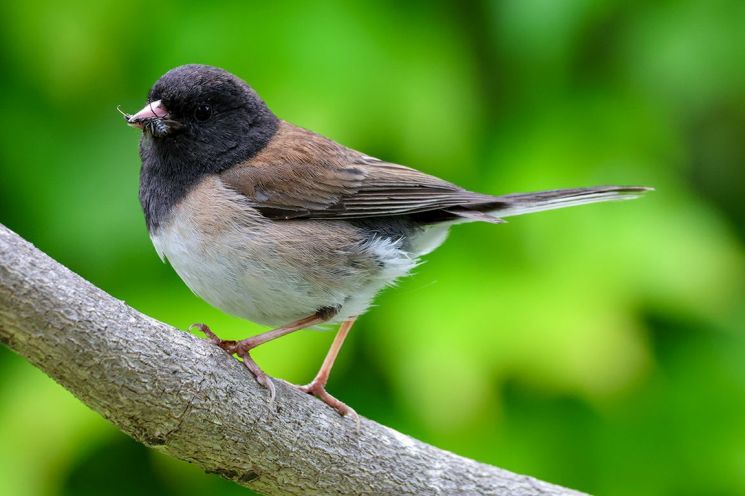 The black-eyed bulbul is a wild bird originally inhabiting mountainous areas, characterized by its long, slender beak that is advantageous for eating seeds or insects in natural conditions. UCLA NEWSROOM
The dark-eyed junco is a wild bird originally inhabiting mountainous regions, characterized by its long, slender beak that is advantageous for eating seeds or insects in natural conditions. However, individuals that migrated into urban areas have tended to develop shorter and thicker beaks, making it easier to consume food waste left by humans. The UCLA research team has been conducting long-term observations by tagging dark-eyed juncos on campus since 2018.
According to the study, birds hatched between 2020 and 2021, when the campus was closed and in-person classes and dining operations were suspended due to COVID-19, developed longer beaks closer to their wild counterparts as they adapted to an environment with drastically reduced human activity. This is analyzed as a result of the birds changing their lifestyle to forage for food in nature again, as food waste on campus decreased. In contrast, when lockdown measures were lifted and in-person classes and dining resumed in 2023 and 2024, the situation changed once more. As human activity increased and food became more abundant on campus, birds born during this period quickly exhibited shorter beak shapes, which are advantageous for urban living.
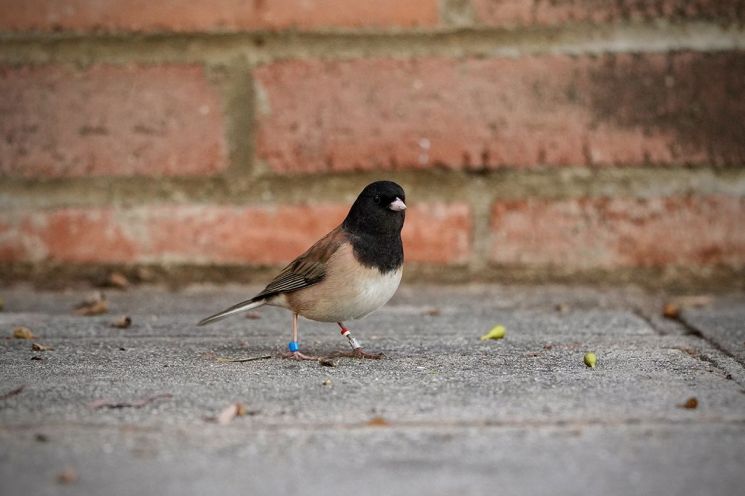 The birds hatched between 2020 and 2021, when campuses were closed and in-person classes and dining operations were suspended due to COVID-19, developed longer beaks closer to their wild counterparts as they adapted to an environment with drastically reduced human activity. UCLA NEWSROOM
The researchers explained that these changes are not merely individual differences but are the result of adaptation and evolution in response to environmental conditions. Eleanor Diamant, visiting assistant professor at Bard College and lead author of the study, said, "There is a strong perception that evolution occurs gradually over thousands or tens of thousands of years, but the actual data provide a remarkable example showing that evolution can take place in a very short period of time."
Co-researcher Pamela Yeh also emphasized, "Humans and nature are much more closely connected than we think, and animals that share spaces with humans respond to environmental changes with astonishing speed," adding, "Such rapid evolution is likely happening continuously, even without our awareness." External experts also highly valued the significance of this research.
Jeff Podos, professor at the University of Massachusetts, stated, "Until now, the impact of humans on wildlife has mainly been discussed in terms of urbanization, pollution, or habitat destruction," and evaluated, "This study is one of the very few cases that documents how a unique social event like the pandemic has actually led to evolution." He added, "It is impressive that two rounds of evolutionary change were observed before and after the pandemic, and that the speed of these changes was extremely rapid."
© The Asia Business Daily(www.asiae.co.kr). All rights reserved.
![Clutching a Stolen Dior Bag, Saying "I Hate Being Poor but Real"... The Grotesque Con of a "Human Knockoff" [Slate]](https://cwcontent.asiae.co.kr/asiaresize/183/2026021902243444107_1771435474.jpg)

















