Geumcheon District Holds Exhibition Showcasing Excavation Achievements of Silla-era Stone Fortress
Not many people are aware that there is a stone fortress from the Silla Dynasty in Geumcheon District, Seoul. Geumcheon District (Mayor Yoo Sunghoon) will hold an exhibition in the first-floor lobby of the district office from January 19 to February 27 to share the results of the excavation of "Seoul Hoamsanseong Fortress," the district's only nationally designated cultural heritage site.
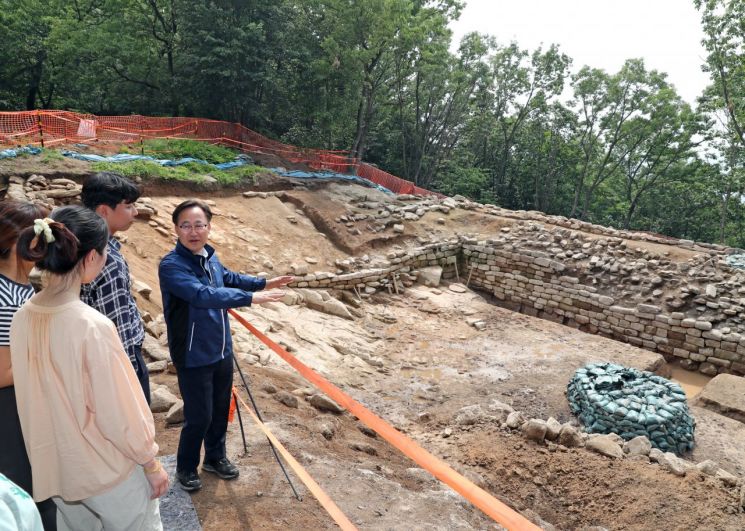 Yoo Sung-hoon, Mayor of Geumcheon District (right), is inspecting the excavation site of the Hoamsanseong stone fortress. Provided by Geumcheon District.
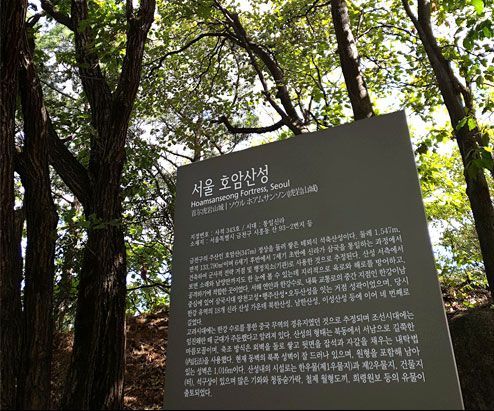
Seoul Hoamsanseong Fortress is located on Hoamsan Mountain (347 meters above sea level) and served as a defensive stronghold for the southwestern area of Seoul. Built during the Silla Dynasty, the stone fortress has a circumference of 1,547 meters and an area of approximately 133,924 square meters. It functioned as a military strategic base and is also believed to have been used as an administrative institution.
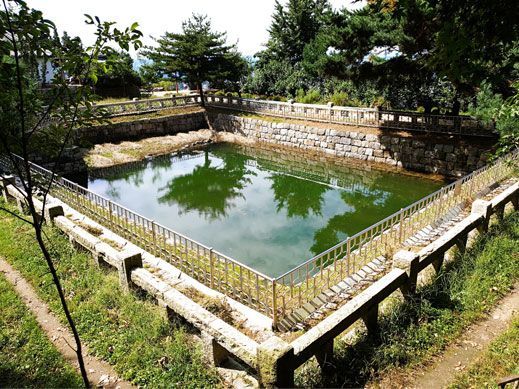
The district began excavating Hoamsanseong Fortress in the 1980s, restoring the first well site, "Hanumul." In 1991, Hoamsanseong Fortress was elevated to the status of a nationally designated cultural heritage site (Historic Site No. 343). At that time, the existence of a second well site was also confirmed, but excavation was halted due to private land ownership and other reasons.
After more than 30 years, the district resumed excavation of the second well site and surrounding building sites in 2022, completing the work in November last year. This exhibition, organized in collaboration with the Hangang Cultural Heritage Research Institute, aims to share these achievements with local residents.
The excavation revealed that the second well site was constructed in the 8th century and used until the mid-12th century. It was a water source for the surrounding buildings and is thought to have also served as a means of regulating water flow within the fortress and as a fire-fighting water source.
The building sites in the southern area showed four distinct phases of development. Various building foundations and basic facilities were discovered within a large plot consisting of stone walls and platforms. In the northeastern area, evidence of raised-floor buildings, pit dwellings, drainage facilities, and entryways was found around the bedrock.
Among the unearthed artifacts, a roof tile inscribed with "Ingdaenae" (仍大內) draws particular attention. "Ingdaenae" refers to "Ingbeolno," the administrative district name given to the Geumcheon area when Goguryeo controlled the Hangang River basin. A roof tile inscribed with "Anyangsa" (安養寺) was also found, indicating exchanges with Anyangsa Temple in Anyang, Gyeonggi Province.
Other finds include high-footed bowls, inkstones, lids, celadon, pottery and porcelain fragments engraved with the character "Gwan" (官), as well as metal artifacts such as axle parts, iron swords, and iron axes. However, as these artifacts are currently undergoing the process of being registered as buried cultural heritage, the actual items will not be displayed at this exhibition.
The exhibition features photographs and records, and related videos will be shown on a media wall. After the exhibition, these videos will continue to be shown on monitors in the district office elevators and community centers, while the excavation achievements will be permanently displayed along the Hoamneulsol-gil area.
Mayor Yoo Sunghoon of Geumcheon District stated, "Seoul Hoamsanseong Fortress is a key part of our district's history," adding, "We will support initiatives such as creating the Hoamsan Historical and Cultural Trail centered on Seoul Hoamsanseong Fortress, so that residents can learn about and enjoy this important heritage."
© The Asia Business Daily(www.asiae.co.kr). All rights reserved.
![Clutching a Stolen Dior Bag, Saying "I Hate Being Poor but Real"... The Grotesque Con of a "Human Knockoff" [Slate]](https://cwcontent.asiae.co.kr/asiaresize/183/2026021902243444107_1771435474.jpg)


















