The University of Seoul announced on January 16 that Professor Ik-Hoon Cho from the Department of Life Science has received the Gold Ribbon Boditech Medical Award at the 37th Winter Conference of the Korean Society for Molecular and Cellular Biology (KSMCB).
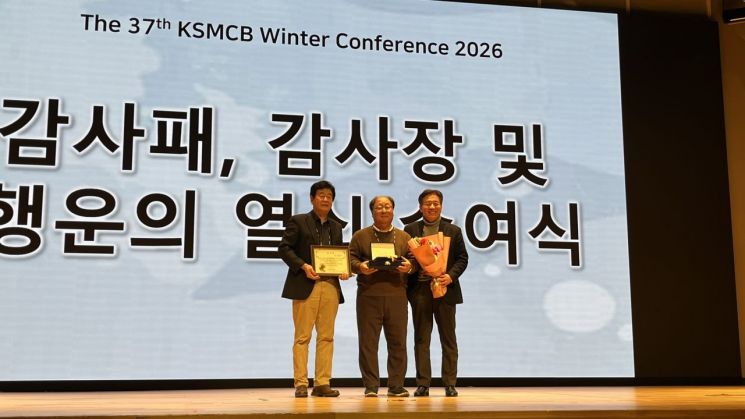
The Korean Society for Molecular and Cellular Biology, established in 1989, is a leading academic organization in Korea that has spearheaded advancements in the field of molecular and cellular biology. The Gold Ribbon Boditech Medical Award is a prestigious honor presented to regular members aged 60 or older (but under 65 and not yet retired) who have demonstrated active academic engagement and serve as exemplary role models for younger researchers.
Professor Cho was selected for this award in recognition of his continuous research achievements and academic contributions in the field of cellular signal transduction. His research is expected to expand the understanding of the mechanisms underlying intractable diseases such as liver cancer and Alzheimer's disease, and to serve as foundational data for the identification of future diagnostic and therapeutic targets.
Professor Cho stated, "It is a great honor to have my years of research in cellular signal transduction recognized by the most prestigious academic society in Korea. This award will motivate me to further dedicate myself to research aimed at overcoming intractable diseases."
Professor Cho earned his Ph.D. in Zoology from Michigan State University in the United States and joined the Department of Life Science at the University of Seoul in 2001. Since then, he has elucidated the regulatory mechanisms of Wnt and Hippo signaling pathways and has conducted research to develop therapeutic strategies for various diseases, including cancers and Alzheimer's disease, caused by abnormalities in these pathways.
© The Asia Business Daily(www.asiae.co.kr). All rights reserved.
![Clutching a Stolen Dior Bag, Saying "I Hate Being Poor but Real"... The Grotesque Con of a "Human Knockoff" [Slate]](https://cwcontent.asiae.co.kr/asiaresize/183/2026021902243444107_1771435474.jpg)















