Meeting with Chief Presidential Secretary for Policy, Secretaries for Land and Transport, and Climate and Energy
Proposals for New National Medical School, Integrated Relocation of Civilian and Military Airports, and Normalization of Muan International Airport
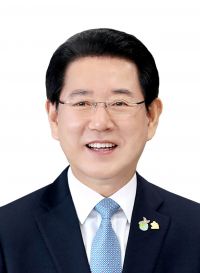 Kim Youngrok, Governor of Jeonnam Province
On January 14, Kim Youngrok, Governor of Jeonnam Province, met consecutively with Kim Yongbeom, Chief Presidential Secretary for Policy, as well as secretaries responsible for land and transport, agriculture, local autonomy development, and climate and energy. During these meetings, he proposed key regional issues, including the inclusion of special provisions for the Gwangju-Jeonnam Integrated Metropolitan City and the establishment of a new integrated national medical school.
This round of meetings was strategically conducted to address a wide range of critical regional projects, including the expansion of fiscal special provisions for the integrated metropolitan city, which is expected to become a core agenda item in the discussions on administrative integration between Gwangju and Jeonnam.
During his meeting with Chief Secretary Kim Yongbeom, Governor Kim requested bold and comprehensive financial support and the granting of region-specific special provisions to ensure that the administrative integration of Gwangju and Jeonnam serves as a leading model for balanced national development in South Korea.
In particular, to strengthen the stable fiscal foundation of the integrated metropolitan city, he proposed the creation of an integrated economic support fund-allocating a portion of national taxes generated by the economic activities of special city residents-as well as the establishment of a new integrated special (education) grant fund.
He also suggested that the administrative integration should go beyond a simple reorganization of administrative districts and lead to economic growth, job creation, and balanced national development. To this end, he called for region-specific special provisions, including the promotion of advanced industries such as AI and energy, and the relocation of public institutions and companies.
Governor Kim emphasized, "As President Lee Jaemyung's strong commitment to supporting the integrated region becomes more widely known, the expectations and aspirations for grand integration among the residents of Gwangju and Jeonnam are growing. The administrative integration of Gwangju and Jeonnam is not just a local issue but a critical task to strengthen South Korea's competitiveness and achieve balanced national development."
Chief Secretary Kim Yongbeom responded, "I deeply empathize with the expectations of the residents of Gwangju and Jeonnam and the governor's efforts regarding administrative integration. The government will actively cooperate to ensure that the relevant special provisions and proposals are fully supported at the national level."
Governor Kim also held meetings with secretaries in various fields, including land and transport, agriculture, local autonomy development, climate and energy, and small and venture businesses. He called for the swift establishment of a national medical school at the integrated university, the integrated relocation of Gwangju's civilian and military airports, the prompt resolution of the Muan International Airport localizer issue, and the normalization of airport operations, among other pressing regional matters.
Regarding the establishment of a national medical school at the Jeonnam Integrated University, he requested the allocation of more than 100 medical school seats and the establishment of affiliated hospitals in both the eastern and western regions of Jeonnam.
For the full-scale implementation of the historic agreement reached last December by the six-party consultative body on the integrated relocation of Gwangju's civilian and military airports, he proposed designating Muan County as a preliminary relocation candidate site in February and reflecting the priority relocation of Gwangju's civilian airport in the 7th Comprehensive Airport Development Plan.
Jeonnam Province plans to begin collecting residents' opinions on the administrative integration of Gwangju and Jeonnam by holding its first public hearing on January 19 and touring all 22 cities and counties. Since January 8, the province has also been operating an online platform to facilitate active discussions, providing a communication channel for residents of Gwangju and Jeonnam as well as the general public nationwide.
© The Asia Business Daily(www.asiae.co.kr). All rights reserved.
![Clutching a Stolen Dior Bag, Saying "I Hate Being Poor but Real"... The Grotesque Con of a "Human Knockoff" [Slate]](https://cwcontent.asiae.co.kr/asiaresize/183/2026021902243444107_1771435474.jpg)














