Customer Explains: "To Send to a Friend Overseas"
A story has emerged about a cafe employee who personally intervened to stop a customer from filming videos that included the faces of staff members every time they visited. The customer explained that they were filming to share their daily life with a friend overseas, but the employee expressed discomfort, saying, "I don't understand."
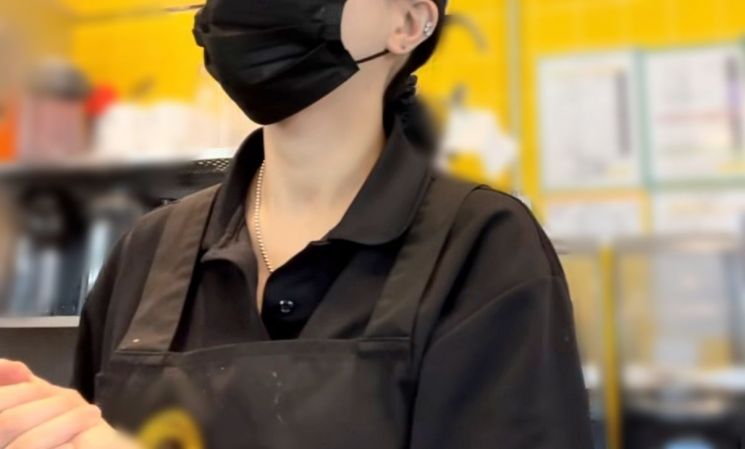 Mr. A is asking a customer who is filming a video inside the cafe about the reason for filming. Mr. A's Instagram
Mr. A, who works at a cafe in Seoul, recently posted a video and a message on his Instagram, stating, "I asked a regular customer, who would film videos that included the faces of staff members every time they came in, about the reason for filming." The video quickly went viral, receiving over 12,000 likes shortly after it was released.
When asked, "Why are you filming?" the answer was, "To send to a friend"
In the video, Mr. A carefully asks the customer entering the store, "You film a video every time you come in. May I ask what the purpose is?" The customer replies, "I do film videos, but it's to send to a friend." When Mr. A asks again, "Our faces might appear in the video, so why are you sending that?" the customer hesitates and says, "Just to show my friend overseas how I live..." trailing off.
Mr. A then requests, "Please make sure that the faces of the staff are not included when you film." He explains, "There are two female employees working here, and after holding back several times, I finally decided to say something because I was concerned." He added, "I still don't understand the explanation about sending daily life to a friend." It is reported that after this request, the customer has not returned to the cafe.
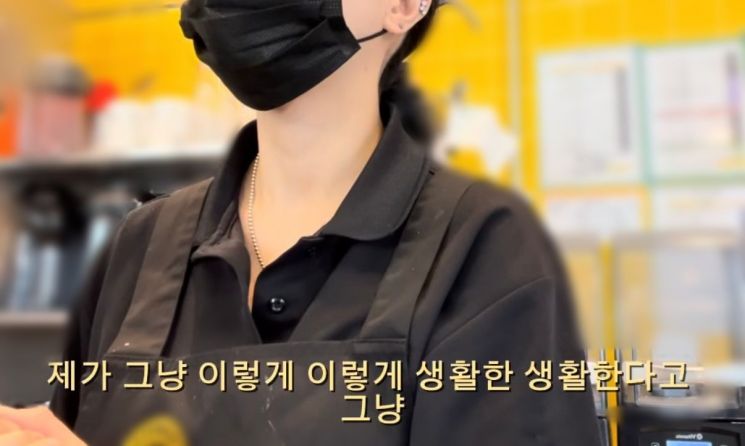 When asked the reason for taking the photo, the customer replied, "To send to a friend." Instagram of Mr. A
Viewers of the video commented, "In this day and age, filming someone else's face without permission is dangerous," "It's not something that can be dismissed as simply sharing daily life," "There is a real risk of misuse, such as deepfake crimes," and "Many people have no concept of portrait rights."
Violation of Portrait Rights May Lead to Legal Liability
If you film someone in a way that makes their face identifiable, you need their consent. Portrait rights are a fundamental right protected under Article 10 of the Constitution, and violating them without special circumstances can constitute an unlawful act. In particular, if a video filmed without consent is posted on social media without public interest and the individual can be identified, the person responsible may be liable for damages.
In fact, in December of last year, a court recognized a violation of portrait rights and ordered a person in their 30s to pay 2 million won in damages for posting a video featuring someone else on social media without their consent.
© The Asia Business Daily(www.asiae.co.kr). All rights reserved.
![Clutching a Stolen Dior Bag, Saying "I Hate Being Poor but Real"... The Grotesque Con of a "Human Knockoff" [Slate]](https://cwcontent.asiae.co.kr/asiaresize/183/2026021902243444107_1771435474.jpg)
















