Korea Economic Association Surveys Impact of Differential Regulations on Mid-Sized Companies
More Respondents Say "Corporate Growth Ladder" Is Not Functioning
Most Mid-Sized Companies Report Decreased Employment and Investment Due to Differential Regulations
Tax System Rationalization Cited as Key Solution for Growth
Upon Regulatory Improvement, "Expanding Hiring Will Be the First Step"
One out of every three mid-sized companies is reportedly facing difficulties in scaling up due to strengthened regulations and reduced support.
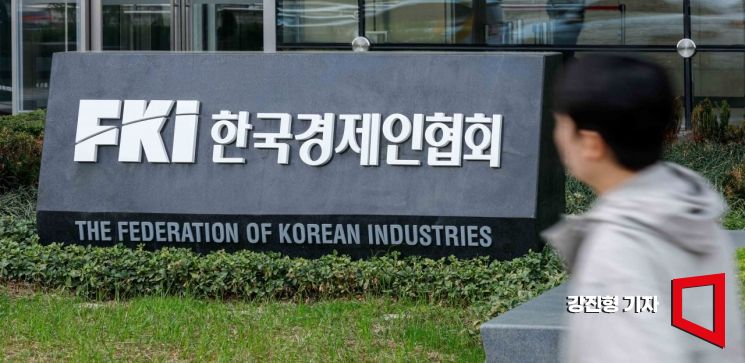 Employees of tenant companies are moving at the Korea Economic Association in Yeouido, Seoul. Photo by Jin-Hyung Kang aymsdream@
The Korea Economic Association announced on the 14th that, according to the results of a "Survey on the Impact of Differential Regulations on Mid-Sized Companies" conducted by Mono Research with 1,154 mid-sized companies, 29% of respondents said the "corporate growth ladder" is not functioning smoothly. Only 13.5% responded that it is working well, which is less than half the proportion of those who said otherwise. The corporate growth ladder refers to a system where regulations and support are seamlessly connected at each stage of a company's growth as it scales up.
According to the survey, 35% of mid-sized companies said they felt the impact of strengthened regulations after graduating from small and medium-sized enterprise status. The main reasons cited for this increased regulatory burden were the reduction of tax benefits (35.5%) and the reduction of financial support (23.2%). This was followed by regulatory burdens such as disclosure and internal transactions (14.5%), reduction of employment support (9.4%), the burden of responding to new regulatory environments such as ESG (environmental, social responsibility, and corporate governance improvement) and carbon neutrality (9.4%), and restrictions on public procurement (5.1%).
In addition, four out of ten mid-sized companies (43.0%) viewed differential regulations by company size as having a negative impact on corporate growth. The negative impacts on business operations were ranked as follows: workforce reductions and hiring freezes (39.0%), reduction in new investments (28.8%), consideration of overseas relocation or establishing foreign subsidiaries (16.9%), and reduction in research and development (R&D) (11.0%).
The Korea Economic Association explained that the combined responses for workforce and investment reductions accounted for 67.8% of all answers, confirming that differential regulations by company size have a direct impact on core management activities such as workforce management and investment decisions.
When asked about policy tasks needed for the continued growth of mid-sized companies, the most common response was "rationalization of the tax system, including corporate tax, inheritance tax, and R&D tax credits," at 41.1%. This was followed by "expansion of policy-based financial support" at 25.8%. Other necessary tasks identified included "support for securing and nurturing professional talent" (13.2%), "expansion of support for global growth" (7.5%), "activation of M&A and improvement of regulations on new industries" (6.9%), and "support for responding to ESG and carbon neutrality" (4.8%).
If differential regulations by company size are rationally improved, mid-sized companies are highly likely to readjust their business operations, focusing on expanding employment. When asked about the management activity they would pursue first if regulations were improved, the largest share, 41.0%, chose "expanding new hiring." This was followed by "expanding investments" (28.0%), "aggressive M&A and entry into new businesses" (12.5%), "targeting and accelerating overseas markets" (9.5%), and "enhancing shareholder value, such as increasing dividends" (9.0%).
Lee Sangho, Head of the Economic and Industrial Division at the Korea Economic Association, emphasized, "The current differential regulations by company size are blocking companies from scaling up," adding, "It is urgent to review and improve the overall system so that incentive structures can function rationally according to the stage of growth."
© The Asia Business Daily(www.asiae.co.kr). All rights reserved.

















