Wi Sung-rak, Chief of the National Security Office, Briefs on Summit
"Shuttle Diplomacy between Korea and Japan Now Fully Established"
Surprise 'Drum Duet' Anecdote Shared... "A Bold Welcome"
Shuttle Diplomacy between the Ancient Capitals o
The leaders of South Korea and Japan held a summit in Nara, Japan, where they discussed trade issues such as the Comprehensive and Progressive Agreement for Trans-Pacific Partnership (CPTPP), as well as the situation on the Korean Peninsula and ways to cooperate on North Korea policy. The two leaders reaffirmed their commitment to the complete denuclearization of the Korean Peninsula and the establishment of lasting peace, agreeing to continue close cooperation on North Korea policy. Regarding the sensitive issue of the ban on imports of Fukushima seafood, the discussion concluded with the Korean side listening to the Japanese side’s explanation concerning seafood food safety.
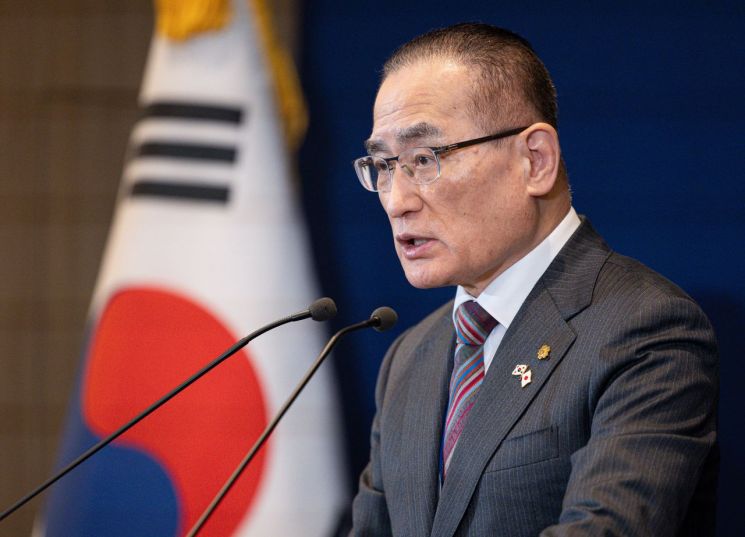
Wi Sung-rak, Director of the National Security Office, held a press briefing at the Osaka Press Center in Japan to explain the results of the summit between President Lee Jaemyung and Japanese Prime Minister Sanae Takaichi. President Lee held a one-on-one meeting and an expanded meeting with Prime Minister Takaichi for about 100 minutes from 2 p.m. on January 13, followed by additional informal talks and a dinner, during which they had sincere and in-depth discussions. On the morning of January 14, President Lee and Prime Minister Takaichi visited Horyu-ji, a temple symbolizing over 1,500 years of historical exchange between the Korean Peninsula and Japan, and spent time together to further their friendship.
Director Wi emphasized that this summit was arranged “in less than three months” after Prime Minister Takaichi visited South Korea for the Asia-Pacific Economic Cooperation (APEC) summit in October last year. He noted, “Including the G20 meeting in December, this marks the third meeting,” adding, “The shuttle diplomacy between the leaders of South Korea and Japan, which resumed with the August visit to Japan, has now been fully established.” He also described the atmosphere of the summit, noting that Prime Minister Takaichi, who arrived in Nara first, personally welcomed President Lee in front of the JW Marriott Hotel, where both leaders were staying, showing “special consideration” at the start of the schedule.
Director Wi further stated, “Since the last two meetings have built a consensus between the leaders on the direction of Korea-Japan relations, this time the focus was on candidly discussing concrete measures to deepen and broaden cooperation.”
In the one-on-one meeting, the two leaders assessed that Korea-Japan relations, marking the 60th anniversary of normalization of diplomatic ties, are developing in a future-oriented manner and discussed the rapidly changing international situation. In the expanded meeting, they broadly addressed ways to expand practical cooperation in areas directly related to the economy and the daily lives of citizens, such as the economy, society, culture, and people-to-people exchanges, and also discussed finding common ground on sensitive issues, according to Director Wi. Regarding the additional informal talks that lasted 22 minutes from 5:30 p.m., Director Wi explained, “It was at the request of the Japanese side to deepen the bond between the leaders,” and added, “It is very unusual for the leaders to hold a separate informal talk following the one-on-one and expanded meetings.”
Director Wi also shared an anecdote about the two leaders performing a drum ensemble together during the additional informal talks. He said, “At the beginning, the Japanese side provided attire suitable for drum performance, and both leaders changed into it. The attire had the President’s name on it,” adding, “The songs performed were ‘Golden’ by K-Pop Demon Hunters and ‘Dynamite’ by BTS, which can be seen as an extraordinary and special gesture of hospitality by the Japanese side.” The dinner that followed began at 7 p.m. and lasted for 105 minutes. Director Wi explained, “The leaders and their spouses, along with official delegates, attended the dinner in a friendly and relaxed atmosphere,” and “The Japanese side prepared a variety of dishes made with local ingredients from Nara.”
Director Wi also assessed that the visit to Horyu-ji in the morning was met with the highest level of hospitality. He explained, “The temple is known in Korea as Beopryungsa and is the first site in Japan to be registered as a UNESCO World Cultural Heritage site,” adding, “They opened the storage area, normally closed to the public, to show the original wall paintings of the main hall, which are strictly preserved due to fire damage. This was the highest level of hospitality the Japanese side could offer for the President’s first visit to Nara.”
Shuttle Diplomacy Between Historic Cities Gyeongju and Nara Achieves ‘Learning from the Past’ ... Laying the Groundwork for Expanded Practical Korea-Japan Cooperation
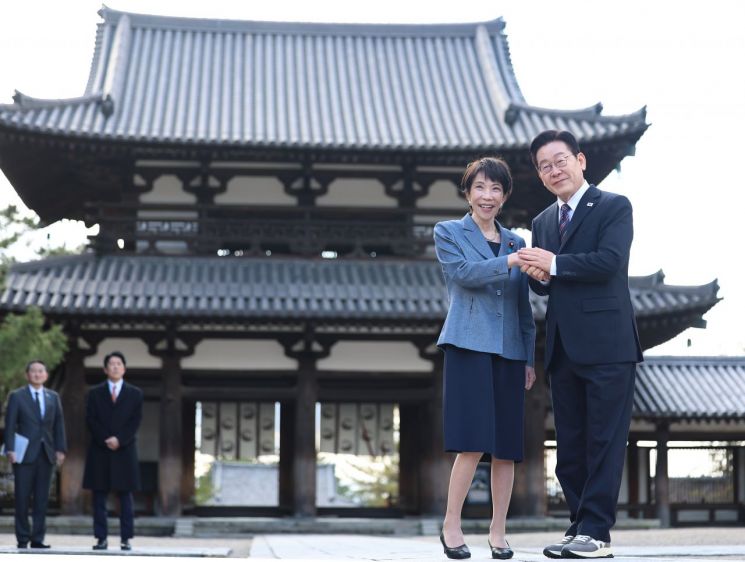
Director Wi cited ‘learning from the past’ as a key achievement of this summit, noting that holding consecutive meetings at the historic cities of Gyeongju and Nara at two-month intervals embodied the spirit of learning from the old to create something new. He added that the practice of holding summits while traveling to regional cities in both countries, such as Busan, Gyeongju, and Nara, is significant in terms of “strengthening cooperation to jointly address the shared challenges of balanced national development and revitalization of local regions.”
In terms of practical cooperation, it was announced that the relevant authorities would hold consultations to establish “an institutional framework for more comprehensive cooperation beyond trade-centered collaboration,” particularly in areas such as economic security, science and technology, and standards. The two sides also agreed to deepen cooperation on artificial intelligence (AI) and intellectual property (IP), respond together to common social issues such as low birth rates, aging populations, and regional growth imbalances, and promote exchanges among future generations.
Regarding the response to transnational crimes, Director Wi said, “We agreed to strengthen joint responses to crimes such as scams that threaten the lives and property of citizens in both countries.” He added, “Japan will participate in the international cooperation council launched under the leadership of our National Police Agency, and the two countries will also prepare a document to systematize bilateral cooperation.”
Takaichi Raised the ‘Josei Coal Mine’ Issue First ... On Seafood Import Regulations, Korean Side Listened to Japanese Explanation

On historical issues, Director Wi highlighted strengthened humanitarian cooperation. He said that regarding DNA testing to identify remains discovered in August last year at the site of the 1942 Josei coal mine flooding accident in Ube, Yamaguchi Prefecture, Japan, “the relevant authorities have agreed to cooperate.” He noted, “This was the first issue raised by Prime Minister Takaichi during the one-on-one meeting,” and added, “This is the first step in fulfilling the long-held wishes of the bereaved families and could serve as a clue to addressing historical issues based on the universal values of human rights and humanitarianism.”
Director Wi also cited the personal friendship and trust built between the two leaders as the greatest achievement, saying, “At the end of the meeting, there was talk of overcoming future difficulties based on friendship and trust.” He continued, “Contrary to initial doubts or concerns at the start, a strong friendship has been established, and on that foundation of trust, it has been demonstrated that new areas of cooperation can be explored and historical issues can also be addressed.”
When asked whether the DNA testing of the Josei coal mine remains would be conducted by a government agency or outsourced to the private sector, Director Wi replied, “Consultations between officials from both governments have been ongoing, and the outcome of this summit shows progress,” adding, “While we still need to determine which entity will conduct the verification, the important point is that intergovernmental consultations and agreements have advanced.” Regarding the issue of elevating ‘Dokdo Day,’ he answered, “There was no discussion of Dokdo Day or related issues at this summit.”
Regarding the CPTPP and seafood import regulations, Director Wi stated that the Japanese side provided an explanation on food safety, which the Korean side listened to, and added, “The CPTPP was mentioned, and both sides reaffirmed their intention to pursue it. This is an issue that requires cooperation between working-level departments.” On supply chain cooperation and China’s rare earth export controls, he said, “The leaders expressed their willingness to cooperate on supply chains, and working-level discussions are progressing. However, it will take time to finalize everything.”
On the issue of worsening China-Japan relations, it appears that there was no detailed discussion on specific matters. Director Wi explained, “We discussed strengthening Korea-Japan cooperation, Korea-U.S.-Japan cooperation, and Korea-Japan-China trilateral cooperation,” adding, “The discussions were not aimed at any particular country, but rather reflected the need for everyone to work together to enhance security management in Northeast Asia.”
Meanwhile, regarding the next location for shuttle diplomacy, it was confirmed that Prime Minister Takaichi expressed willingness to make a return visit. Director Wi said, “There was no discussion about the specific location,” but added, “There was some light mention, and Andong was brought up. Whether the next meeting will be held in a regional city or elsewhere has not yet been decided and will be discussed going forward.”
© The Asia Business Daily(www.asiae.co.kr). All rights reserved.



















