Up 0.2 Percentage Points from Last June's Forecast
U.S. Growth Exceeds Expectations
Risks Remain from Trade Conflicts and Inflation
The World Bank has projected that global economic growth will slow slightly due to uncertainties such as U.S. tariffs. The outlook suggests that the recovery of the global economy will lose momentum as the effects of increased trade and supply chain restructuring, which were seen ahead of last year's tariff hikes, begin to diminish. However, the World Bank analyzed that the robust growth of some major economies, particularly the United States, will help mitigate the extent of the slowdown.
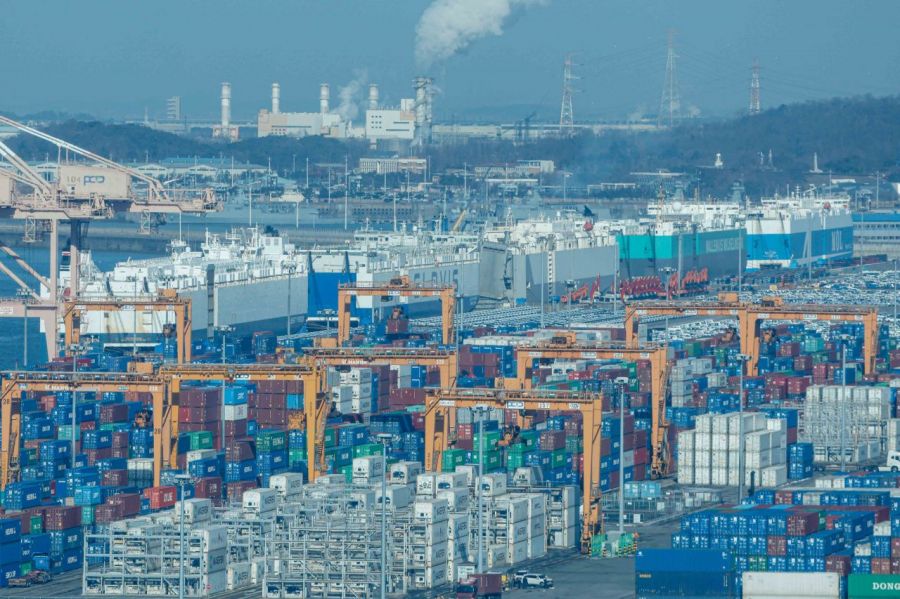
In its Global Economic Prospects report released on January 13 (local time), the World Bank forecast global economic growth for this year at 2.6%, which is 0.1 percentage point lower than last year's estimated 2.7%. The World Bank explained that last year, ahead of the U.S. tariff imposition, there was a sharp increase in trade volume and supply chain restructuring, resulting in stronger-than-expected economic resilience. However, it projected that these growth-boosting effects will disappear this year as both trade volume and domestic demand decline. Nevertheless, the World Bank expects that increased fiscal spending in some large economies will help ease the slowdown in growth.
The 2.6% growth rate projected by the World Bank in this report is 0.2 percentage point higher than the 2.4% forecast in its report from June last year. In this context, the World Bank explained that the United States accounts for two-thirds of the upward revision, as its growth rate is expected to be higher than previously anticipated. The U.S. growth rate is forecast to rise slightly from 2.1% last year to 2.2% this year. The World Bank observed, "While the impact of tariffs is increasingly weighing on consumption and investment, the extension of tax benefits and the end of the federal government shutdown last year are expected to support growth this year."
The growth rate for the Eurozone is projected to decline from 1.4% last year to 0.9% this year. The main reasons cited are the weakening of export price competitiveness due to rising energy prices following Russia's invasion of Ukraine, which in turn has slowed export growth.
The growth rate for the East Asia and Pacific region is expected to be 4.4%, lower than last year's 4.8%. In particular, China's growth rate is forecast to decrease from 4.9% last year to 4.4% this year, with the World Bank attributing this to weakened consumer confidence, a slump in the real estate market, slowing employment, and a slowdown in manufacturing. Excluding China, the growth rate for the East Asia and Pacific region is projected to be 4.5%. South Korea's growth rate was not included in this report.
Additionally, the growth rate for developing countries is expected to decrease from 4.2% last year to 4% this year.
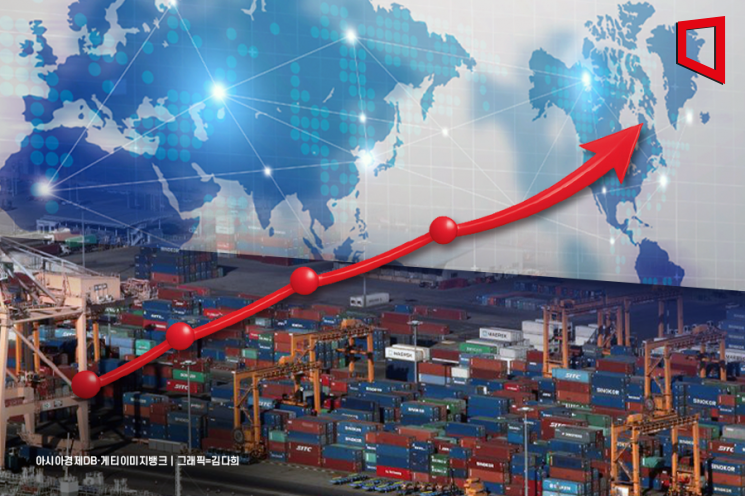
The World Bank noted that, despite some countries reaching trade agreements with the United States last year, policy uncertainty remains high, and regional supply chains could be restructured depending on changes in tariff rates. It also observed that there are short-term downside risks to the global economy, and that growth could slow if risks such as escalating trade conflicts, increased trade barriers, falling asset prices and deteriorating financial market conditions, fiscal concerns, and inflation materialize.
© The Asia Business Daily(www.asiae.co.kr). All rights reserved.
![Clutching a Stolen Dior Bag, Saying "I Hate Being Poor but Real"... The Grotesque Con of a "Human Knockoff" [Slate]](https://cwcontent.asiae.co.kr/asiaresize/183/2026021902243444107_1771435474.jpg)
















