Bipartisan Bill Introduced by Democrats and Republicans
Ban on Blockading, Occupying, Annexing, or Conducting Military Operations on NATO Territory
U.S. senators have introduced a bill to prohibit the occupation or annexation of NATO territory, including Greenland.
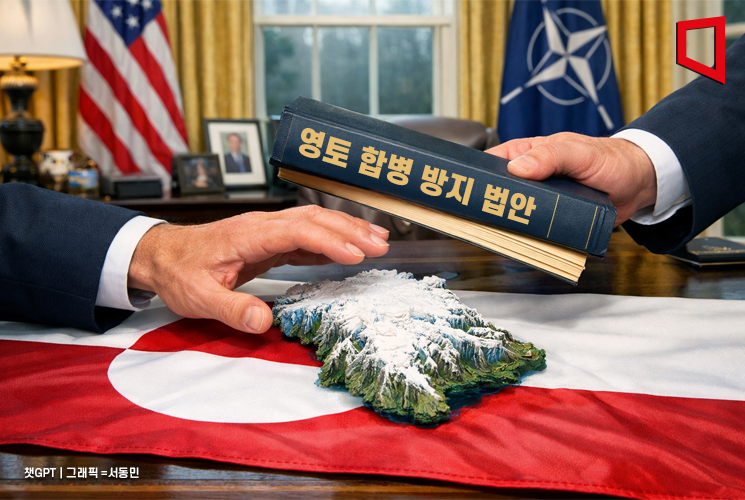
According to a Financial Times (FT) report on January 13 (local time), the bill prohibits the Department of Defense and the State Department from using congressionally approved funds to blockade, occupy, annex, conduct military operations, or otherwise control the territory of NATO member states.
The bill was jointly introduced by Senator Jeanne Shaheen, the Democratic ranking member of the Senate Foreign Relations Committee, and Republican Senator Lisa Murkowski. This bipartisan measure comes in response to President Donald Trump’s public pressure to annex Greenland. Previously, President Trump stated, "The United States will take over Danish territory (Greenland) one way or another."
Senator Shaheen emphasized, "This bipartisan bill makes it clear that U.S. taxpayer dollars cannot be used to divide NATO or undermine America's commitment to NATO." Senator Murkowski also stated, "The NATO alliance is what distinguishes us from adversarial nations," adding, "The very idea of using substantial U.S. resources to the detriment of our allies is deeply concerning and must be prohibited by law."
The House of Representatives is also moving in the same direction. A bipartisan group of House members led by Democratic Representative Bill Keating has submitted a similar bill. This suggests that even within the Republican Party, there are significant concerns about President Trump’s remarks regarding the annexation of Greenland.
Speaker of the House Mike Johnson said the previous day, "I believe no one is considering such an idea (annexing Greenland)," adding, "A declaration of war on Greenland is not scheduled, and it is not under any consideration."
Denmark and Greenland are responding diplomatically. The foreign ministers of Denmark and Greenland are scheduled to meet with Secretary of State Marco Rubio and Vice President JD Vance in Washington, D.C. on January 14.
The previous day, Jens-Frederik Nielsen, Prime Minister of Greenland’s autonomous government, and Mette Frederiksen, Prime Minister of Denmark, held a joint press conference and officially stated that if residents had to choose immediately, they would choose Denmark over the United States. This statement came one day before their meeting with the United States.
Prime Minister Frederiksen especially warned that an invasion of Greenland would mean the end of NATO. This remark is interpreted as an effort to build consensus among U.S. lawmakers and defense companies who wish to maintain the NATO alliance.
Jon Rahbek-Clemmensen, Director of the Arctic Security Research Center at the Royal Danish Defence College, stated, "U.S. defense companies rely heavily on NATO for all sales to European countries, from F-35 fighter jets to ammunition."
According to the U.S. Constitution, the power to declare war originally belongs to Congress, but over time, Congress’s authority to declare war has diminished.
Matthew Waxman, Director of the National Security Law Program at Columbia Law School, explained, "Every modern U.S. president has claimed broad authority to deploy U.S. forces overseas to protect and advance American interests," adding, "If Congress has the political will, there are ways to check a particular president." In other words, Congress can use its power to introduce legislation or control the budget to check the president’s ability to declare war.
© The Asia Business Daily(www.asiae.co.kr). All rights reserved.
![Clutching a Stolen Dior Bag, Saying "I Hate Being Poor but Real"... The Grotesque Con of a "Human Knockoff" [Slate]](https://cwcontent.asiae.co.kr/asiaresize/183/2026021902243444107_1771435474.jpg)















