110 Cases of Technology Leaked Overseas, Including Semiconductors
33 Involve National Core Technologies
FDI Security Review Threshold of 50% Exploited
Influence Exercised Through Minority Stake Investments
Systematic Improvements Neede
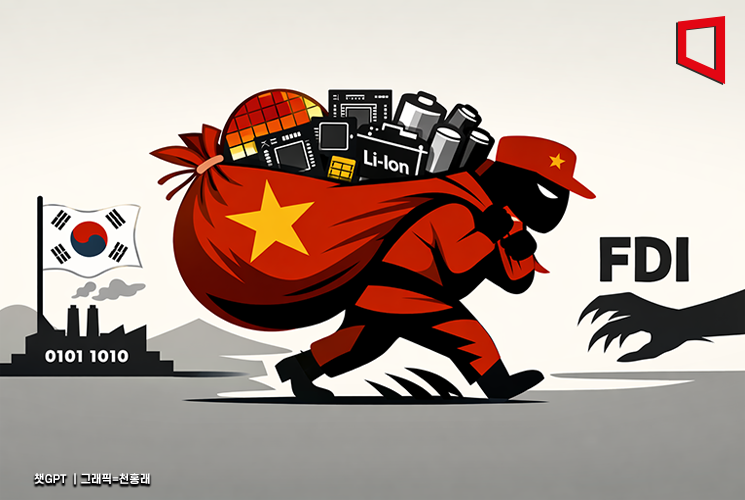
#1. Great Wall Motors of China established a subsidiary in South Korea in 2019-2020, claiming to enter the battery business, but used it as a channel to steal technology. The company pretended to conduct joint research with university-industry cooperation groups and received battery blueprints and research materials from current and former employees of Samsung SDI and SK On. This technology was later found to have been used in the construction of a factory in China. In January 2024, the police arrested and referred five people involved in the case for prosecution.
#2. In 2021, a former employee of SEMES, a Samsung Electronics subsidiary that manufactures core semiconductor and display equipment, established a cleaning equipment company in South Korea and developed equipment using technology leaked from his previous workplace. This individual was caught after supplying the equipment to the Korean subsidiary of a Chinese equipment company. He received 7.8 billion won in exchange for personnel and technology, and was apprehended by prosecutors while producing mass-production equipment using the stolen technology.
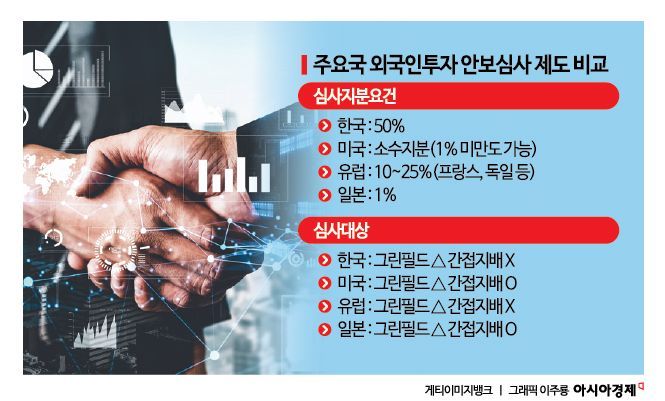
Foreign Direct Investment (FDI), which is meant to fuel the vitality of domestic companies, is being abused as a channel for technology leakage. Some exploit university-industry cooperation to steal technology, while others take advantage of the loophole in the foreign investment security review standard, which is set at 50%, by participating with a lower equity stake to still exert influence over company management. The damage caused by technology leakage through FDI has exceeded 20 trillion won over the past five years. As a result, there is a growing call to revise the system, such as by raising the security review standards in the FDI attraction process.
According to the "Review of Measures to Improve the Foreign Investment Security Review System" report released on January 14 by the Korea Economic Research Institute, commissioned to Professor Jo Sujeong of Korea University Law School, the damage to the domestic industry from technology leakage over the past five years (2020-June 2025) amounts to approximately 23.27 trillion won. The number of leaked technologies sent overseas reached 110 cases, of which 33 were identified as national core technologies. By sector, semiconductors accounted for the largest share (33%), followed by displays (20%) and electrical and electronics (8%). All of these are strategic national industries.
Private investment in advanced industries has steadily expanded thanks to FDI. In 2024, the R&D expenditure of South Korea's top 1,000 companies reached 83.6 trillion won, marking an all-time high.
However, technology leakage has also increased alongside the rise in FDI. As investment methods have diversified-such as through joint ventures, minority equity investments, and the establishment of overseas R&D centers-the number of weak links has grown as well.
Within the business community, there is a growing consensus that it is time to heighten awareness of technology protection, improve the system, and swiftly prepare countermeasures. Lee Sangho, Head of the Economic and Industrial Division at the Korea Economic Research Institute, suggested, "We must strengthen standards to ensure that South Korea does not become the weak link in the global supply chain, while also operating the system delicately so as not to undermine domestic companies' partnerships."
© The Asia Business Daily(www.asiae.co.kr). All rights reserved.
![Clutching a Stolen Dior Bag, Saying "I Hate Being Poor but Real"... The Grotesque Con of a "Human Knockoff" [Slate]](https://cwcontent.asiae.co.kr/asiaresize/183/2026021902243444107_1771435474.jpg)
















