Cultural Heritage Administration Releases Reports, Videos, and Books
Six Years of In-Depth Study on Village Beliefs
Oral Histories of National Intangible Heritage Holders Also Published
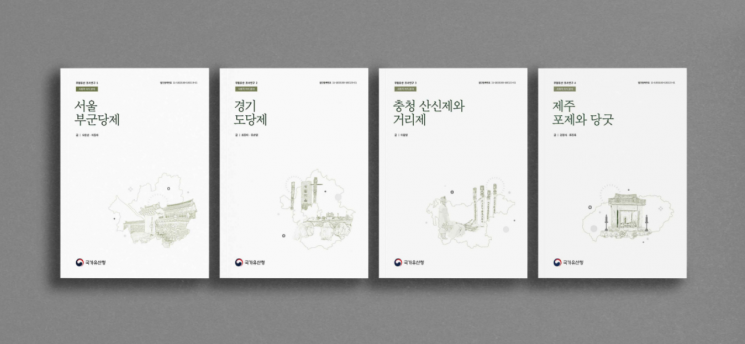
From village rituals praying for peace to the skilled craftsmanship of artisans, a comprehensive record of Korea's intangible heritage is coming to households. On January 14, the National Heritage Administration announced that it will release intangible heritage research reports and videos and books documenting the transmission process of national intangible heritage holders through the 'Intangible Heritage Digital Archive.'
The highlight of this release is the in-depth research on village beliefs conducted nationwide over the past six years since 2019. The National Heritage Administration has been documenting the value of 'Dongje,' a village ritual performed by communities in Seoul, Gyeonggi, Chungcheong, and Jeju for their principal village deities or mountain spirits, by visiting the actual sites.
The reports cover four types of rituals: the 'Seoul Bugundangje' performed at the Bugundang shrine near the Han River in Seoul; the 'Gyeonggi Dodangje' honoring the principal deity in the Gyeonggi region; the 'Sanshinje and Georije' of Chungcheong; and the 'Jeju Poje and Dang-gut,' where Confucian village rituals coexist with shamanistic ceremonies in Jeju. The research team highlighted the unique characteristics of each region’s rituals and vividly captured the original forms of village faith that have strengthened community bonds. A National Heritage Administration official stated, "We also plan to release research results for the Gangwon, Jeolla, and Gyeongsang regions within the year."
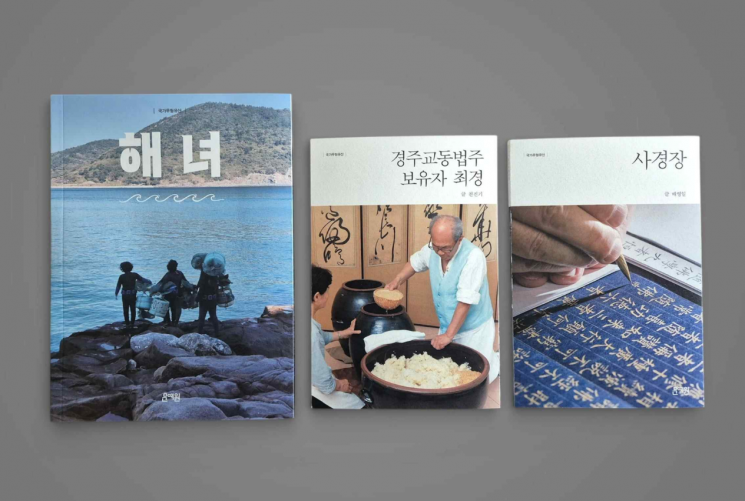
The legacy of master artisans at risk of disappearing will also be permanently preserved through videos and books. The videos faithfully document the lives and performances of Kim Chunsik, a sobanjang (tray table artisan) who makes Naju soban, and Kim Ilgu and Jeong Sunim, holders of pansori repertoires Jeokbyeokga and Heungboga.
The published books provide detailed accounts of the history and value of 'Sakyungjang,' the art of transcribing Buddhist scriptures; 'Haenyeo,' the female divers symbolizing Korea’s maritime culture; and 'Gyeongju Gyodong Beopju' (holder Choi Kyung), the traditional liquor of the Choi family in Gyeongju. Additionally, the oral life histories include the initiation and lives of six holders: Kim Younghee (Donghaean Byeolsingut, Honorary Holder), Won Gwangsik (Master Iron Caster), Lee Jaechun (Andong Chajeon Nori), Park Intae (Gyeongsan Jain Danoje), Lee Sangho (Hahoe Byeolsingut Talnori), and Han Jeongja (Victory Dance), all recorded in their own voices.
A National Heritage Administration official said, "We will expand digital access so that everyone can easily enjoy our culture."
© The Asia Business Daily(www.asiae.co.kr). All rights reserved.
![Clutching a Stolen Dior Bag, Saying "I Hate Being Poor but Real"... The Grotesque Con of a "Human Knockoff" [Slate]](https://cwcontent.asiae.co.kr/asiaresize/183/2026021902243444107_1771435474.jpg)
















