Calls for Revising Cabinet Meeting Regulations
Alongside Passage of the Special Law
As discussions on a special law for the administrative integration of Gwangju and Jeonnam are evolving into plans for a "special city," there are growing calls to institutionalize the attendance of the integrated special city mayor at Cabinet meetings. It is argued that, along with the passage of the special law in the National Assembly, the presidential decree governing Cabinet meetings should also be revised.
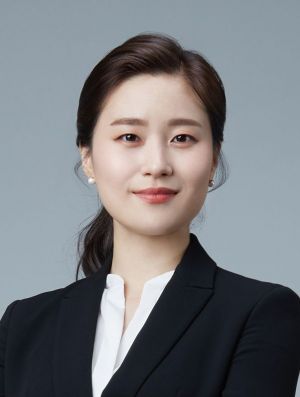
Jung Daeun, Gwangju Metropolitan City Council Member and Chair of the Steering Committee, stated on January 13, "The integrated special mayor of Gwangju and Jeonnam should be allowed to attend Cabinet meetings, just like the mayor of Seoul Special City."
The Cabinet is the highest government policy deliberation body, based on the Constitution. Article 89 of the Constitution stipulates that 17 matters, including the basic plans for state affairs, general government policies, constitutional amendments, national referendums, bills and draft presidential decrees, budgets and settlements, major matters concerning national finance, presidential emergency orders, and martial law, are subject to Cabinet deliberation. Article 88 specifies that the Cabinet is composed of the President, the Prime Minister, and between 15 and 30 Cabinet members.
Matters necessary for the operation of the Cabinet are outlined in the Government Organization Act and the presidential decree known as the "Regulations on Cabinet Meetings." Article 8 of these regulations stipulates that, among local government heads, only the mayor of Seoul Special City may attend Cabinet meetings, along with the Chief Presidential Secretary, the National Security Office Director, and the Chief of the Office for Government Legislation.
Jung Daeun stated that if the special law for the administrative integration of Gwangju and Jeonnam passes the National Assembly, a revision of the presidential decree will also be necessary to allow the integrated special mayor to attend Cabinet meetings. She argued that this provision should be clearly stated in the draft special law currently being prepared by Gwangju and Jeonnam.
Jung Daeun remarked, "If the administrative integration of Gwangju and Jeonnam is established as a special city, it will mark the launch of the second special city in the history of our Constitution," adding, "It is necessary to institutionally establish the status of the first integrated special mayor." She continued, "For the administrative integration of Gwangju and Jeonnam to serve not only as a driver of regional development but also as a channel for leading national balanced development, it is essential to create a structure in which the special mayor has a voice in the highest government policy deliberation process."
Meanwhile, Jung Daeun is a lawyer who previously worked with the Lawyers for a Democratic Society and was selected as an outstanding lawyer by the Korean Bar Association. She also served as Co-Chief of the Election Campaign Headquarters for Lee Jaemyung, the Democratic Party's candidate in the 21st presidential election.
© The Asia Business Daily(www.asiae.co.kr). All rights reserved.
![Clutching a Stolen Dior Bag, Saying "I Hate Being Poor but Real"... The Grotesque Con of a "Human Knockoff" [Slate]](https://cwcontent.asiae.co.kr/asiaresize/183/2026021902243444107_1771435474.jpg)















