Young Medical Scientist Category: Professors Martin Steinegger and Joo-Myung Lee
The Asan Social Welfare Foundation announced on January 13 that Professor Ho-Young Lee of the Department of Pharmacy at Seoul National University has been selected as the recipient of the 19th Asan Medical Award in the Basic Medical Science category, while Professor Seung-Eup Kim of the Division of Gastroenterology at Severance Hospital, Yonsei University College of Medicine, has been chosen in the Clinical Medical Science category.
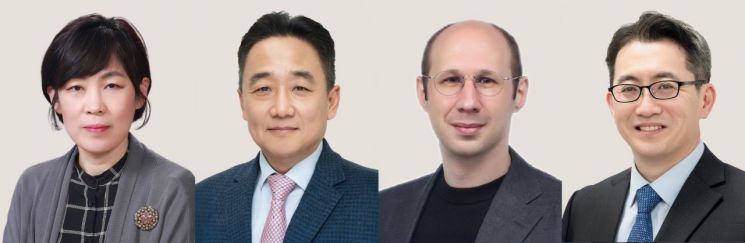 From the left, the 19th Asan Medical Award recipients: Professor Ho-Young Lee in Basic Medical Science, Professor Seung-Eup Kim in Clinical Medical Science, and Professors Martin Steinegger and Joo-Myung Lee in Young Medical Scientist category. Asan Social Welfare Foundation.
In the Young Medical Scientist category, Professor Martin Steinegger of the Department of Biological Sciences at Seoul National University and Professor Joo-Myung Lee of the Division of Cardiology at Samsung Medical Center, Sungkyunkwan University School of Medicine, were selected.
Professor Ho-Young Lee, the recipient in the Basic Medical Science category, was recognized for systematically elucidating the molecular mechanisms by which environmental factors such as smoking and fine dust promote the development and progression of chronic obstructive pulmonary disease and lung cancer, and for proposing new therapeutic strategies based on these findings. He published research in Nature Communications demonstrating that cigarette smoke not only directly damages lung cells but also raises blood glucose levels, which in turn suppresses the ability of macrophages-a type of immune cell-to attack cancer cells, thereby accelerating the progression of lung cancer. This research presented a new pathway for the development of lung cancer caused by smoking.
In particular, Professor Lee revealed that a specific signaling pathway activated during lung tissue recovery can, under certain conditions, lead not to recovery but to the development of emphysema or cancer, thereby explaining the mechanism by which chronic lung diseases progress to lung cancer. These research achievements have laid the groundwork for developing new therapeutic strategies across all stages, from prevention to treatment and recurrence prevention of various lung diseases and lung cancer, and have been credited with contributing to improved survival rates for lung cancer patients.
Professor Seung-Eup Kim, the recipient in the Clinical Medical Science category, was highly recognized for pioneering the field of non-invasive liver fibrosis diagnosis and establishing a new standard for liver disease treatment.
In 2005, he led the domestic application of transient elastography (FibroScan), an ultrasound-based technique, to replace invasive liver biopsies that require needle insertion to collect liver tissue, thereby paving the way for easier and more accurate assessment of liver conditions. In a study published in the medical journal JAMA in 2024, he demonstrated that non-invasive tests alone can accurately predict patient prognosis.
Professor Martin Steinegger, recipient in the Young Medical Scientist category, was highly praised for his achievements in driving innovation in protein structure analysis using big data and machine learning technologies. Professor Joo-Myung Lee was recognized for his outstanding global research achievements in cardiovascular interventional imaging and physiological assessment.
The Asan Social Welfare Foundation established the Asan Medical Award in 2008 to encourage medical scientists who have made outstanding achievements in basic and clinical medical sciences, and has selected a total of 57 recipients to date. This year's award ceremony will be held on March 18 at Lotte Hotel in Sogong-dong, Seoul. The recipients in the Basic Medical Science and Clinical Medical Science categories will each receive a prize of 300 million won, while the recipients in the Young Medical Scientist category will receive 50 million won.
© The Asia Business Daily(www.asiae.co.kr). All rights reserved.
![Clutching a Stolen Dior Bag, Saying "I Hate Being Poor but Real"... The Grotesque Con of a "Human Knockoff" [Slate]](https://cwcontent.asiae.co.kr/asiaresize/183/2026021902243444107_1771435474.jpg)















