A recent survey has found that while the perception of corruption in society has decreased among businesspeople and experts, it has increased among the general public.
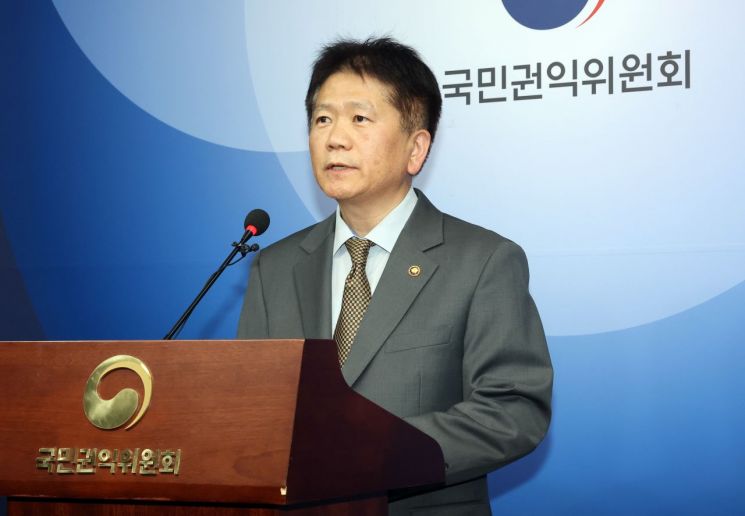 Myungsoon Lee, Vice Chairman of the Anti-Corruption Division at the Anti-Corruption and Civil Rights Commission, is speaking at the Government Complex Sejong. Photo by Yonhap News
On January 13, the Anti-Corruption and Civil Rights Commission released the results of its 2025 Corruption Perception Survey. The survey, conducted in June and October of last year, measured perceptions of corruption and fairness in society and the public sector among 1,400 members of the general public, 700 businesspeople, 630 experts, 400 foreigners, and 1,400 public officials.
The proportion of the general public who perceived society as corrupt was 57.6%, a 0.5 percentage point increase from the previous year. In contrast, the perception of corruption improved among experts and businesspeople. The rate of those perceiving society as corrupt was 32.7% among businesspeople (down from 43.6%), 44.4% among experts (down from 53.8%), 8.8% among foreigners (down from 14.4%), and 5.3% among public officials (down from 12.8%). When asked which of the 11 sectors of society were most corrupt, the general public, experts, and public officials pointed to the political parties and legislative sector, businesspeople cited the media sector, and foreigners identified religious organizations as the most corrupt.
The perception that the public sector is corrupt also increased only among the general public. The proportion of the general public who viewed the public sector as corrupt rose from 35.5% in 2024 to 39.1% last year. In contrast, the perception of corruption in the public sector improved among businesspeople (from 31.9% to 22.6%), experts (from 36.1% to 30.8%), foreigners (from 14.2% to 8.8%), and public officials (from 3.1% to 1.1%). By administrative sector, the general public, businesspeople, and public officials pointed to the prosecution, correctional, and legal affairs sector as the most corrupt, while experts identified the construction, housing, and land sector.
However, perceptions of unfairness decreased across all surveyed groups compared to the previous year. The proportion of those who said "our society is unfair" was 50.3% among the general public (down from 51.8%), 24.3% among businesspeople (down from 34.1%), 46.5% among experts (down from 55.4%), 10.0% among foreigners (down from 14.0%), and 12.7% among public officials (down from 21.8%).
Regarding the effectiveness of the government's anti-corruption policies, all groups reported an increase in positive responses compared to the previous year. In particular, the proportion of businesspeople who said the policies were effective rose to 47.1%, up 27.0 percentage points from 20.1% the previous year.
Myungsoon Lee, Vice Chairperson of the Anti-Corruption Division at the Anti-Corruption and Civil Rights Commission, stated, "We take seriously the fact that the general public's perception of corruption remains insufficient, and we will do our utmost to ensure that citizens can feel the results of anti-corruption efforts in their daily lives."
© The Asia Business Daily(www.asiae.co.kr). All rights reserved.
![Clutching a Stolen Dior Bag, Saying "I Hate Being Poor but Real"... The Grotesque Con of a "Human Knockoff" [Slate]](https://cwcontent.asiae.co.kr/asiaresize/183/2026021902243444107_1771435474.jpg)
















