China Applies for Massive ITU Frequency and Orbital Resources
US-China Space Power Rivalry Intensifies
China has officially entered the competition to dominate low Earth orbit (LEO) by applying to the International Telecommunication Union (ITU), a United Nations agency, for frequency and orbital resources for more than 200,000 satellites. With SpaceX's Starlink currently leading the race, China appears to be accelerating its pursuit with a large-scale "preemptive application" strategy.
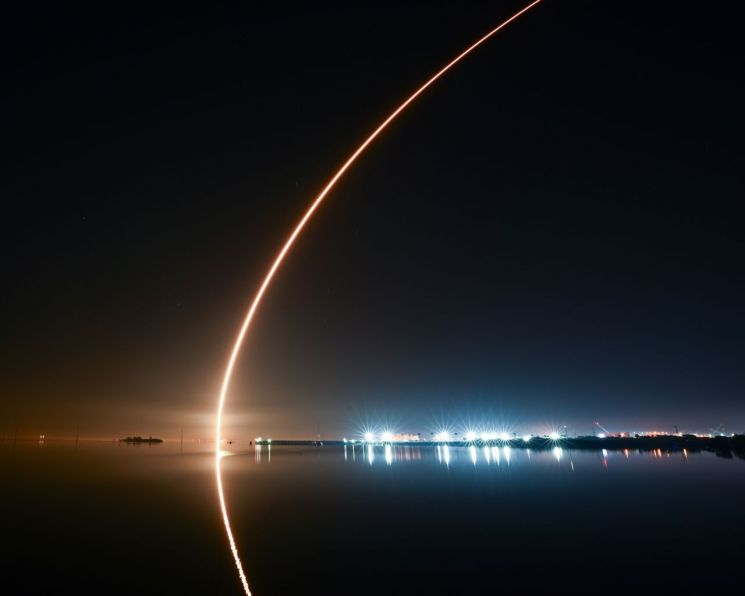
Chinese media outlets, including Shanghai Securities News, reported on January 12 (local time), citing the ITU website, that China applied last month for frequency and orbital resources for over 200,000 satellites.
Of the total applications, more than 190,000 were submitted by the newly established "Institute of Radio Development, Utilization and Technology Innovation" in Hebei Province at the end of last month. This institution requested 96,714 satellites each through two projects, CTC-1 and CTC-2.
Ding Botao, Deputy Director of the Institute of Information Research at the Shanghai Academy of Social Sciences, and others commented that "securing satellite frequency and orbital resources has now become a matter of national strategy." Experts noted that although ITU approval is still pending, this institution is effectively acting as China's "national team" and could accelerate the country's pursuit of SpaceX.
According to ITU regulations, the applying organization must launch and operate at least one satellite within seven years and subsequently deploy the entire constellation in phases. If these requirements are not met, the organization must revise its plan and reapply.
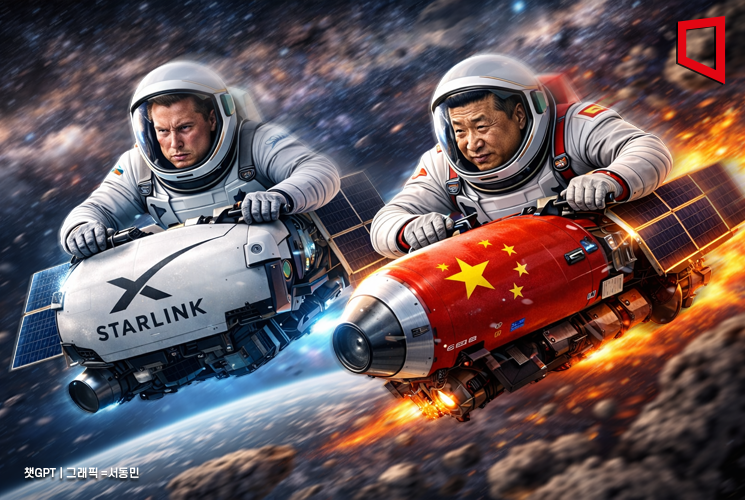
The Hong Kong-based South China Morning Post (SCMP) reported that while the United States and China are competing in the field of internet satellite constellation launches, SpaceX's Starlink is currently far ahead. Since LEO orbits and high-frequency bands are limited, those who apply first have the advantage.
The U.S. Federal Communications Commission (FCC) approved the deployment of an additional 7,500 second-generation Starlink satellites on January 9. While SpaceX aims to launch a total of 42,000 satellites, the Chinese side has criticized Starlink for increasing security threats, orbital congestion, and collision risks.
Meanwhile, China's state-run China Central Television (CCTV) recently introduced the "Nantianmen Plan," a space warfare weapon concept that began around 2017 amid the U.S.-China competition for space military power. The plan includes conceptual weapon systems such as a 100,000-ton space aircraft carrier and unmanned space fighters. CCTV reported that while this concept has not yet reached the implementation stage, it points to the future direction of aerospace technology development.
© The Asia Business Daily(www.asiae.co.kr). All rights reserved.
![Clutching a Stolen Dior Bag, Saying "I Hate Being Poor but Real"... The Grotesque Con of a "Human Knockoff" [Slate]](https://cwcontent.asiae.co.kr/asiaresize/183/2026021902243444107_1771435474.jpg)

















