Summit in Prime Minister Takaichi’s Hometown of Nara on January 13
Continuing ‘Shuttle Diplomacy’ with Third Lee-Takaichi Meeting
A Test for ‘Pragmatic Diplomacy’ Amid China-Japan Tensions... Korea May Face Pressure to Choose
Joint Press Announce
On January 13, President Lee Jaemyung will visit Nara, Japan, for a two-day, one-night trip and hold a summit with Japanese Prime Minister Sanae Takaichi. This marks a series of back-to-back diplomatic engagements just a week after returning from a state visit to China. Amid rapidly changing Northeast Asian dynamics, including deteriorating China-Japan relations, this summit is expected to serve as a diplomatic test for Korea's role in the region. There is also keen interest in whether key economic cooperation topics such as artificial intelligence (AI), supply chains, and the Comprehensive and Progressive Agreement for Trans-Pacific Partnership (CPTPP), as well as historical issues like the Josei coal mine, will be discussed for the first time at the summit table.
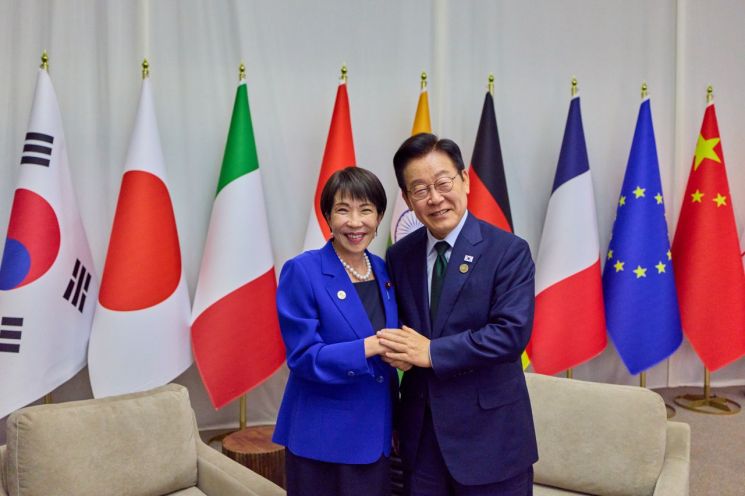
Upon arriving in Nara, President Lee will hold a one-on-one meeting and an expanded summit with Prime Minister Takaichi, followed by a joint press announcement. The summit will continue with a private conversation and a dinner. On the morning of January 14, the two leaders will visit Horyuji, a prominent cultural site in Nara Prefecture, after which President Lee will meet with Korean residents in the Kansai region, including Osaka, before returning to Korea.
This summit is expected to address both 'practical agendas' and 'sensitive issues' at the same table. The Blue House announced that a wide range of topics will be discussed, including cooperation in future fields such as intellectual property (IP) protection, AI, and supply chains, as well as responses to transnational crimes like scams, social issues, and people-to-people exchanges directly affecting daily life. In addition, historical issues are also expected to be on the agenda. National Security Office Director Wi Sunglak identified "strengthening humanitarian cooperation" on historical issues such as the Josei coal mine as a key objective. The Josei coal mine is an undersea mine where, during the Pacific War, more than 130 Koreans were forcibly conscripted for labor, and in 1942, the mine collapsed, resulting in the drowning of over 180 people, including Japanese workers.
Continuing Korea-Japan 'Shuttle Diplomacy' in the Japanese Prime Minister's Hometown... Focus on Historical Issues
The symbolism of this visit to Japan is significant. The fact that the summit is being held in 'Nara,' Prime Minister Takaichi's hometown rather than Tokyo, is being described as an "exceptional omotenashi (extraordinary hospitality)." Nara is an ancient capital of Japan and Takaichi's hometown; she was first elected as an independent in the 1993 general election and has since served ten terms. The Japanese side is reportedly taking special measures for security, including traffic controls. Prime Minister Takaichi traveled to Nara ahead of the summit on January 12. Japanese media noted that it is extremely rare for a prime minister to move to the summit location a day in advance, and Osaka Prefectural Police announced that certain highway sections would be temporarily closed on January 13 and 14.
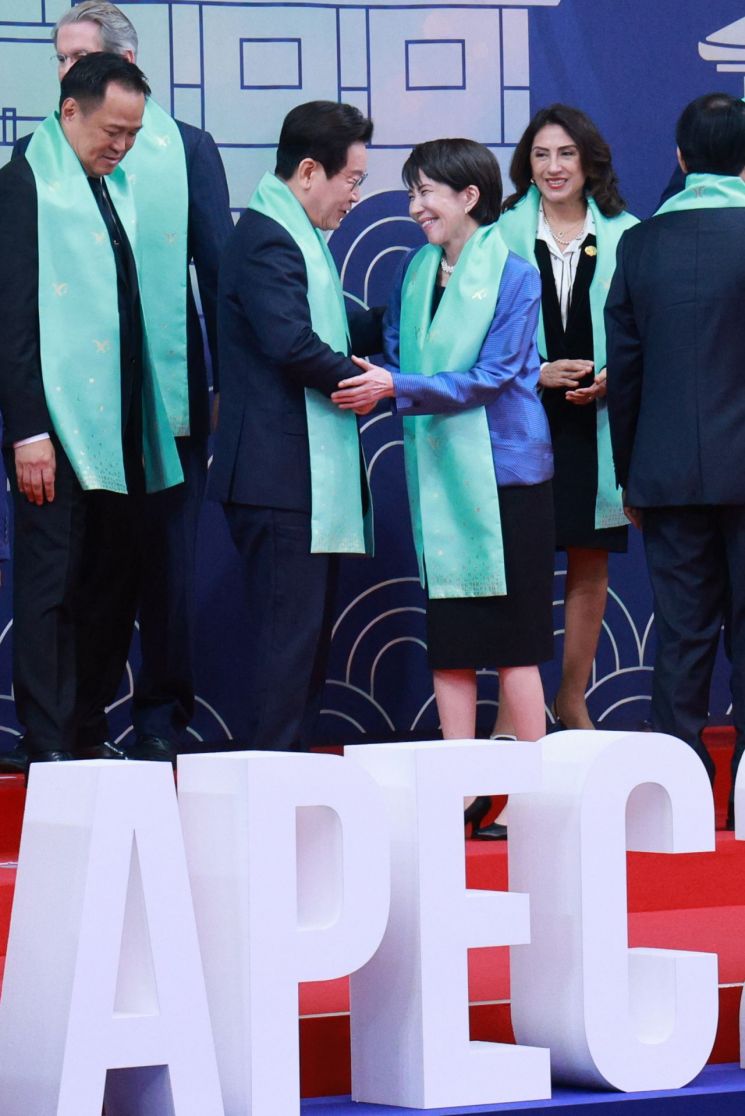
It is also noteworthy that President Lee is continuing the 'shuttle diplomacy' agreed upon with Prime Minister Takaichi, following former Prime Minister Shigeru Ishiba. Director Wi Sunglak described this visit as "strengthening the bond and trust between the two leaders through shuttle diplomacy," noting that the two leaders will meet a total of five times over the two days. President Lee and Prime Minister Takaichi first held a summit at the Asia-Pacific Economic Cooperation (APEC) summit in Gyeongju, and later met again on the sidelines of the Group of Twenty (G20) summit in South Africa.
Whether historical issues will be formally discussed at the summit table also draws attention. Rather than immediately tackling highly sensitive issues such as the Japanese military comfort women, forced labor, or the Sado mine, President Lee appears to be starting with the excavation of Korean remains at the Josei coal mine, an area where Korea and Japan have more room for cooperation, in an effort to create an atmosphere for addressing historical issues in earnest. If the two leaders address historical issues in detail, it will be the first time this has happened. Until now, President Lee, starting with former Prime Minister Ishiba, has maintained that an accurate understanding of history should be a prerequisite for discussions between leaders, but has also emphasized that historical issues should not hinder future cooperation and that there is no need to rush.
With China-Japan Relations Deteriorating, Korea May Face Pressure to Choose... A Test for 'Pragmatic Diplomacy'
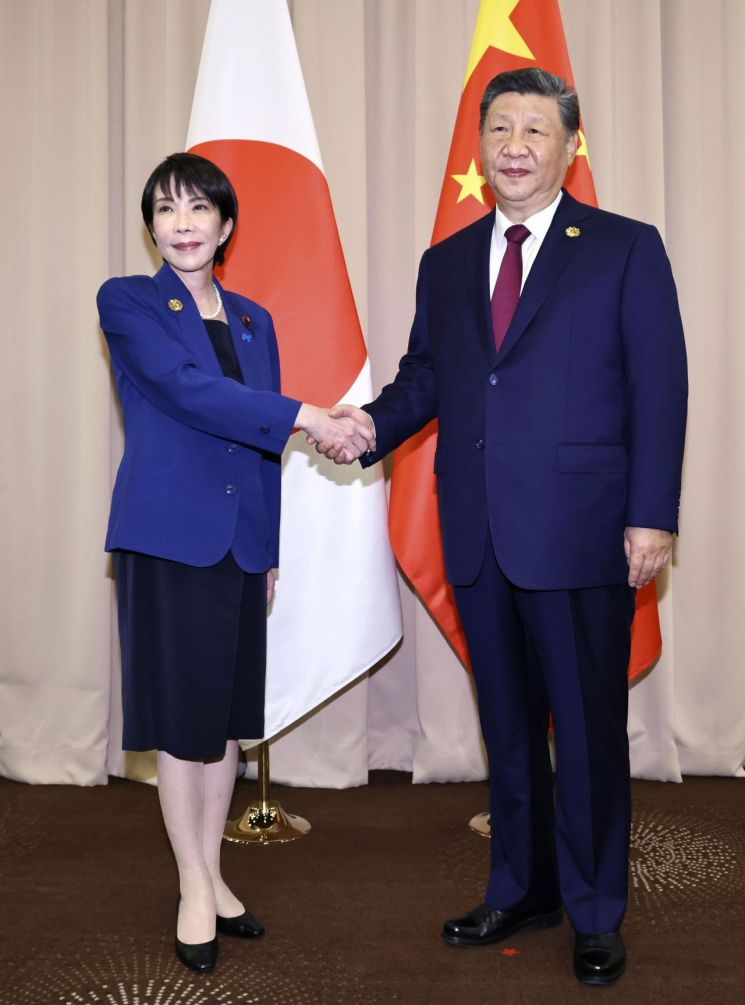
However, the rapidly worsening China-Japan relations, triggered by China's export controls on rare earths to Japan, are both a point of concern and a variable that could affect the outcome of the summit. The Japanese government has repeatedly emphasized the importance of Korea-Japan relations and Korea-U.S.-Japan cooperation, sending a message that it expects "frank dialogue."
In particular, as tensions between China and Japan escalate, there are observations that Korea may face pressure to choose sides. Thus, a key point of interest is how President Lee, while upholding a 'pragmatic' stance, will manage differences over regional security issues such as the Korean Peninsula peace and coexistence process and the Taiwan Strait. In Japan, there are already voices noting that, unlike former President Yoon Suk-yeol, President Lee is taking a neutral position in China-Japan relations, and that it is necessary to counter China's attempts to highlight shared historical issues and drive a wedge between Korea and Japan. There is also advice that Korea and Japan should jointly address challenges such as North Korea-China-Russia military cooperation, U.S. relations, supply chains, and domestic issues like low birth rates and aging populations.
In an exclusive interview with NHK released on January 12, President Lee stated, "In the complex situation in Northeast Asia, it is very important for Korea and Japan to share values and aspirations," adding, "We should complement each other's shortcomings, and I believe there are many areas where we can compete and cooperate. We need to find common ground." He also left open the possibility of joining the CPTPP and expressed support for the North Korea-Japan summit that Prime Minister Takaichi has indicated an intention to pursue.
However, regarding the ban on imports of seafood from Fukushima, Japan, President Lee stated that it is an issue that must be resolved in the long term for CPTPP accession. The CPTPP is a multilateral free trade agreement (FTA) launched in 2018 by Asia-Pacific countries, with twelve member countries including Japan, Canada, and Australia, and Korea is also seeking to join. President Lee said, "Given the current situation, we need to address the emotional and trust issues of the Korean people, so it will be difficult in the short term," adding, "To gain support for CPTPP accession, the issue of importing seafood from Fukushima is also an important agenda item."
On the 14th, Visiting 'Horyuji,' Influenced by Baekje... Meeting with Korean Residents Also Scheduled
On the final day of the visit, January 14, President Lee will meet Prime Minister Takaichi again at Horyuji. As Horyuji is the oldest wooden structure in the world and was influenced by Baekje architectural techniques, Prime Minister Takaichi is expected to highlight the history of Korea-Japan exchanges before historical conflicts arose. Japanese media reported that final arrangements are being made for Prime Minister Takaichi to personally guide President Lee. Afterward, President Lee plans to hold a meeting with Korean residents in the Kansai region before returning to Korea.
© The Asia Business Daily(www.asiae.co.kr). All rights reserved.
![Clutching a Stolen Dior Bag, Saying "I Hate Being Poor but Real"... The Grotesque Con of a "Human Knockoff" [Slate]](https://cwcontent.asiae.co.kr/asiaresize/183/2026021902243444107_1771435474.jpg)

















