On-Site Power: The Solution to U.S. Big Tech's Electricity Crunch
Focused Investments in ESS and Fuel Cells
In response to the surging power demand from artificial intelligence (AI) data centers, major U.S. tech companies have chosen to take matters into their own hands by opting for "direct generation" rather than waiting for upgrades to the existing power grid. Rapidly deployable and efficient hydrogen fuel cells and energy storage system (ESS) infrastructure are emerging as key investment themes for 2026.
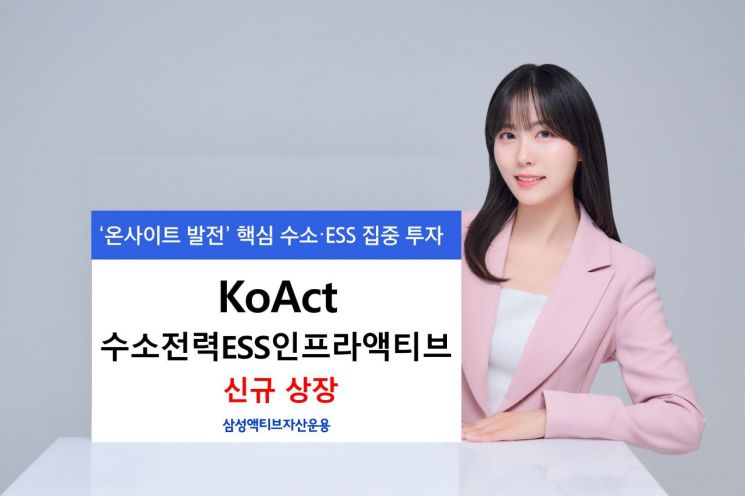
Samsung Active Asset Management announced on January 12 that it will list the "KoAct Hydrogen Power ESS Infrastructure Active" ETF on January 13, which invests in leading domestic companies specializing in hydrogen power facilities and ESS.
Due to the rapid advancement of the AI industry, U.S. electricity demand has reached its limit. According to a report by Berkeley Lab, the average wait time for power grid connections at U.S. power plants has more than doubled from 2.3 years in the 2000s to 4.8 years in 2024. For big tech firms in urgent need of electricity, large-scale nuclear or gas power plants-which take 5 to 10 years to build-are not realistic alternatives.
"On-site power" generation, which involves building dedicated power plants right next to data centers, is drawing attention. The main sources for on-site power are solar energy, ESS, and hydrogen fuel cells, all of which can be installed within a relatively short period-about a year or less.
The ESS market is experiencing rapid growth. According to the International Energy Agency (IEA), the global cumulative installation of ESS is expected to grow at an average annual rate of 21.5% through 2035, far outpacing solar (12.7%) and wind (7.7%). With North America accounting for about 30-40% of the global ESS market, domestic companies are strengthening their export momentum in this region.
The hydrogen power sector is also expanding, as major U.S. companies like Bloom Energy continue to secure large-scale orders. Following the revision of the IRA last July, companies can now receive a 30% investment tax credit even when using low-cost fuel, reducing the cost of power generation and solidifying hydrogen as a practical power procurement method for big tech firms.
Korean companies stand to benefit from the strengthened overseas entity clause in the IRA. From 2026, to qualify for tax credits, the proportion of non-Chinese components must be significantly increased. As a result, domestic battery companies such as LG and Samsung are converting their U.S. production lines for ESS use, while companies like Vinatech and Koces have officially secured orders from Bloom Energy in the United States.
The KoAct Hydrogen Power ESS Infrastructure Active ETF offers a differentiated portfolio compared to existing secondary battery ETFs. Moving beyond battery materials, it includes a significant number of ESS-specialized equipment manufacturers such as Seojin System and Hanjung NCS, as well as fuel cell component companies like Vinatech and Koces. The ETF also covers the entire infrastructure spectrum, including Doosan Enerbility, which is developing 100% hydrogen power turbines, and HRSG (Heat Recovery Steam Generator) leaders such as BHI and SNT Energy.
Kim Hyosik, Team Leader of Investment Team 2 at Samsung Active Asset Management, stated, "2026 will mark the first year in which the competition among U.S. big tech companies to secure power expands into the construction of on-site power infrastructure. We will actively invest in domestic hydrogen and ESS core companies that can directly benefit from the U.S. IRA policy, now the global standard, to pursue differentiated returns."
© The Asia Business Daily(www.asiae.co.kr). All rights reserved.
![Clutching a Stolen Dior Bag, Saying "I Hate Being Poor but Real"... The Grotesque Con of a "Human Knockoff" [Slate]](https://cwcontent.asiae.co.kr/asiaresize/183/2026021902243444107_1771435474.jpg)
















