"Even with Administrative Integration, the Current System for Electing Superintendents and Maintaining Offices of Education Must Be Preserved"
"Education Cannot Become a Subordinate of Politics and Administration"
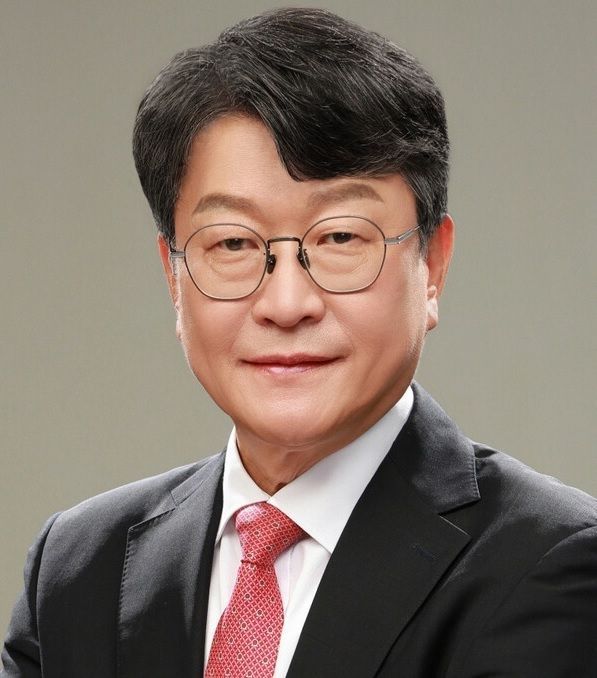
Seokjin Oh, former Director of the Education Bureau at the Daejeon Metropolitan Office of Education and current head of the Happy Education Connection Community, has stated his opposition to including educational administration in the Daejeon-Chungnam administrative integration discussions.
On January 12, former Director Oh issued a statement regarding the Daejeon-Chungnam administrative integration, asserting the following: ▲ He firmly opposes the integration of educational administration being treated as a subordinate area of administrative integration; ▲ He calls for the immediate halt of educational administration integration being pursued without public debate and collection of public opinion; ▲ Even if administrative integration proceeds, the current system for electing metropolitan and provincial superintendents and maintaining the respective offices of education should remain unchanged; ▲ The decision on whether to integrate educational administration should be made through an official public forum in which education stakeholders participate.
Seokjin Oh, who has announced his candidacy for Superintendent of Education in Daejeon in the upcoming June 3 local elections, said, "As discussions on administrative integration among metropolitan governments, such as Daejeon-Chungnam and Gwangju-Jeonnam, are spreading, there is a rapid push to integrate educational administration as well." He added, "This is a critical issue concerning the existence of educational autonomy and the educational rights of future generations, and I express clear and resolute opposition to the push for educational administration integration."
Former Director Oh stated, "Education is not a subordinate function or accessory of administration, but a core value in the public sphere directly protected by the Constitution. Nonetheless, the integration of educational administration is being discussed without sufficient public debate or social consensus among Daejeon citizens, Chungnam residents, and the entire education community." He emphasized, "This is an anti-constitutional administrative principle that disregards the autonomy and expertise of educational administration, educational self-governance, and the unique characteristics of local education as stipulated in Article 31 of the Constitution."
He further argued, "The fundamental differences in educational conditions and challenges between Daejeon and Chungnam are precisely why the integration of educational administration cannot be supported."
As grounds for his position, former Director Oh explained, "Daejeon, as a metropolitan city, faces key issues such as resolving overcrowded classrooms, addressing educational disparities between urban areas, and nurturing talent for future industries. In contrast, Chungnam urgently needs to address the decline in the school-age population, the crisis of school closures, and educational disparities in rural, fishing, and remote island areas."
Accordingly, he stressed, "Rather than pursuing integration, we should move toward strengthening autonomy down to the basic unit level. From the outset, integrating into a single educational administration system and a unified policy direction does not align with the intent of the Constitution or the Local Education Autonomy Act."
Former Director Oh added, "An even more serious issue is that the integration discussions are proceeding rapidly without the participation of key education stakeholders, such as students, parents, teachers, and education officials. This constitutes 'education bypassing'-politics and administration that do not respect education-and decisions made without deliberation or consensus will only result in conflict and confusion."
He also urged the Ministry of Education and the Council of Superintendents of Education of the Republic of Korea to clearly state their official positions and to present principles that are consistent with the Constitution and the Education Autonomy Act.
Seokjin Oh emphasized, "Education is a value that must be protected by the Constitution, and it is the heaviest responsibility our society bears toward the next generation." He continued, "Education grows through autonomy rather than integration, at the basic rather than metropolitan level, and through diversity rather than uniformity. Decisions about the nation's long-term educational direction should be based on deliberation rather than speed, responsibility rather than efficiency, and education rather than politics."
© The Asia Business Daily(www.asiae.co.kr). All rights reserved.
![Clutching a Stolen Dior Bag, Saying "I Hate Being Poor but Real"... The Grotesque Con of a "Human Knockoff" [Slate]](https://cwcontent.asiae.co.kr/asiaresize/183/2026021902243444107_1771435474.jpg)















