WSJ: "White House Reviewing All Possible Options"
Cyber Weapons, Additional Economic Sanctions, and Military Strikes Under Consideration
Potential for Clash with Israel if U.S. Military Intervenes
Final Decision Unlikely on the 13th
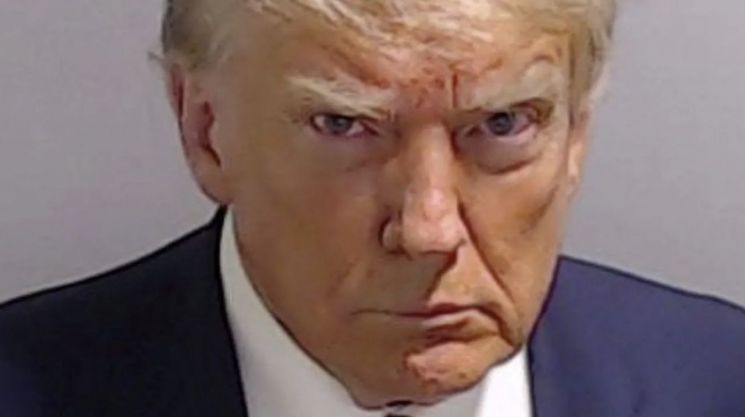
Donald Trump, President of the United States, is reviewing measures to support anti-government protests in Iran. It is reported that all possible options are being considered, ranging from providing satellite internet services to military strikes.
According to the Wall Street Journal (WSJ) on January 11 (local time), the Trump administration will hold a high-level meeting on January 13 to discuss ways to support the anti-government protests in Iran. The agenda includes deploying cyber weapons against Iranian military and civilian facilities, imposing additional sanctions on the Iranian regime, and considering military strikes. Secretary of State Marco Rubio, Secretary of Defense Pete Hegseth, and Chairman of the Joint Chiefs of Staff Dan Cain are expected to attend the meeting.
However, the WSJ reported that President Trump is not expected to make a final decision at the meeting. During a preliminary discussion among senior officials last week, some aides expressed concern that if the United States or Israel supports the Iranian anti-government protests, it could provide the Iranian regime with justification to claim foreign intervention.
One of the options under discussion is sending Starlink satellite internet terminals, provided by SpaceX, which is owned by Tesla CEO Elon Musk, to Iran. As anti-government protests have intensified, Iranian authorities have cut off internet and communications, and deployed Islamic Revolutionary Guard Corps (IRGC) ground forces in some areas to suppress the demonstrations. There are also reports that the death toll in this process may have exceeded 2,000.
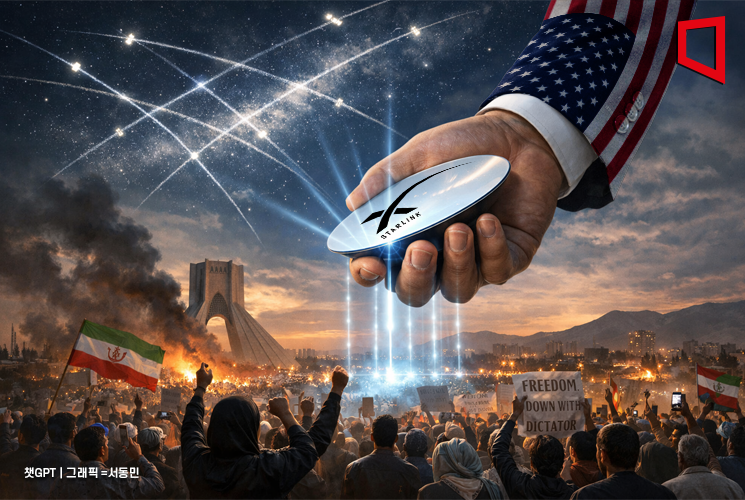
In addition, ahead of the meeting, the White House is said to have officially requested opinions from relevant public agencies regarding military intervention and economic sanctions in response to the Iranian anti-government protests. If the United States were to intervene militarily, it would require redeployment of U.S. forces, as the aircraft carrier Gerald R. Ford was recently moved from the Mediterranean, where it was defending the Middle East and Europe, to Central and South America.
However, it appears unlikely that the Trump administration will choose the military option. Some within the administration believe that a U.S. response could heighten tensions in the Middle East and increase the possibility of Iran attacking Israel.
On the previous day, Mohammad Bagher Ghalibaf, Speaker of the Iranian Parliament, stated at a meeting that if the United States takes military action against Iran, Tehran will consider U.S. and Israeli military bases and facilities in the Middle East as "legitimate targets." This has contributed to the cautious stance.
Meanwhile, the anti-government protests in Iran began on December 27 of last year, when merchants in the capital Tehran protested against the economic crisis, including the collapse of the rial. The protests then spread to university districts and have since expanded into nationwide anti-government demonstrations.
© The Asia Business Daily(www.asiae.co.kr). All rights reserved.
![Clutching a Stolen Dior Bag, Saying "I Hate Being Poor but Real"... The Grotesque Con of a "Human Knockoff" [Slate]](https://cwcontent.asiae.co.kr/asiaresize/183/2026021902243444107_1771435474.jpg)
















