Supreme Court Overturns Lower Court Ruling in Tax Adjustment Lawsuit,
Remands Case for Further Proceedings
The Supreme Court has ruled that even if a foreign patent right is not registered in Korea, royalties for that patented technology can be taxed domestically if the technology is actually used in a domestic manufacturing process.
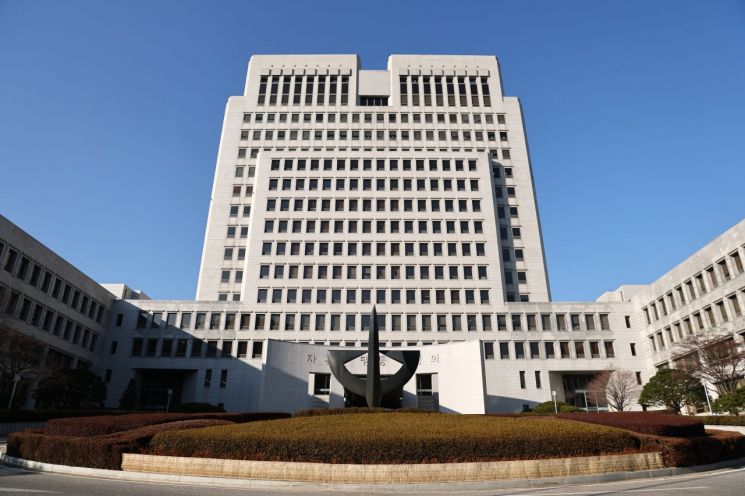
According to the legal community on January 12, the Supreme Court's Second Division (Presiding Justice Oh Kyungmi) overturned the lower court's decision, which had ruled in favor of the plaintiff, American corporation A, in a lawsuit seeking to cancel the refusal of a corporate tax adjustment by the Giheung Tax Office chief, and remanded the case to the Suwon High Court.
The case began in 2017, when Company A entered into 20 patent license agreements with Samsung SDI, a Korean corporation. At that time, only one of the 20 patents was registered in Korea, while the remaining 19 were registered only overseas. Samsung SDI used these patented technologies to design and manufacture batteries and other products in Korea, paid Company A approximately 2.95 million US dollars in royalties, and withheld corporate tax at the source.
In response, Company A filed for a tax adjustment, arguing that royalties for foreign patents not registered in Korea do not constitute domestic-source income under the Korea-US Tax Treaty and thus should be refunded. When the tax office rejected this request, Company A filed a lawsuit.
The courts of both first and second instance ruled in favor of Company A. The court of first instance stated, "According to the Korea-US Tax Treaty, based on the territoriality principle of patent rights, the right to implement a patent is effective only within the territory of the country where the patent is registered," and added, "Under the interpretation of the Korea-US Tax Treaty, patent infringement cannot occur outside the country where the patent is registered, so it is inconceivable to use such a patent or pay for its use."
The court further ruled, "If an American corporation registers a patent overseas but not in Korea, the income received by the American corporation in relation to this cannot be considered compensation for use and thus cannot be regarded as domestic-source income." The second instance court upheld this judgment.
However, the Supreme Court's view differed. The Supreme Court determined that even if a patent is registered only overseas, if the patented technology is actually used in the manufacturing or sales process in Korea, the royalties paid for its use may constitute domestic-source income as compensation for domestic use.
The Supreme Court also stated, "The lower court ruled that the royalties in this case do not constitute domestic-source income solely because they relate to patents not registered in Korea, without examining whether the patented technology was actually used in domestic manufacturing or sales."
The Court added, "This judgment by the lower court misunderstood the legal principles regarding whether royalties for patents not registered in Korea constitute domestic-source income under the Korea-US Tax Treaty, and failed to conduct the necessary factual investigation, thereby affecting the outcome of the ruling," and remanded the case for further proceedings.
© The Asia Business Daily(www.asiae.co.kr). All rights reserved.
![Clutching a Stolen Dior Bag, Saying "I Hate Being Poor but Real"... The Grotesque Con of a "Human Knockoff" [Slate]](https://cwcontent.asiae.co.kr/asiaresize/183/2026021902243444107_1771435474.jpg)
















