Annual Cost Savings of 200 Billion Won Through AI Process Adoption
"Technology is the Key to Cost Competitiveness"
Leveraging Automotive OLED Expertise to Enter the Robotics Market
Considering 'Physical AI' for Production Lines
8.6-Generation
Chuldong Jung, President of LG Display, stated regarding future workforce management plans, "Nothing has been decided yet, but I believe that if necessary, we should adjust our workforce."
After successfully returning to profitability last year and laying the groundwork for management normalization, President Jung made these remarks on January 7 (local time) during a meeting with reporters at the site of "CES 2026," the world’s largest consumer electronics and IT exhibition held in Las Vegas, United States. President Jung expressed his determination not to settle for short-term profits but to establish a stable profit structure that can withstand any market conditions through workforce efficiency and technology-driven cost innovation.
President Jung assessed that more than two years of intensive cost-cutting efforts served as the foundation for the turnaround, but he also emphasized the need for flexible organizational operations in response to rapidly changing global market conditions. This is interpreted as a strategy to secure mid- to long-term competitiveness by optimizing the workforce structure when necessary to achieve technological superiority and strengthen profitability.
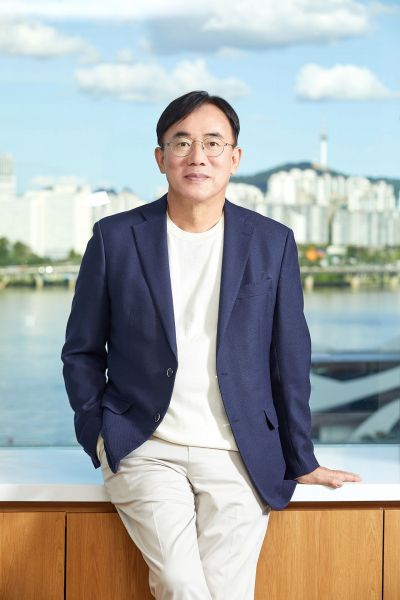
In particular, President Jung identified AX (AI transformation) as the core of a "sustainable profit structure" that is resilient to external environmental changes. Since declaring 2025 as the inaugural year of AX, LG Display has introduced its own AI into the highly complex OLED sector, achieving annual cost savings of over 200 billion won. President Jung stressed, "The introduction of AX and VD (Virtual Design) acts as a catalyst to accelerate innovation from research and development to production," adding, "This year, we will expand the AX culture across all areas."
At this exhibition, LG Display unveiled its OLED for humanoid robots for the first time. President Jung stated, "The display specifications required by robots are similar to those for vehicles," and added, "We will proactively respond to demand in the robotics market with our already secured high-reliability plastic OLED (P-OLED) technology."
President Jung predicted that the emergence of physical AI in robots would present new opportunities for LG Display. He said, "Robot companies are still considering how to implement display interfaces, but we have accumulated know-how in the automotive market," and added, "With P-OLED, which offers design flexibility for curved surfaces and strong durability, we are confident in meeting new customer demand in robotics." He also mentioned plans to consider introducing the advanced robot technologies observed at this exhibition into actual display production processes to enhance smart factory competitiveness.
In particular, President Jung is also reviewing ways to apply the physical AI technology observed at the exhibition to actual production processes. He explained, "We plan to review how current robot technology can be applied and utilized in our display production processes," adding, "Such innovation will ultimately serve as a key driver for enhancing cost competitiveness." Regarding the fierce pursuit by Chinese companies, he remarked, "I truly felt that competition has become extremely intense," and emphasized, "We will secure leading-edge technology that creates clear entry barriers, giving customers compelling reasons to choose LG Display."
On the industry’s key topic of 8.6-generation IT OLED investment, President Jung advocated for a cautious and measured approach. He said, "For investments to be economical, we need to consider the combination of customers and products, but it is not yet the right time to generate profits from 8.6-generation investment," and drew a line by stating, "At the current stage, the existing 6-generation is sufficient to respond to market demand." This reflects a thoroughly pragmatic stance of allocating resources only when there is confidence in actual profitability.
However, he made it clear that investments to prepare for future technologies in a timely manner will not be halted. President Jung plans to proceed without delay with the 1.3 trillion won new technology infrastructure investment decided last year, aiming to deliver visible results next year. He stated, "We are maintaining research and development spending at a certain level and allocating resources as needed at the right timing," and emphasized, "Our ultimate goal is not short-term profits for this year or next year, but to build a sustainable and stable profit structure in the long term."
President Jung concluded, "Ultimately, overwhelming technological prowess is the answer to all problems," and argued, "Rather than innovation disconnected from market demand, we will outpace China’s pursuit and solidify our leadership in the global display market with differentiated competitiveness that delivers tangible benefits to customers."
© The Asia Business Daily(www.asiae.co.kr). All rights reserved.
![Clutching a Stolen Dior Bag, Saying "I Hate Being Poor but Real"... The Grotesque Con of a "Human Knockoff" [Slate]](https://cwcontent.asiae.co.kr/asiaresize/183/2026021902243444107_1771435474.jpg)















