Death Toll Rises to 17 as Hospitalized Victim Dies
Wildlife Descend into Residential Areas Due to Large-Scale Urbanization
An incident occurred in the eastern jungles of India where an elephant caused the deaths of at least 17 people.
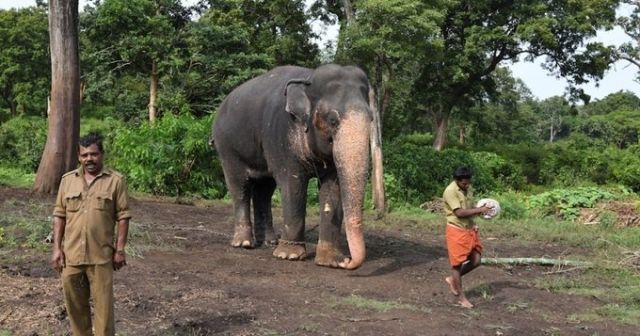
According to local media such as the Times of India on January 9 (local time), authorities in the Indian state of Jharkhand announced that a fully grown male elephant had been roaming the Sarnada forest area for the past seven days, attacking both people and houses. The elephant reportedly launched 12 attacks in the areas of Chaibasa, Kolhan, and the Sarnada forest region.
During these incidents, at least 17 people were killed and 6 were injured. The death toll rose after a woman who was being treated at West Singhbhum Sadar Hospital for injuries sustained in an elephant attack passed away. Notably, in West Singhbhum district alone, 13 people, including members of the same family, lost their lives. Local residents are gripped by fear and remain inside their homes, with growing concerns for the safety of children and the elderly.
Aditya Narayan, the forest officer for the Chaibasa area, explained, "The elephant has been moving aggressively for several days, continuously changing its location, which makes it difficult to track." He added, "It is certain that the elephant is in a state of musth, which has caused its aggression to increase to an extreme level." Musth is a physiological condition that male elephants experience periodically, characterized by a surge in reproductive hormones and heightened aggression.
Narayan stated that wildlife management officials have not yet succeeded in tracking the elephant, but authorities and private organizations across India are joining efforts to locate it. The relevant authorities said that once the elephant is found, it will be tranquilized and relocated to a safe area.
Wildlife experts cite large-scale urbanization, deforestation, encroachment into forests, and the disappearance of forest buffer zones as independent reasons why wild animals are increasingly entering residential areas.
Authorities have urged residents to avoid the forest periphery and remain vigilant. Smita Pankaj, the regional forest officer, said, "At night, the elephant becomes aggressive and attacks houses and residents, while during the day it hides deep in the forest."
Meanwhile, in Jharkhand state, approximately 1,300 people have died from elephant attacks over the past 23 years. Due to the erratic movements of elephants, six pairs of train services in the region have also been canceled. According to the Indian Ministry of Environment, about 80 wild elephants nationwide died in collisions with trains between 2020 and 2025. Recently, in Assam state, a passenger train struck and killed eight elephants in a single incident.
© The Asia Business Daily(www.asiae.co.kr). All rights reserved.
![Clutching a Stolen Dior Bag, Saying "I Hate Being Poor but Real"... The Grotesque Con of a "Human Knockoff" [Slate]](https://cwcontent.asiae.co.kr/asiaresize/183/2026021902243444107_1771435474.jpg)















