Limiting Calories Matters More Than Restricting Eating Hours
No Changes in Metabolic Indicators Without Calorie Reduction
Recently, comedian Hong Hyunhee made headlines for losing 10 kilograms through intermittent fasting after giving birth. However, new research suggests that the key to intermittent fasting lies in reducing calorie intake rather than simply restricting eating hours.
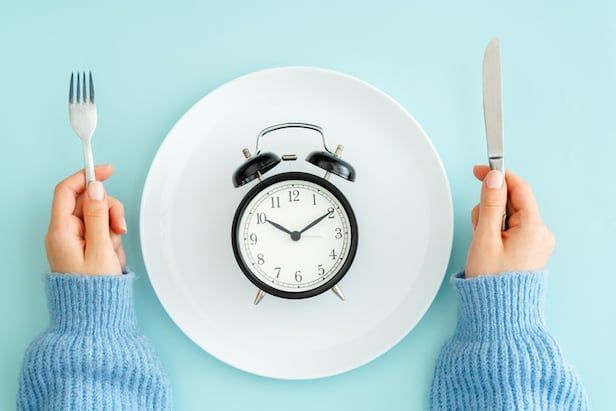
According to the science media outlet Science Daily, a joint research team from the German Institute of Human Nutrition (DIfE) and Charit? Medical University published findings in the international journal Science Translational Medicine that challenge existing beliefs about the effects of intermittent fasting.
First, the researchers examined whether limiting meal times alone-while keeping calorie intake constant-would improve metabolic and cardiovascular health indicators. Their aim was to clarify whether the health benefits attributed to intermittent fasting stem from restricting eating hours or from the natural reduction in calorie intake that often accompanies it.
The team designed the "ChronoFast" experiment. They conducted a crossover trial with 31 overweight or obese women, assigning them to two-week periods of eating either between 8 a.m. and 4 p.m. or between 1 p.m. and 9 p.m. In both groups, total calorie and nutrient intake were kept identical. The researchers then analyzed glucose and fat metabolism, inflammation markers, and changes in the biological clock through blood tests, blood glucose measurements, and monitoring of physical activity.
The results after two weeks were unexpected. There were no significant improvements in key metabolic indicators such as insulin sensitivity, blood glucose, blood lipid levels, or inflammation markers. Professor Olga Ramich, who led the study, explained, "The health improvements observed in previous studies likely resulted not from reduced eating hours, but from the natural decrease in calorie consumption during those periods." She emphasized, "If you want to lose weight or improve your metabolism, you should not only focus on restricting eating times but also pay attention to how much you are eating."
Meanwhile, adjusting meal times did affect the biological clock. Blood cell analysis showed that participants who ate later in the day experienced an average delay of about 40 minutes in their internal circadian rhythm compared to those who ate earlier. In fact, these participants also went to bed and woke up later. Co-researcher Becke Peters noted, "Meal timing acts as an important signal that regulates our body's circadian rhythm, much like light does," adding, "When you eat can influence your daily life rhythm."
© The Asia Business Daily(www.asiae.co.kr). All rights reserved.
![Clutching a Stolen Dior Bag, Saying "I Hate Being Poor but Real"... The Grotesque Con of a "Human Knockoff" [Slate]](https://cwcontent.asiae.co.kr/asiaresize/183/2026021902243444107_1771435474.jpg)
















