Political Insiders Testify:
"A Structure Where the Truth Is Hard to Uncover"
As allegations have surfaced within political circles regarding the receipt of "nomination funds," attention is turning to the persistent malpractice of cash transfers ahead of the June local elections.
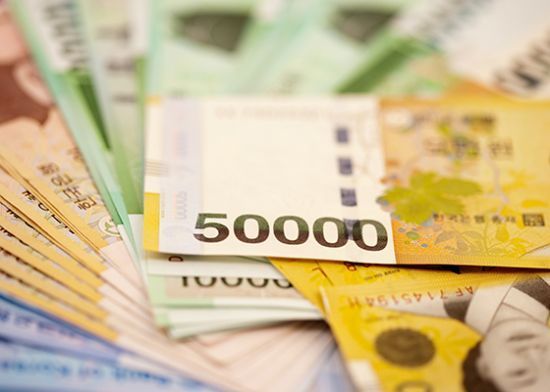
On January 10, Yonhap News reported, based on interviews with former and current local council members, that the practice of delivering money to local district lawmakers or regional committee chairs (party chapter heads) in hopes of securing a nomination still persists. A member of the Seoul District Council, who has been active across both major parties, stated that money is being provided to support the activities of district lawmakers. He said, "Lawmakers use the money for operating their district offices or for party member gatherings, essentially as special activity funds," and added, "Even when party banners are put up, money is collected."
Since the so-called "Oh Se-hoon Law" in 2004 abolished local party chapters and replaced them with regional committees (party chapters), these committees are not allowed to receive donations. If the sitting lawmaker also serves as the regional committee chair (party chapter head), they can raise and use up to 150 million won per year through a sponsorship association. However, those outside the National Assembly cannot establish a sponsorship association except during election campaigns.
As a result, it is reported that the funds needed to manage the district often come from local council members, who typically expect a nomination in return. A former Jeonnam provincial council member from the Democratic Party said, "When holding district events, local council members pool their money together," and added, "In local political circles, there is a saying that 'if you align yourself with the right person, you'll get the nomination, so why go through all the trouble.'"
A Gyeongbuk provincial council member from the People Power Party explained, "Just because you make a donation doesn't mean your nomination is guaranteed, so it's a different concept from buying and selling positions," adding, "While money is openly exchanged, both the giver and the receiver are essentially pointing guns at each other, making it difficult for the truth to come out."
Yonhap News also reported that there are rumors of a "market price" for nomination funds. For example, in Seoul, the going rate is said to be around 50 million won for a district mayor, 30 million won for a city council member, and 20 million won for a district council member.
The price is reportedly higher for positions with a greater chance of winning. For instance, Kim Kyung, a Seoul city council member, stated in a written statement that he handed over 100 million won to Kang Sunwoo's camp, who was then a member of the Democratic Party, during the 2022 local elections. The Gangseo 1st electoral district, where Kim was nominated, is considered a Democratic stronghold.
Money exchanged in political circles is not limited to nomination funds. It is also reported that ▲sponsorship funds ▲proceeds from publication events ▲congratulatory and condolence money can be legally raised. Unlike sponsorship funds or publication event proceeds, which leave records of transfers or sales, congratulatory and condolence money is not subject to disclosure requirements and is typically handled in cash, making it difficult to trace even large sums, according to critics.
© The Asia Business Daily(www.asiae.co.kr). All rights reserved.
![Clutching a Stolen Dior Bag, Saying "I Hate Being Poor but Real"... The Grotesque Con of a "Human Knockoff" [Slate]](https://cwcontent.asiae.co.kr/asiaresize/183/2026021902243444107_1771435474.jpg)
















