October Trade Deficit Shrinks to $29.4 Billion, Down 39% from Previous Month
Stronger Protectionism Cuts Imports, Boosts Exports
In October of last year, the United States' trade deficit fell to its lowest level since mid-2009. This is interpreted as a result of President Donald Trump's protectionist policies, centered on ultra-high tariffs, having a full-fledged impact on trade flows.
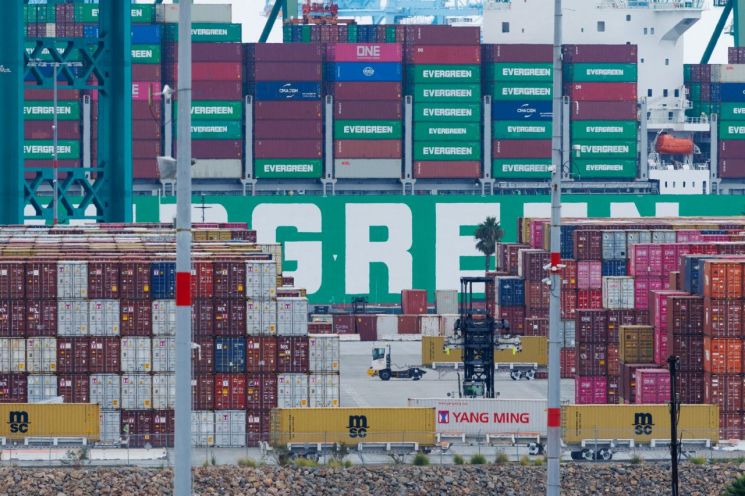
According to the U.S. Department of Commerce on January 8 (local time), the trade deficit in October of last year was $29.4 billion, a 39% decrease from the previous month. This marks the smallest deficit in approximately 16 years, since June 2009 ($27.2 billion deficit), when the United States began to recover from the global financial crisis and recession.
The trade balance improved significantly as exports increased and imports decreased simultaneously. In October, exports rose 2.6% from the previous month to reach $302 billion, while imports fell 3.2% to $331.4 billion.
This reduction in the trade deficit reflects the changed trade flows between the United States and its major trading partners following President Trump's announcement of the so-called "Liberation Day" tariffs on April 2 of last year. The United States raised tariffs by 10 percentage points on all countries worldwide and imposed additional country-specific tariffs. Furthermore, tariffs were introduced on specific items such as automobiles, steel, and aluminum. In the case of South Korea, due to the Korea-U.S. Free Trade Agreement (FTA), most products and automobiles that previously had zero tariffs are now subject to a 15% tariff when exported to the United States. Steel and aluminum are subject to a high tariff rate of 50%.
The United States' trading partners appear to have chosen to increase imports of American products rather than impose retaliatory tariffs, which has supported the increase in U.S. exports. Despite the strengthening of protectionism, demand for American goods and services has remained steady.
Additionally, the Trump administration's decision to ease some tariff policies compared to its initial plans also contributed to the decrease in imports. In particular, imports of pharmaceuticals and non-monetary gold dropped significantly in October. Previously, President Trump had indicated an intention to impose a 100% tariff on pharmaceuticals starting October 1, leading to a temporary surge in related imports in September. However, as the imposition of high tariffs was postponed, imports of these items declined sharply in October.
However, on a cumulative basis since the beginning of the year, the U.S. trade deficit still remains 7.7% higher than during the same period last year.
Chris Rupkey, Chief Economist at FwdBonds, stated that this slowdown in trade imbalance "will provide much-needed momentum to fourth-quarter economic growth, which had been hit by the federal government shutdown (temporary suspension of operations)." He analyzed, "While imports of foreign goods are declining due to tariffs, the United States' trading partners are choosing to purchase more American goods and services rather than harboring resentment." He added, "With productivity supporting growth, forecasts of a U.S. economic recession that have been raised so far are proving to be off the mark."
© The Asia Business Daily(www.asiae.co.kr). All rights reserved.
![Clutching a Stolen Dior Bag, Saying "I Hate Being Poor but Real"... The Grotesque Con of a "Human Knockoff" [Slate]](https://cwcontent.asiae.co.kr/asiaresize/183/2026021902243444107_1771435474.jpg)















