U.S. Considers Exercising Control Over Venezuela's PDVSA
Plans to Lead Increase in Venezuelan Oil Production
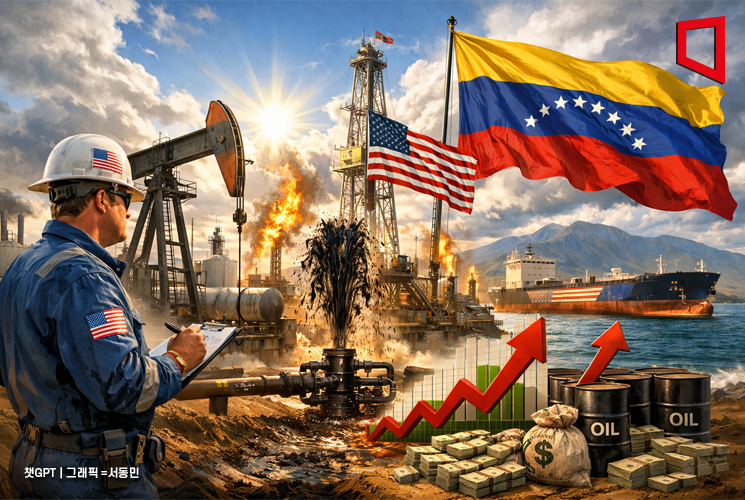
The Trump administration is reviewing measures to take control of Venezuela's oil industry over the coming years. This move is interpreted as an effort to curb China's influence in South America and lower international oil prices.
According to the Wall Street Journal (WSJ) on January 7 (local time), the Trump administration is considering partially exercising control over Venezuela's state-run oil company, PDVSA. The plan includes the United States acquiring and selling most of Venezuela's oil production.
If this plan succeeds, the United States could effectively control most of the oil reserves in the Western Hemisphere. Furthermore, President Trump could lower oil prices to $50 per barrel, as he desires. Currently, international oil prices are trading at around $56 per barrel. President Trump wants to increase oil production to lower prices, but a prolonged period of low prices could negatively impact the U.S. shale gas industry.
White House spokesperson Caroline Levitt stated, "The U.S. energy industry and the people of both the United States and Venezuela would reap enormous benefits if President Trump controls Venezuelan oil," adding, "Previously, it was used to fund the Maduro regime, which is involved in drugs and terrorism."
Officials from the U.S. and Venezuelan governments have discussed, through informal channels, ways for the United States to lead an increase in Venezuela's oil production. During these discussions, it was reportedly mentioned that control over PDVSA could be secured by transporting oil through joint ventures between U.S. energy companies such as Chevron and Venezuela's PDVSA.
The decline in Venezuela's oil production is due to U.S. sanctions. As buyers sharply decreased, there was insufficient storage space for the produced crude oil, prompting Venezuela to respond by cutting production. Currently, China is the largest importer of Venezuelan oil.
Previously, President Trump announced via the social media platform Truth Social that Venezuela would supply the United States with 30 to 50 million barrels of crude oil. On the same day, Energy Secretary Chris Wright also stated at a Goldman Sachs-hosted event that the United States would sell Venezuelan crude oil indefinitely.
The Trump administration's attempt to exercise control over Venezuela's state-run oil company signals its intention to expand the "drill baby drill" policy to South America. President Trump has long regarded increasing oil production and lowering oil prices as economic advantages, making them top priorities throughout his second term.
In particular, it is assessed that concerns among voters about the burden of oil prices ahead of the upcoming midterm elections in November, which have led to a decline in President Trump's approval ratings, have also influenced this move.
© The Asia Business Daily(www.asiae.co.kr). All rights reserved.
![Clutching a Stolen Dior Bag, Saying "I Hate Being Poor but Real"... The Grotesque Con of a "Human Knockoff" [Slate]](https://cwcontent.asiae.co.kr/asiaresize/183/2026021902243444107_1771435474.jpg)















