Abolition of the Security Command Lineage:
From Security Command to Defense Security Support Command to Defense Counterintelligence Command
Key Functions to Be Transferred or Abolished
The Defense Counterintelligence Command, which played a leading role in the December 3 Martial Law, will be disbanded, and its security investigation functions will be transferred to the Ministry of National Defense Investigation Headquarters. In addition, counterintelligence information and security audit functions will be handled by newly established agencies tentatively named the "National Defense Security Intelligence Service" and the "Central Security Audit Team." Functions such as personnel intelligence, background checks, and trend investigations, which have long been criticized, will be abolished.
Hong Hyun-ik, Chairperson of the Special Civil-Military Advisory Committee for Overcoming Insurrection and Designing Future National Defense at the Ministry of National Defense, as well as Head of the Counterintelligence and Security Redesign Subcommittee, held a briefing at the Ministry of National Defense on the afternoon of January 8. He stated, "We hope that these recommendations will fundamentally change the institutional framework, enhancing the professionalism of the military's counterintelligence and security functions, and allowing each agency to focus on its core mission while achieving democratic control and harmony."
According to the recommendations submitted by the subcommittee to the Ministry of National Defense, the Defense Counterintelligence Command will undergo a process of constructive dissolution. If this plan is finalized, the lineage of military counterintelligence agencies-spanning from the Security Command, to the Defense Security Command, to the Defense Security Support Command, and finally to the Defense Counterintelligence Command-will come to an end after about 60 years. Instead, the existing functions of the Defense Counterintelligence Command-namely, security investigations, counterintelligence information, security audits, and trend investigations-will be either transferred to other agencies or abolished.
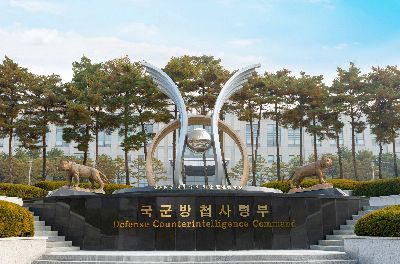
Security Investigations to the Investigation Headquarters... Specialized Agencies for Counterintelligence and Security
First, the security investigation function will be transferred to the Ministry of National Defense Investigation Headquarters to address concerns about the concentration of information and investigative powers. Chairperson Hong explained, "In most advanced countries, counterintelligence information agencies typically do not possess investigative authority."
Functions such as counterintelligence information will be transferred to a newly established specialized agency, tentatively named the National Defense Security Intelligence Service. This agency will be responsible for activities related to counterintelligence, the defense industry, and counterterrorism, as well as missions involving defense industry and cybersecurity. The head of the National Defense Security Intelligence Service will be considered for appointment from civilian personnel, such as government officials, to ensure civilian control, and the organization will be downsized to an appropriate level, taking into account the transfer and abolition of other functions.
Functions such as central security audits, background checks, and support for vetting general officers will be transferred to a newly established Central Security Audit Team (tentative name). In addition, general security audits at the corps level and below will be transferred to each branch of the military. Support for vetting general officers will be limited to basic data collection by the Central Security Audit Team, under the direction and control of the Ministry of National Defense Inspector General's Office. Chairperson Hong added, "The names, personnel, and organizational scale of the newly established agencies will be further detailed as the Ministry of National Defense proceeds with the restructuring of the Defense Counterintelligence Command."
The subcommittee also recommended establishing a "Security Investigation Council" to facilitate cooperation and information sharing among the three agencies, as the existing security investigation, counterintelligence information, and security audit functions of the Defense Counterintelligence Command will be distributed among them. Functions that have been criticized in the past, such as personnel intelligence, background checks, and trend investigations, are to be completely abolished.
Strengthening the Foundation for Democratic Oversight of New Counterintelligence and Security Agencies
The subcommittee also recommended strengthening both internal and external oversight mechanisms to ensure democratic control over the newly established National Defense Security Intelligence Service and Central Security Audit Team.
Specifically, a new department-level position, tentatively named the Director of Information Security Policy, will be established within the Ministry of National Defense to oversee and direct the work of the National Defense Security Intelligence Service, the Central Security Audit Team, and the Defense Intelligence Headquarters, as well as to supervise the development of military information and security policies. Furthermore, the heads of inspection for the new agencies will be appointed from civilian or external personnel to ensure independence and neutrality.
As an external oversight measure, the basic operational guidelines for the National Defense Security Intelligence Service will be reported to the National Assembly, and regular work reports will be made mandatory. In addition, a Compliance Audit Committee composed of civilian experts will be established within the National Defense Security Intelligence Service to verify legal compliance, thereby enhancing transparency and accountability.
The subcommittee further recommended that the legal basis for the establishment of these new units be enacted to ensure sustained momentum for counterintelligence reform, and that measures be developed to minimize side effects from personnel reallocation, along with other necessary actions.
Chairperson Hong stated, "Reforming the Defense Counterintelligence Command must strengthen the core counterintelligence and security functions essential to national security, while also ensuring democratic oversight and constitutional values. We hope these recommendations will fundamentally change the institutional framework, enhance the professionalism of the military's counterintelligence and security functions, and allow each agency to focus on its core mission while achieving democratic control and harmony."
Meanwhile, based on these recommendations, the Ministry of National Defense plans to prepare a detailed organizational plan and, aiming for completion within the year, will proceed step by step with legal and institutional reforms and unit planning for the restructuring of the Defense Counterintelligence Command.
© The Asia Business Daily(www.asiae.co.kr). All rights reserved.
![Clutching a Stolen Dior Bag, Saying "I Hate Being Poor but Real"... The Grotesque Con of a "Human Knockoff" [Slate]](https://cwcontent.asiae.co.kr/asiaresize/183/2026021902243444107_1771435474.jpg)















