Bilateral Ties Deteriorated After Huawei Executive's Arrest
Canadian Prime Minister Visits China for the First Time in Eight Years
Reuters, citing the Canadian Prime Minister's Office, reported that Prime Minister Mark Carney of Canada will visit China from January 13 to 17.
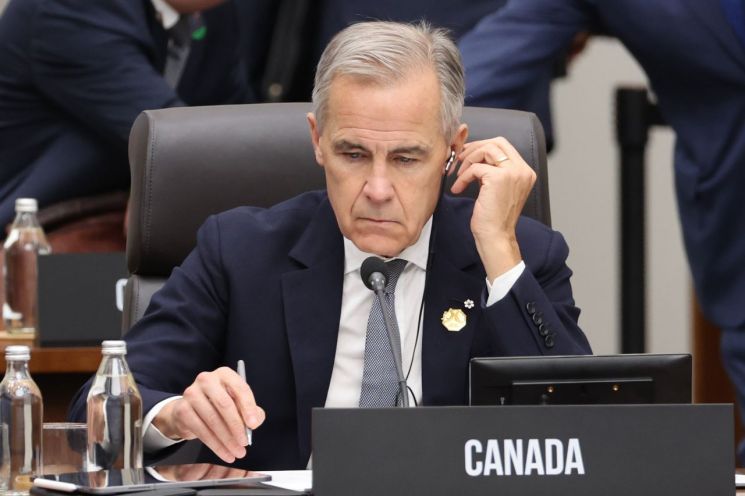
This will be the first official visit to China by a Canadian prime minister in over eight years, since former Prime Minister Justin Trudeau visited in 2017.
Previously, in November of last year, Prime Minister Carney met with Chinese President Xi Jinping on the sidelines of the Asia-Pacific Economic Cooperation (APEC) summit in Gyeongju, where he expressed his intention to restore relations. It was also the first official meeting between the leaders of the two countries in eight years.
During that summit, President Xi invited Prime Minister Carney to visit China, and Carney accepted the invitation, stating that he "looks forward to constructive and pragmatic dialogue."
Bilateral relations deteriorated after Canada, at the request of the United States during the first Trump administration in 2018, arrested Meng Wanzhou, Vice Chairwoman of Huawei, China's largest telecommunications equipment company, while she was staying in Vancouver. In retaliation, China detained two Canadian citizens on espionage charges.
In 2023, allegations emerged that China had surveilled Chinese-Canadian politicians with anti-China views. In response, Canada expelled Chinese diplomats stationed in Canada, and China retaliated by expelling Canadian diplomats, escalating tensions further.
Additionally, in line with measures taken by the United States and the European Union, Canada imposed a 100% tariff on Chinese electric vehicles and a 25% tariff on Chinese steel and aluminum starting in October 2024. In response, in March of last year, China announced it would impose retaliatory tariffs of 25% to 100% on Canadian agricultural and livestock products such as canola oil.
However, after the launch of the second Trump administration, Canada has sought to restore relations with China to reduce its dependence on the United States, as it faces increased tariff pressure from the U.S.
Analysts suggest that, as a result of the Trump administration's raid on Venezuela, Canada could suffer the greatest economic impact. This is because Canadian heavy crude oil, which has accounted for a significant portion of U.S. oil imports, is now in direct competition with Venezuelan ultra-light crude oil. If Venezuelan crude oil enters the U.S. market in earnest, there are concerns that the price and market share of Canadian oil exports to the United States could decline significantly.
© The Asia Business Daily(www.asiae.co.kr). All rights reserved.
![Clutching a Stolen Dior Bag, Saying "I Hate Being Poor but Real"... The Grotesque Con of a "Human Knockoff" [Slate]](https://cwcontent.asiae.co.kr/asiaresize/183/2026021902243444107_1771435474.jpg)











