Cox: "New Car Sales Expected to Reach 15.8 Million Units This Year"
Forecasted Decrease of 500,000 Units from Last Year’s 16.3 Million
Driven by Reduced Spending Among Low-Income Consumers and End of EV Subsidies
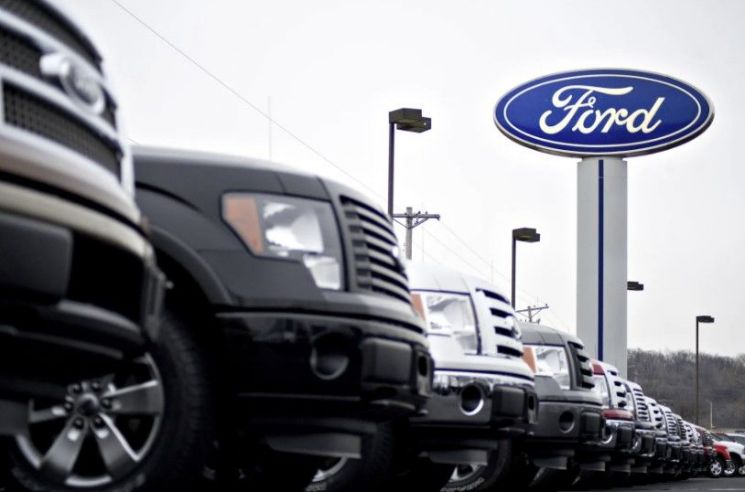
This year, U.S. new car sales are projected to decline for the first time in four years, due to reduced spending by low-income consumers and a sharp slowdown in demand for electric vehicles.
On January 6 (local time), the Financial Times (FT), citing U.S. market research firm Cox Automotive, reported that new car sales in the United States are expected to reach 15.8 million units this year, a decrease of 500,000 units compared to last year’s 16.3 million units. Edmunds, a U.S. automotive media outlet, also forecasted that new car sales will slightly decrease to 16 million units this year, down from 16.3 million units last year.
Recently released new car sales figures show mixed results among automakers. In the fourth quarter of last year, Ford’s U.S. sales increased by 2.7% compared to the same period the previous year. In contrast, General Motors (GM) and Hyundai Motor saw decreases of 7% and 1%, respectively.
Automotive industry executives have warned that consumers will face greater financial burdens due to the Trump administration’s tariff policies and the expiration of electric vehicle tax credits last year.
Reflecting these concerns, Chung Euisun, Chairman of Hyundai Motor Group, stated in his New Year’s address, “This year will be one in which the risk factors we have long feared will become reality.” David Christ, Head of Sales at Toyota Motor North America, also commented, “Not only our prices, but those of our competitors will rise as well.”
Amid rising tariffs and the impending end of electric vehicle subsidies, new car sales continued to increase through the third quarter of last year. Cox Automotive projects that total electric vehicle sales will rise from 16 million units in 2024 to 16.3 million units in 2025.
However, analysts note that a ‘K-shaped’ trend is emerging beneath the headline sales numbers. Since COVID-19, rising car prices have pushed out customers who previously purchased lower-priced models from the auto market.
Erin Keating, Senior Researcher at Cox Automotive, pointed out, “As automakers faced severe supply shortages and supply chain disruptions, the average price of new cars in the U.S. soared by an annual average of 9.3% from November 2020 to November 2022.” This contrasts with the 3.2% average annual increase over the previous eight years.
Although the annual increase has since slowed to 1%, prices have not returned to pre-pandemic levels. Low-income consumers, in particular, are struggling due to a sharp rise in other car-related expenses. Over the past five years, maintenance and repair costs have risen by an average of 8.7% per year, while auto insurance premiums have increased by 13%. These figures are higher than the 5% average annual increase in the consumer price index over the same period.
Keating further noted, “Those who can afford a new car are buying larger and more luxurious vehicles as they wish, while others are not switching to smaller cars but are instead leaving the new car market altogether, opting for used cars or continuing to drive their existing vehicles.”
As a result, automakers are facing a dilemma over whether to focus production on small cars for low-income consumers or on high-priced models for high-income buyers.
Automakers have not yet reflected tariff costs in new car prices, but there is a possibility they may pass on costs through increased shipping fees or by reintroducing equipment options. Jessica Caldwell, Head of Market Analysis at Edmunds, analyzed, “A drop in interest rates will ease monthly payment burdens, and with 400,000 customers whose lease contracts are expiring expected to return to the market, various factors are likely to support new car demand in 2026.”
Tyson Jominy, Senior Vice President of Data & Analytics at JD Power, stated, “There is an option to boost commercial vehicle sales by offering aggressive incentives, but since this could lower profit margins, automakers will need to find ways to keep prices down while maintaining profitability.”
© The Asia Business Daily(www.asiae.co.kr). All rights reserved.
![Clutching a Stolen Dior Bag, Saying "I Hate Being Poor but Real"... The Grotesque Con of a "Human Knockoff" [Slate]](https://cwcontent.asiae.co.kr/asiaresize/183/2026021902243444107_1771435474.jpg)
















