2026 Budget and Fund Management Execution Guidelines
Subsidy Projects to Exclude Habitual Wage-Delinquent Employers
This year, the budget execution guidelines will be restructured with a focus on expanding the autonomy of local governments in the implementation of national subsidy projects, protecting vulnerable workers, and strengthening the accountability of fiscal management by the government and public institutions.
On January 5, the Ministry of Planning and Budget announced that it had notified all ministries of the "2026 Budget and Fund Management Execution Guidelines" reflecting these changes. The execution guidelines serve as the standard norms that budget execution officials in each ministry must follow, and are used as criteria to assess the appropriateness of budget execution during audits. Through this revision, the government aims to ease the rigidity in the execution of national subsidy projects, strengthen incentives for budget savings, and enhance fiscal responsibility.
First, the autonomy of local governments in the execution of national subsidy projects will be significantly expanded. If a local government saves on the budget for a national subsidy project through its own efforts, it will be allowed to use the remaining funds in a broader range of areas than before. Previously, remaining balances of less than 500,000 won could only be used for other projects within the same sector, but starting next year, this threshold will be raised to less than 5 million won.
The scope of permissible use will also be expanded from the "same sector" to the "same field" within the National Fiscal Management Plan, and the remaining funds can also be used for temporary new projects that are completed within a single fiscal year. Through these changes, the government expects to increase incentives for local governments to save on national subsidy project budgets and to enable more flexible execution tailored to on-site conditions.
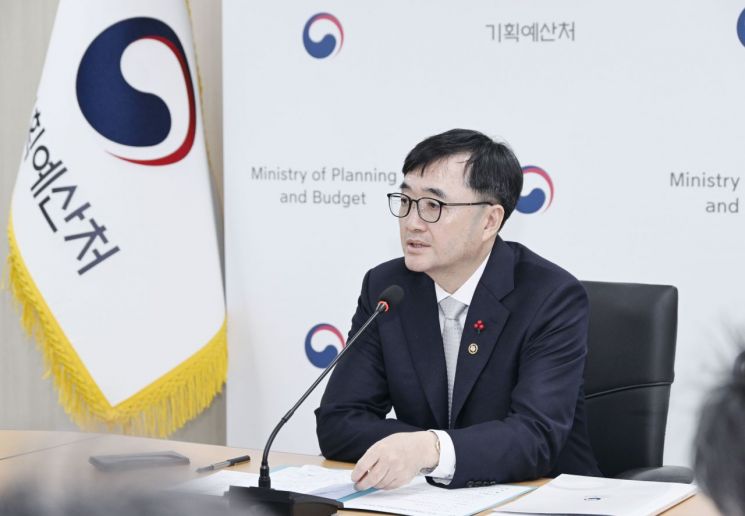 Deputy Minister Ki-Geun Lim Presides Over Expanded Executive Meeting
(Seoul=Yonhap News) Ki-Geun Lim, Deputy Minister of the Ministry of Planning and Budget, is presiding over the "Expanded Executive Meeting" held at the temporary office building of KT&G on January 2, 2026. [Provided by the Ministry of Planning and Budget. Resale and database prohibited]
Photo by Yonhap News
New measures will also be introduced to protect vulnerable workers. The guidelines will specify the exclusion of habitual wage-delinquent employers from participating in various subsidy projects and restrict their eligibility for subsidies. A habitual wage-delinquent employer is defined as one who has delayed three months or more of wages within the past year, or has been delinquent five or more times with a total overdue amount of at least 30 million won. In addition, improvements have been made to ensure that junior employees are not unfairly discriminated against in the payment of relocation expenses or the allocation of official residences due to remote assignments or transfers.
The accountability and effectiveness of fiscal execution by the government and public institutions will also be strengthened. Under the reformed duty officer system for national public officials, the budget saved from duty allowances will, in principle, be treated as unused funds, and exceptions will only be made for cases directly related to the "introduction of the Artificial Intelligence (AI) Duty Civil Complaint System" and similar reforms. The management of settlement surpluses at government-funded institutions will also be tightened, requiring institutions with insufficient retirement benefit reserves to allocate at least 80% of their settlement surplus to retirement benefit reserves, up from the previous 70%.
In addition, the procedures for handling remaining balances of investment and project contributions will be clarified to enhance transparency and efficiency. If the policy objectives have been achieved or if changes in project conditions reduce the need for execution, the use of investment funds must be discussed with the Ministry of Planning and Budget. The handling of remaining balances and interest income from non-R&D project contributions must also undergo prior consultation. For revenue-substituting expenses, if excess revenue occurs, additional expenditures will only be permitted if they are directly linked to the revenue and align with the project’s objectives, with strengthened management standards.
The government stated, "Through continuous improvement of execution guidelines, we will minimize inefficiencies in the budget execution process and ensure that limited resources are used in line with policy objectives."
© The Asia Business Daily(www.asiae.co.kr). All rights reserved.
![Clutching a Stolen Dior Bag, Saying "I Hate Being Poor but Real"... The Grotesque Con of a "Human Knockoff" [Slate]](https://cwcontent.asiae.co.kr/asiaresize/183/2026021902243444107_1771435474.jpg)















