Gwangju City Revises Total Pollution Load Allocation Plan for Han River Basin
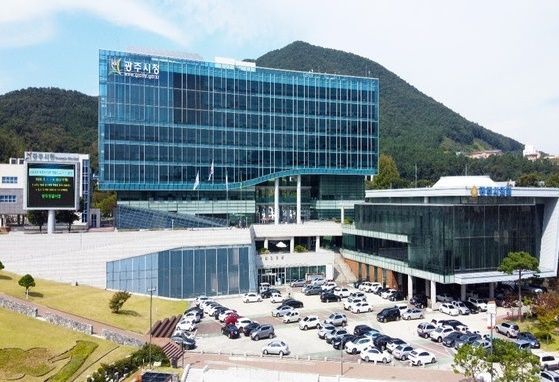
Gwangju City in Gyeonggi Province announced on January 5 that it will revise and implement the allocation plan for regional development load under the Total Water Pollution Load Management System, in order to preserve water quality in the Han River basin and promote sustainable regional development.
This measure reflects the results of the 2024 performance evaluation of the "Han River Basin Total Pollution Load Management Implementation Plan." According to Gwangju City, all unit watersheds complied with their allocated loads, but the possibility of increased total phosphorus (T-P) non-point source pollution due to small-scale regional development was identified in some unit watersheds. Therefore, the city decided to adjust the allocation standards to ensure long-term water quality stability.
The main points of the revised allocation plan include: ▲ easing the allocation standards for regional development load in unit watersheds with low development demand; and ▲ strengthening the total phosphorus (T-P) point source allocation standards for projects requiring the installation of individual sewage treatment facilities.
Specifically, for projects requiring the installation of individual sewage treatment facilities in the Gyeongan B1 and Han River F6, F7, and F8 unit watersheds, the allocation standard has been adjusted from the previous 40% (based on BOD point standard) of the regional development load consumption to 50%. This change takes into account that half of the 10-year planning period has elapsed and that actual development demand remains low.
In addition, to prevent exceeding the allocated load in the final year, the allocation standard for total phosphorus (T-P) point source pollution for projects requiring the installation of individual sewage treatment facilities has been strengthened from the previous 0.030 kg/day to 0.020 kg/day, thereby enhancing the safety of water quality management.
The city expects that this revision of the allocation plan will maintain a balance between development and environmental conservation, minimize inconvenience to citizens, and enable the stable achievement of the policy goal of preserving the Han River's water source quality.
A Gwangju City official stated, "The purpose of this revision is not to simply strengthen or relax regulations, but to make reasonable adjustments that consider both actual development conditions and long-term water quality goals. We will continue to do our utmost to preserve the water quality of the Han River basin through the ongoing implementation of the total pollution load management system."
© The Asia Business Daily(www.asiae.co.kr). All rights reserved.
![Clutching a Stolen Dior Bag, Saying "I Hate Being Poor but Real"... The Grotesque Con of a "Human Knockoff" [Slate]](https://cwcontent.asiae.co.kr/asiaresize/183/2026021902243444107_1771435474.jpg)
















