Operation to Capture Maduro Expected to Significantly Impact Energy Security
"Falling Gasoline Prices Could Influence Expectations for Additional Fed Rate Cuts"
The US operation to capture Venezuelan President Nicolas Maduro is ultimately aimed at strengthening "energy security" over the long term, according to analysis from the securities industry.
"US Refiners Secure Direct Supply Lines Through Facility Investment and Ownership"
On January 5, Kwon Heejin, a researcher at KB Securities, stated, "While the official justification for this military operation is the eradication of drugs and terrorism, it clearly sends a message that the US intends to solidify its energy security through American oil companies."
As of last year, Venezuela held the world's largest crude oil reserves (20.2%), but due to sanctions, its production accounts for only about 1% of the global total. Kwon explained, "Energy production facilities in Venezuela are in such poor condition that they would need to be completely rebuilt. Therefore, even if Venezuela comes under US influence, the immediate impact on crude oil production will be limited."
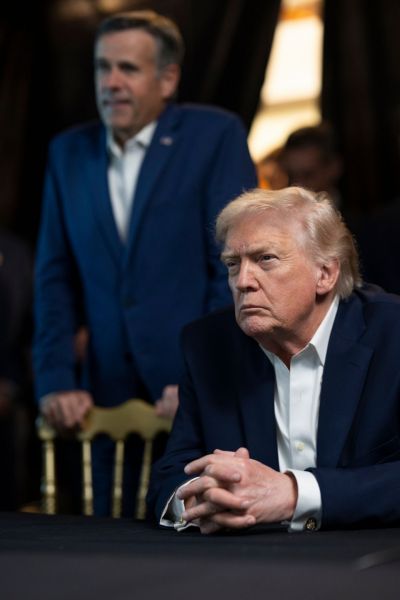 US President Donald Trump is monitoring the progress of the "Resolute Determination" operation to arrest Venezuelan President Nicolas Maduro on the 3rd (local time) together with his aides. Photo by AP
However, from a long-term perspective, the implications are significant. Kwon noted, "Venezuela has abundant reserves and is geographically close, and US refineries are specialized in processing the heavy crude oil mainly found in Venezuela. As President Donald Trump mentioned, if US refiners directly invest in Venezuela and own facilities, they can secure direct supply lines."
"Also Serves as a Check on China, Which Is Close to the Maduro Regime"
This operation also serves to check China, which is Venezuela's largest creditor and a major importer of cheap crude oil. China has officially expressed support for the Maduro regime and maintained close relations.
Kwon stated, "Venezuela holds the largest share among single countries in the China Development Bank's oil-backed loan program. As China's influence over Venezuela becomes more limited, it will become even more difficult for China to import cheap crude oil and to recover the remaining principal of its oil-backed loans, which amounts to about $17 billion to $19 billion."
The impact on inflation is also noteworthy. With the midterm elections approaching this year and the issue of consumer prices being a burden for President Trump, gaining control over Venezuela could be used as a card to strengthen expectations for energy price stability. Kwon analyzed, "If international oil prices fall by 5%, the US consumer price inflation rate could decrease by about 0.1 to 0.2 percentage points. If gasoline prices drop further, it would support expectations for additional rate cuts by the Federal Reserve this year."
He added, "In contrast, in Korea, due to the rigidity of public utility charges, the impact of a similar drop in oil prices on inflation is smaller than in the US. Domestic consumer prices are estimated to fall by less than 0.1 percentage points."
© The Asia Business Daily(www.asiae.co.kr). All rights reserved.
![Clutching a Stolen Dior Bag, Saying "I Hate Being Poor but Real"... The Grotesque Con of a "Human Knockoff" [Slate]](https://cwcontent.asiae.co.kr/asiaresize/183/2026021902243444107_1771435474.jpg)











