"Verification of Disaster Response Manual Implementation"
Busan City has completed its inspection of disaster response systems for super high-rise and underground-connected buildings.
On January 2, Busan City (Mayor Park Hyungjoon) announced that it had finished a comprehensive inspection of the disaster response support system for super high-rise and underground-connected buildings in the second half of 2025. The purpose of this inspection was to verify whether disaster response manuals are being properly implemented on-site.
The inspection targeted super high-rise buildings with 50 or more floors or a height of at least 200 meters, as well as underground-connected complex buildings with 11 or more floors or a capacity of at least 5,000 people that are connected to underground stations or underground shopping centers.
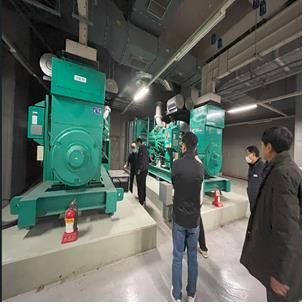
The city conducted the inspections by dividing into joint inspection teams composed of city, district, and private sector experts, and district self-inspection teams. The joint inspection team conducted sample inspections of eight buildings at four sites from December 2 to 3, while the district self-inspection teams inspected the remaining 71 buildings at 51 sites from November 10 to December 27.
On-site, the inspections focused on whether disaster prevention and damage mitigation plans were established and implemented, whether chief disaster managers were designated and had completed training, the formation and operation of initial response teams, the installation status of integrated disaster control rooms, and the adequacy of evacuation safety zone operations.
As a result of the joint inspections, cases of insufficient initial response team training and inadequate disaster and terrorism response drills were identified. This led to 14 on-site consultations and 4 corrective actions. The corrective actions included insufficient initial response team training, inadequate disaster and terrorism drills, repairs to the seismograph in the integrated situation room, and repairs to the heliporter stair railings. In this process, private sector fire safety engineers participated to provide professional consulting as well.
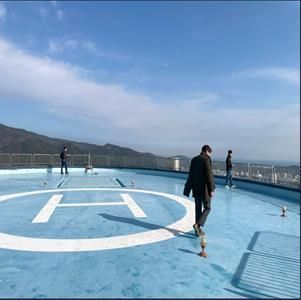
During the district self-inspection team inspections, 37 on-site consultations, 2 administrative orders, and 12 corrective actions were issued. The administrative orders were related to insufficient water supply and drainage facilities in disaster control rooms. The corrective actions addressed issues such as lack of initial response team training, insufficient education and public awareness, poor management of evacuation routes, and the need for additional detector installations.
Currently, there are a total of 79 relevant facilities in Busan, including 43 super high-rise buildings and 36 underground-connected complex buildings. Among these, Haeundae District has the highest concentration of such facilities.
The city plans to continue regular inspections and post-management in order to preemptively eliminate risk factors and strengthen disaster response capabilities, thereby ensuring the safety of its citizens.
Kim Gihwan, Director of the Citizens’ Safety Office, emphasized, "Safety is our top priority and cannot be compromised," adding, "We will continue to strengthen disaster response systems for super high-rise and underground-connected buildings to create an environment where citizens can feel secure."
© The Asia Business Daily(www.asiae.co.kr). All rights reserved.
![Clutching a Stolen Dior Bag, Saying "I Hate Being Poor but Real"... The Grotesque Con of a "Human Knockoff" [Slate]](https://cwcontent.asiae.co.kr/asiaresize/183/2026021902243444107_1771435474.jpg)

















