Madagascar Produces 20 Tons Annually
Most Gold Smuggled Abroad, Causing Severe Loss of National Wealth
Central Banks Strengthen Centralized Purchase Programs
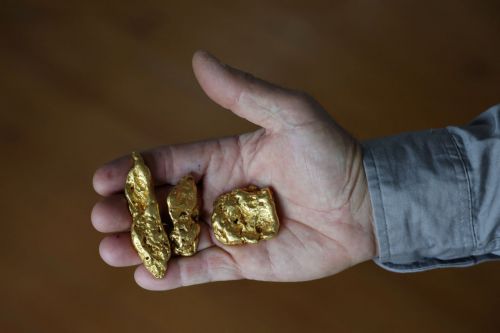
Last year, as international gold prices soared to unprecedented heights, illegal mining and smuggling crimes surged as people sought to move gold overseas, prompting central banks in gold-producing countries to devise countermeasures.
On January 1 (local time), the Financial Times (FT) reported that central banks in countries with gold mines, such as Madagascar, Ghana, and Ecuador, are expanding centralized domestic gold purchase programs.
In Madagascar, about 20 tons of gold are produced annually. This amounts to $2.8 billion (approximately 4 trillion won) at current value, but most of it is illegally exported. It has been confirmed that these smuggling organizations even use airplanes and helicopters to commit their crimes.
In response, the Central Bank of Madagascar has expanded its gold purchase program targeting small-scale gold mines nationwide, with the goal of increasing its gold reserves from 1 ton to 4 tons. The purchased gold is either sent abroad for refining and converted into foreign currency, or used to increase the country's gold reserves.
Aivo Andrianarivelo, Governor of the Central Bank of Madagascar, stated, "The goal is to ensure that gold benefits Madagascar and to legalize the gold industry."
The Central Bank of Ghana established a central gold purchasing organization last year. The Central Bank of Ecuador is expanding its domestic gold purchase program, which began in 2016, and plans to open a new exchange in a southern village this month.
Diego Patricio Tapia Encalada, Head of Investments at the Central Bank of Ecuador, said that the program offers attractive purchase prices for quick transactions, emphasizing, "Price is important as an incentive to prevent gold mining companies from using other channels."
Environmental pollution, such as deforestation and water contamination caused by reckless mining, is also a significant problem. In Ghana, mercury emissions and water pollution from small-scale mining have escalated into a political crisis. In fact, it is reported that more than 60% of Ghana’s waterways have been contaminated due to gold mining activities.
David Tait, CEO of the World Gold Council (WGC), said, "Small-scale miners produce as much as 1,000 tons of gold annually, and a significant portion is traded illegally. No one knows exactly how much gold ends up in the hands of criminals, but even if it's just 50%, that's an enormous amount." He further warned, "If gold prices ever reach $10,000, it could be catastrophic."
However, the gold purchase system of central banks is not simple. There are significant challenges in verifying whether gold ore has been mined legally and traded legitimately, and whether it is associated with conflict or crime.
Marc Ummel, Head of Commodities at the NGO Swissaid, pointed out, "We have witnessed many problems and failures with such programs," adding, "Most due diligence and tracking systems are inadequate."
Last year, international gold prices rose by more than 60% from the previous year, surpassing $4,300 per ounce. This year, global investment banks and prominent investors forecast a price range of $5,000 to $5,200 per ounce. JP Morgan projects that the average gold price will reach $5,055 in the fourth quarter of 2026 and rise to $5,400 in 2027.
© The Asia Business Daily(www.asiae.co.kr). All rights reserved.
![Clutching a Stolen Dior Bag, Saying "I Hate Being Poor but Real"... The Grotesque Con of a "Human Knockoff" [Slate]](https://cwcontent.asiae.co.kr/asiaresize/183/2026021902243444107_1771435474.jpg)















