Suppressing Bone Formation Through Gene Editing... No Difference in Taste
Commercialization and Regulatory Framework Remain Future Challenges
Chinese researchers have announced the development of a new breed of silver crucian carp with significantly reduced intramuscular fine bones using gene editing technology.
According to recent reports by the South China Morning Post (SCMP) and Xinhua News Agency, a joint research team led by Professor Gui Jianfang of the Institute of Hydrobiology at the Chinese Academy of Sciences and Professor Gao Zexia of Huazhong Agricultural University has developed a new silver crucian carp breed called “Zhongke No. 6.”
On December 22, the researchers held a press conference in Beijing, explaining that this breed offers three advantages simultaneously: high yield, disease resistance, and improved feed efficiency.
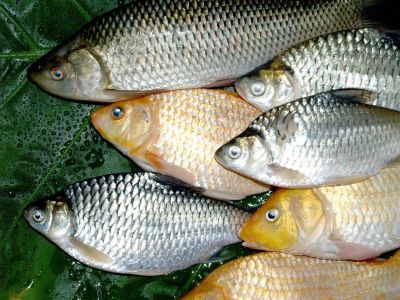
What is particularly noteworthy is that this breed has almost no fine bones densely embedded between the muscles. Crucian carp is widely used as a premium ingredient in China due to its tender flesh and high nutritional value. However, concerns have persisted because it contains more than 80 fine bones, making it difficult to prepare and posing a choking risk, especially for the elderly and children. As a result, its use has been limited across the food service industry.
The research team applied gene-editing technology to identify and edit the regulatory gene “runx2b,” which is involved in bone formation, thereby significantly reducing the development of fine bones. They also emphasized that the breed was designed to grow in a sterile state, effectively preventing its spread into natural ecosystems.
Experiments conducted in various environments, including pond farming, cage aquaculture, and indoor factory farming, showed that under the same conditions, there was no significant difference in taste between the boneless silver crucian carp and conventional crucian carp.
This research is the result of the “Precision Seed Design and Development” project, which the Chinese Academy of Sciences has been pursuing for six years. Xinhua News Agency evaluated this achievement as a transition of agricultural breeding from “leaving reproduction to chance” to a stage of precise design that allows for prediction and programming. Li Jiayang, the overall project supervisor and member of the Chinese Academy of Sciences, stated, “The goal is to create China’s core seeds that will support national food security and agricultural modernization.”
However, it is expected that it will take more time before “Zhongke No. 6” appears on dining tables. Currently, it remains a candidate new breed at the laboratory stage, and both consumer acceptance and regulatory issues regarding gene-edited fish remain as variables. Professor Gao stated, “Strict breeding evaluations must precede commercialization, and full-scale discussions can only begin after national regulations for new gene-edited breeds are established and implemented.”
© The Asia Business Daily(www.asiae.co.kr). All rights reserved.
![Clutching a Stolen Dior Bag, Saying "I Hate Being Poor but Real"... The Grotesque Con of a "Human Knockoff" [Slate]](https://cwcontent.asiae.co.kr/asiaresize/183/2026021902243444107_1771435474.jpg)















