TSMC, the world’s largest foundry (semiconductor contract manufacturing) company based in Taiwan, announced that it began mass production of cutting-edge 2nm (1nm = one billionth of a meter) process products in the fourth quarter of this year.
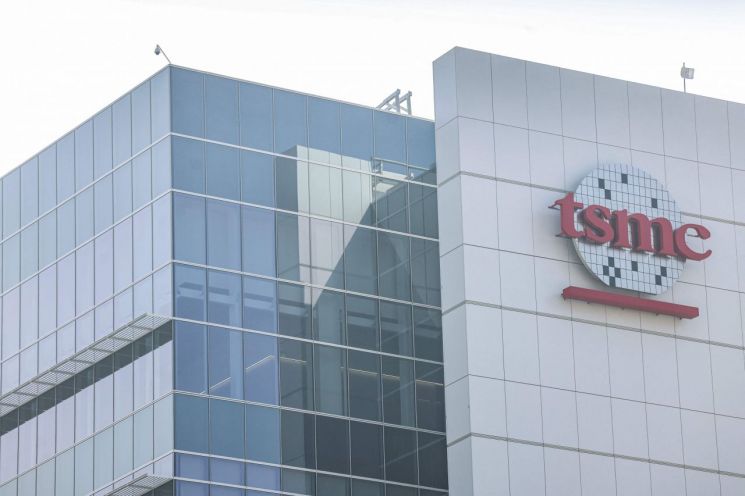
According to Taiwanese media outlets such as the United Daily News on December 31, TSMC revealed on its official website the previous day that it is currently mass-producing 2nm (N2) products at Fab 22, its semiconductor manufacturing plant in the Nanzi Science Park in southern Kaohsiung.
Nanometer refers to the width of semiconductor circuit lines. The narrower the line width, the lower the power consumption and the faster the processing speed.
TSMC explained that it achieved groundbreaking improvements in performance and power consumption in the N2 process by utilizing first-generation Gate-All-Around (GAA) nanosheet transistor technology.
To enhance N2 performance, TSMC developed technologies such as Redistribution Layer (RDL) for forming metal wires and insulating layers for electrical connections on semiconductor chips, as well as Super High-Performance Metal-Insulator-Metal (SHPMIM) capacitors. These innovations reduced surface resistance (Rs) and contact resistance (Rc) by 50% each. The company stated that these technological advancements enable more stable power supply, superior computational capabilities, and overall optimization of energy efficiency.
Sources reported that TSMC’s N2 process marks the first time the company has adopted GAA nanosheet transistor technology, a breakthrough from the previous FinFET transistor technology. This allows for further reduction in transistor size and a significant increase in density, without sacrificing performance or power efficiency.
Another source noted that while TSMC publicly announced the start of N2 process mass production at Fab 22 in the south, it actually began mass production earlier at the first plant of Fab 20 in the Baoshan area of the Hsinchu Science Park in the north.
According to this source, TSMC is considering expanding the monthly production capacity of Fab 22 and Fab 20, which currently stands at around 50,000 units, to over 100,000 units by the end of next year and over 200,000 units by 2027. Initial customers include Apple, AMD, and Intel, with Qualcomm, MediaTek, and Nvidia expected to adopt the technology in the future.
© The Asia Business Daily(www.asiae.co.kr). All rights reserved.
![Clutching a Stolen Dior Bag, Saying "I Hate Being Poor but Real"... The Grotesque Con of a "Human Knockoff" [Slate]](https://cwcontent.asiae.co.kr/asiaresize/183/2026021902243444107_1771435474.jpg)
















