First Arrest and Removal of a Sitting President
Lee Jaemyung Elected with Record-Breaking Votes
Decision to Abolish the Supreme Prosecutors' Office After 78 Years
The year following the 12·3 Martial Law was marked by overcoming extreme division and chaos between supporters and opponents of the regime. This year, the political sphere experienced a period of dramatic transformation, achieving a change of government amid the arrest and removal from office of the sitting president, and returning to normalcy. It was also a year of reform, with the decision to abolish the Supreme Prosecutors' Office for the first time in 78 years.
On December 31, political insiders cited the impeachment of former President Yoon Seokyeol, the inauguration of the Lee Jaemyung administration advocating for a government based on popular sovereignty, and prosecutorial reform carried out through the revision of the Government Organization Act as the most significant events of the year.
◆Removal of Former President Yoon=Former President Yoon, who was indicted on charges of insurrection, resisted with the support of the Presidential Security Service, but was ultimately arrested at the Hannam-dong official residence on January 15 under a warrant. This was the first time in constitutional history that a sitting president was arrested. However, the court accepted Yoon's request for release on March 7, and he was freed the following day, returning to his residence. Afterward, the entire nation closely watched the Constitutional Court's ruling.
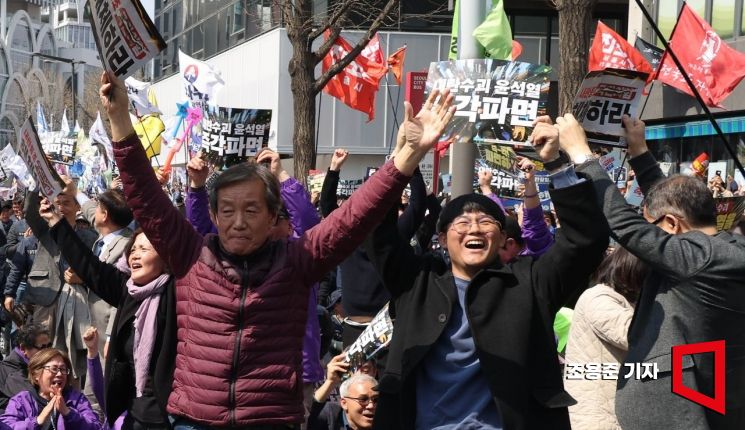 On the 4th, when the Constitutional Court ruled in favor of the impeachment case against former President Yoon Seok-yeol, citizens who supported the impeachment cheered at the Anguk-dong area in Jongno-gu, Seoul, celebrating the court's dismissal ruling. 2025.4.4 Photo by Jo Yongjun
The impeachment trial of President Yoon was the longest in history, heightening political tension. On April 4, the Constitutional Court unanimously upheld the impeachment motion, resulting in his removal from office. The court stated that former President Yoon, by declaring martial law, "used the military and police to undermine the authority of constitutional institutions such as the National Assembly and to violate the fundamental rights of the people, thus abandoning his duty to defend the Constitution." The court further declared, "His unconstitutional and unlawful acts betrayed the trust of the people."
◆Election of President Lee=In the snap presidential election triggered by the removal of the president, Lee Jaemyung of the Democratic Party of Korea was elected president with a record 17.28 million votes (49.4% of the total).
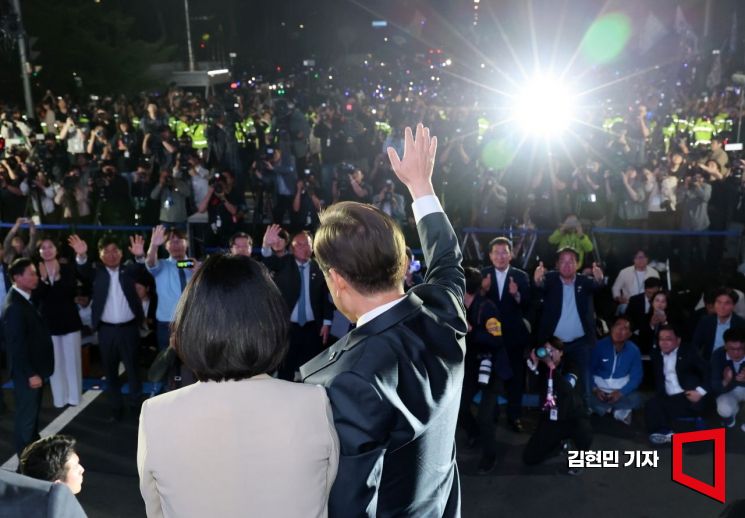 Lee Jae-myung, the presidential candidate of the Democratic Party of Korea who is expected to be elected as the 21st president, and his wife Kim Hye-kyung are greeting citizens at the national vote counting broadcast event held in front of the National Assembly in Yeouido, Seoul on June 4, 2025. Photo by Kim Hyunmin
Kim Moonsu, former Minister of Employment and Labor, was nominated as the presidential candidate for the People Power Party, and Lee Junseok, chairman of the Reform New Party, ran as their candidate, creating a three-way race. During the campaign, President Lee focused on "livelihood issues" and "strict punishment for those involved in the insurrection." In his inaugural address, he pledged to "be a president for all, ending divisive politics." Six months into his term, President Lee has promoted himself as a "competent president" emphasizing "pragmatism" and "communication," maintaining a relatively stable approval rating in the high 50% to low 60% range.
◆Decision to Abolish the Supreme Prosecutors' Office=This year, the National Assembly decided to dismantle the prosecution system. On September 26, led by the Democratic Party, the National Assembly passed an amendment to the Government Organization Act to abolish the Supreme Prosecutors' Office, which holds both indictment and investigative powers, by October next year. Its functions will be divided into the Public Prosecution Service under the Ministry of Justice and the Serious Crime Investigation Service under the Ministry of the Interior and Safety. The goal is to establish a mutually restraining system by completely separating investigative and prosecutorial powers.
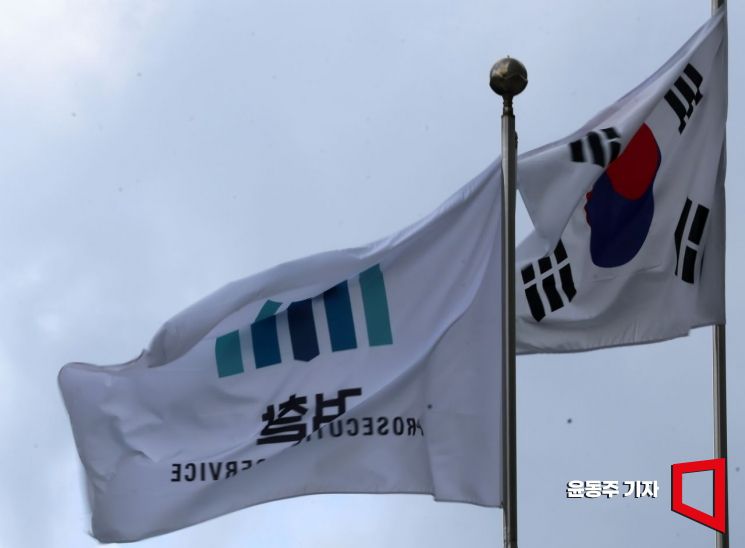
This reform, considered the most significant turning point in the judicial system since liberation, will dismantle the vertically integrated structure of investigation and prosecution that the prosecution has monopolized. However, details are still under discussion, centered on the "Pan-Governmental Prosecution Reform Task Force" under the Prime Minister. Key issues remain, such as how to allocate approximately 2,000 prosecutors between the Public Prosecution Service and the Serious Crime Investigation Service, whether to grant supplementary investigative authority to prosecutors in the Public Prosecution Service, and, if so, to what extent.
© The Asia Business Daily(www.asiae.co.kr). All rights reserved.
![Clutching a Stolen Dior Bag, Saying "I Hate Being Poor but Real"... The Grotesque Con of a "Human Knockoff" [Slate]](https://cwcontent.asiae.co.kr/asiaresize/183/2026021902243444107_1771435474.jpg)

















