Strengthening Stability Over Expansion
Enhancing Fiscal, Safety, and Future Strategy Management Systems
Gimpo City in Gyeonggi Province announced on the 31st that it will pursue an organizational restructuring aimed at strengthening stability and efficiency, rather than expanding the organization externally, in line with national policy tasks.
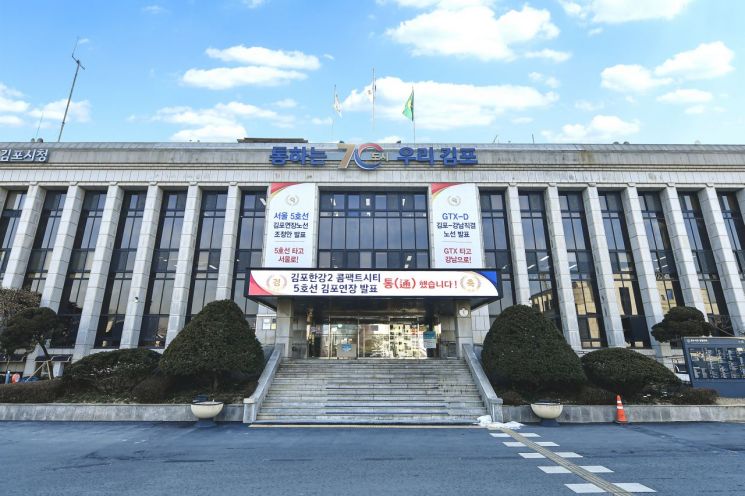
This organizational restructuring focuses on reducing functional overlap and strengthening the management capabilities at the division and bureau level within a rapidly changing administrative environment, with the goal of enhancing the effectiveness of policy implementation. The changes will take effect on January 1, 2026.
First, within the Planning and Coordination Office, the budget and tax departments will be consolidated into a single division or bureau. Through this, the city plans to unify the functions of revenue and expenditure management and strengthen strategic management and connectivity across overall fiscal operations.
The Autonomous Administration Bureau will be renamed the Administrative Safety Bureau, and the existing Safety Planning Office will be reorganized under the same bureau as other administrative departments, thereby reinforcing the command headquarters function under the bureau chief. The relocation of the disaster and safety department is part of the government's plan to strengthen organizational personnel in the disaster and safety sector, with the aim of securing outstanding talent and improving communication with towns and districts. By integrating and coordinating disaster and safety-related functions, which were previously operated in a dispersed manner, within the administrative management system, the city expects to achieve a more systematic approach to disaster and safety management-from prevention in normal times to rapid response during disasters and post-disaster management.
In addition, the Future Strategy Bureau will include the Smart City Division to strengthen the connectivity between mid- to long-term future strategy projects. The city plans to redefine its smart city policy as a core strategy linked to the city's future vision, rather than as a short-term project, and to manage artificial intelligence, new growth engine projects, urban infrastructure projects, and future strategy projects as a single flow, thereby establishing a foundation for sustainable development.
A city official stated, "This organizational restructuring is not just a simple adjustment of departments, but an effort to enhance the execution and administrative efficiency of policies by strengthening management functions at the division and bureau level," adding, "We will build an organization that citizens can truly feel, based on stable operations."
© The Asia Business Daily(www.asiae.co.kr). All rights reserved.
![Clutching a Stolen Dior Bag, Saying "I Hate Being Poor but Real"... The Grotesque Con of a "Human Knockoff" [Slate]](https://cwcontent.asiae.co.kr/asiaresize/183/2026021902243444107_1771435474.jpg)















