Gasoline Tax Cut of 57 Won and Diesel Cut of 58 Won per Liter Maintained
Additional Energy Voucher Support for 200,000 Households
Expansion of the "1,000-Won Breakfast" Program
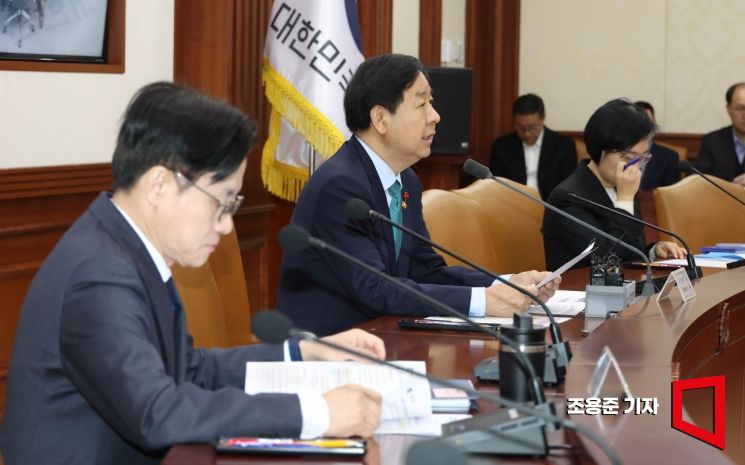 Deputy Prime Minister and Minister of Economy and Finance Koo Yoon-cheol attended the Economic Ministers' Meeting and the Industrial Competitiveness Enhancement Ministers' Meeting held at the Government Seoul Office in Jongno-gu, Seoul on the 24th, where he spoke about plans to expand exports of K-consumer goods and the restructuring of the petrochemical industry. 2025.12.24 Photo by Jo Yongjun
As the winter season approaches, bringing both cold waves and inflationary pressures, the government is launching a comprehensive, pan-governmental plan to support vulnerable groups in areas including heating, health, income, and safety. The initiative aims to reduce the burden of energy, food, and transportation costs, while also strengthening efforts to identify those falling through the welfare safety net and to enhance safety management during the year-end and New Year period.
The Ministry of Economy and Finance announced these measures as part of the "Winter Support and Safety Management Plan for Vulnerable Groups" during the Economic Ministers' Meeting and the Growth Strategy Task Force (TF) meeting held on December 31.
First, to ease the cost-of-living burden during the winter, the government will focus on price stabilization measures. Ahead of the Lunar New Year, discount events of up to 50% will be held for 25 types of agricultural, livestock, and marine products, including cabbage, pork, and mackerel. In addition, to stabilize egg supply, avian influenza (AI) prevention and thorough inspections of laying hens will be conducted simultaneously.
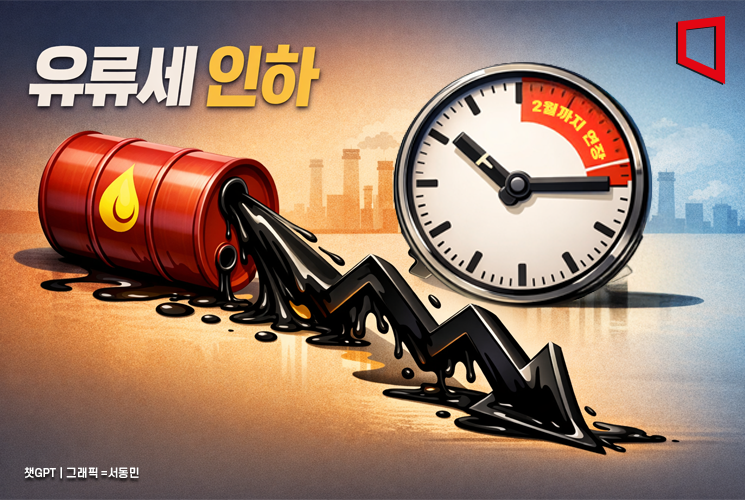
In the energy sector, the reduction of fuel taxes will be extended until February of next year. As a result, the tax reduction per liter will remain at 57 won (7%) for gasoline, 58 won (10%) for diesel, and 20 won (10%) for liquefied petroleum gas (LPG). Subsidies linked to fuel prices for diesel and compressed natural gas (CNG) will also continue. For diesel, 50% of the amount exceeding 1,700 won per liter will be subsidized, and for CNG, 50% of the amount exceeding the tax standard will be supported.
New measures to reduce transportation costs will also be introduced. Starting in January next year, a flat-rate pass (the "Everyone Card") will be implemented in the Seoul metropolitan area, fully reimbursing any public transportation expenses exceeding 62,000 won per month. For seniors aged 65 and older, the public transportation reimbursement rate will be increased from the current 20% to 30%.
To reduce food expenses, the "1,000-won Breakfast" program for university students and industrial complex workers will be expanded to provide 5.4 million meals annually, with the allocation for industrial complex workers increasing to 900,000 meals. A pilot program will also be launched to support lunch expenses for 50,000 employees of local small and medium-sized enterprises, providing up to 40,000 won per month.
Heating support to address cold waves will be focused on vulnerable groups. Among energy voucher recipients, 200,000 households using kerosene or LPG will receive an additional average of 147,000 won, increasing the per-household support from 367,000 won to 514,000 won. For vulnerable groups, electricity bills will be discounted by up to 16,000 won per month, and city gas bills will be reduced by up to 148,000 won during the winter. Households using briquette boilers will receive briquette coupons worth 472,000 won per household, and support for replacing outdated heating facilities will be provided to 3,000 households.
Nationwide, approximately 69,000 senior centers will receive 400,000 won per month for heating costs, and about 7,000 government-funded social welfare facilities will be provided with monthly heating subsidies ranging from 300,000 to 1 million won. In the health sector, free influenza and COVID-19 vaccinations will continue through April next year, focusing on seniors and immunocompromised individuals. Health management through home visits or phone calls will also be strengthened for about 1 million households via public health centers nationwide.
Measures to address welfare blind spots will also be expanded. By analyzing 47 types of crisis indicators, such as electricity or water cutoffs and overdue health insurance or communication bills, the government aims to identify approximately 300,000 households at risk of welfare crises by March next year. Initial consultations using artificial intelligence (AI) and on-site visits by local health and welfare teams will connect those in need with emergency welfare, basic livelihood security, and private welfare services. For approximately 270,000 children at risk of missing meals, the meal support rate during the winter vacation will be raised to at least 10,000 won per meal to minimize gaps.
Income and housing stability measures will also be implemented. Next year, the standard median income for a four-person household will be raised by 6.51%, and the maximum amount of livelihood benefits will increase by 127,000 won per month. Emergency livelihood support will be increased to 1.99 million won per month for a four-person household, and additional winter fuel support will continue. For residents of vulnerable housing such as jjokbang (cubicle rooms) and rooftop rooms, vacant public rental housing will be provided on a temporary basis for up to six months, and priority will be given for public lease housing.
In addition, safety management during the year-end and New Year period will be significantly strengthened. The government has designated 373 locations with large crowds, including year-end and New Year's sunrise events, as areas for management, with nine of them set as intensive management zones for joint response by police and fire authorities. A 24-hour snow removal response system will be in place until mid-March next year to prepare for heavy snow and icy conditions, and focused fire and safety inspections will be conducted at 69 traditional markets and businesses vulnerable to cold waves.
A government official stated, "Through these measures, we expect a tangible reduction in the perceived cost burden of fuel, heating, and transportation. We will do our utmost to minimize welfare blind spots and safety gaps to protect vulnerable groups during the winter season."
© The Asia Business Daily(www.asiae.co.kr). All rights reserved.
![Clutching a Stolen Dior Bag, Saying "I Hate Being Poor but Real"... The Grotesque Con of a "Human Knockoff" [Slate]](https://cwcontent.asiae.co.kr/asiaresize/183/2026021902243444107_1771435474.jpg)
















