Last month, the consumer price inflation rate stood at 2.3%, marking the fourth consecutive month in the mid-2% range. The high exchange rate significantly pushed up petroleum prices, resulting in a persistently high perceived inflation burden. However, the rate of increase slightly eased compared to the previous month (2.4%).
According to the "Consumer Price Trends for December 2025 and the Year" released by the National Data Office on December 31, last month's consumer price index rose 2.3% year-on-year. On a month-on-month basis, it increased by 0.3%.
By item category, prices of agricultural, livestock, and fishery products rose 4.1% compared to a year earlier, contributing 0.32 percentage points to overall inflation. In particular, petroleum prices surged by 6.1%, leading the upward trend in prices. This is the largest increase since February of this year (6.3%).
As a result, diesel prices rose by 10.8% and gasoline by 5.7%, with the high exchange rate driving up energy prices. Among processed foods, the prices of bread (3.3%) and coffee (7.8%) remained at high levels.
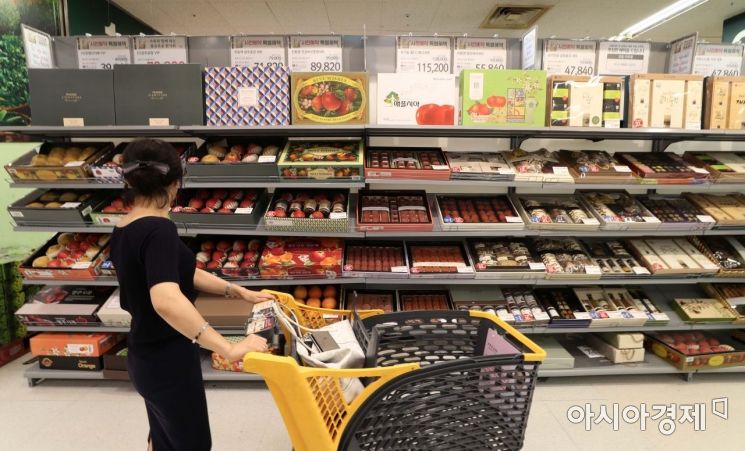 On the 26th, citizens are browsing Chuseok gift sets at a large supermarket in downtown Seoul. Photo by Moon Honam munonam@
The cost of living index, which reflects perceived inflation, increased by 2.8% year-on-year. The food sector rose by 3.3%, while the non-food sector increased by 2.4%. This indicates that inflationary pressure remains high for items that consumers purchase regularly.
The fresh food index, which is highly volatile due to weather conditions, rose by 1.8%. The index excluding agricultural products and petroleum, a core inflation indicator, increased by 2.3%. The OECD-standard index excluding food and energy rose by 2.0%.
Meanwhile, the annual consumer price inflation rate for this year was recorded at 2.1%, the lowest level in five years since 2020 (0.5%). Compared to last year's annual inflation rate (2.3%), the increase narrowed by 0.2 percentage points (P).
On an annual basis, the OECD-style core inflation index, which excludes food and energy, rose by 1.9% year-on-year. The index excluding agricultural products and petroleum increased by 2.2% year-on-year. The cost of living index rose by 2.4% compared to the previous year.
© The Asia Business Daily(www.asiae.co.kr). All rights reserved.
![Clutching a Stolen Dior Bag, Saying "I Hate Being Poor but Real"... The Grotesque Con of a "Human Knockoff" [Slate]](https://cwcontent.asiae.co.kr/asiaresize/183/2026021902243444107_1771435474.jpg)















