FOMC Minutes Released
"Members Supporting a Rate Cut Could Have Also Supported Holding Steady"
Members of the U.S. Federal Reserve (Fed) showed significant disagreements over a rate cut this month. However, the majority agreed that further rate cuts would be appropriate if inflation continues to decline gradually.
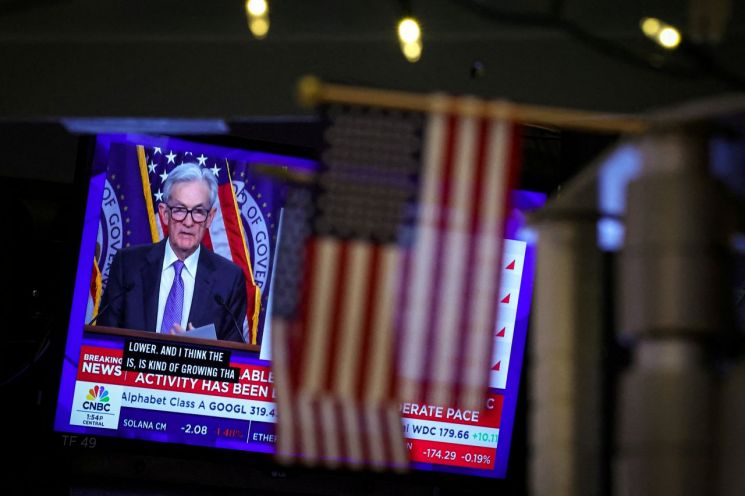
The minutes from the December Federal Open Market Committee (FOMC) meeting, released by the Fed on December 30 (local time), stated, "Among the members who supported a policy rate cut at this meeting, some felt the decision was at a very delicate balance and could have supported keeping the target rate range unchanged."
Earlier, at the regular FOMC meeting held on December 10, the Fed lowered the benchmark interest rate by 0.25 percentage points, adjusting it to 3.5-3.75% per annum. However, three out of the twelve FOMC members with voting rights cast dissenting votes, marking the highest number of vetoes in six years and revealing internal disagreements. The Fed maintained a relatively cautious stance by projecting only one rate cut next year, a position reaffirmed in these minutes.
While most participants agreed with the rate cut itself, opinions were divided on whether policy should prioritize price stability or full employment.
The minutes noted, "Most participants mentioned that shifting to a more neutral policy stance would help prevent a severe deterioration in labor market conditions." At the same time, "Several participants pointed out the risk of high inflation becoming entrenched," adding, "If policy rates are further reduced while inflation remains at elevated levels, it could be misconstrued as a weakening of policymakers' commitment to the 2% inflation target."
Nevertheless, the members generally agreed to leave the door open for additional rate cuts depending on future economic indicators.
The minutes stated, "Most participants judged that if inflation declines over time as expected, further downward adjustments to the federal funds rate target range would be appropriate." In addition, "Some participants who preferred or could have supported leaving the target rate range unchanged believed that the substantial amount of labor market and inflation data to be released between meetings would help determine the justification for a rate cut."
On Wall Street, there is analysis that the decision to cut rates amid such sharp disagreements among members reflects the influence of Fed Chair Jerome Powell. Stephen Stanley, Chief U.S. Economist at Santander US Capital Markets, said, "The committee could have easily decided either way, but the fact that the FOMC cut rates is clear evidence that Chair Powell pushed for the reduction."
However, amid these disagreements, uncertainty remains over the future path of interest rates. Since the U.S. real gross domestic product (GDP) growth rate in the third quarter reached an annualized 4.3% quarter-on-quarter, the highest in two years, there are projections that this could reignite inflation concerns among members who opposed the December rate cut.
© The Asia Business Daily(www.asiae.co.kr). All rights reserved.
![Clutching a Stolen Dior Bag, Saying "I Hate Being Poor but Real"... The Grotesque Con of a "Human Knockoff" [Slate]](https://cwcontent.asiae.co.kr/asiaresize/183/2026021902243444107_1771435474.jpg)















