Results of the 12th Supply and Demand Estimation Committee Announced
Impact of AI Adoption and Changes in Working Days
Full-Scale Discussion on Medical School Enrollment Quotas Set for January Next Year
An analysis has found that by 2035, the domestic workforce of physicians will be short by at least 4,900, and by 2040, the shortage could exceed 11,000.
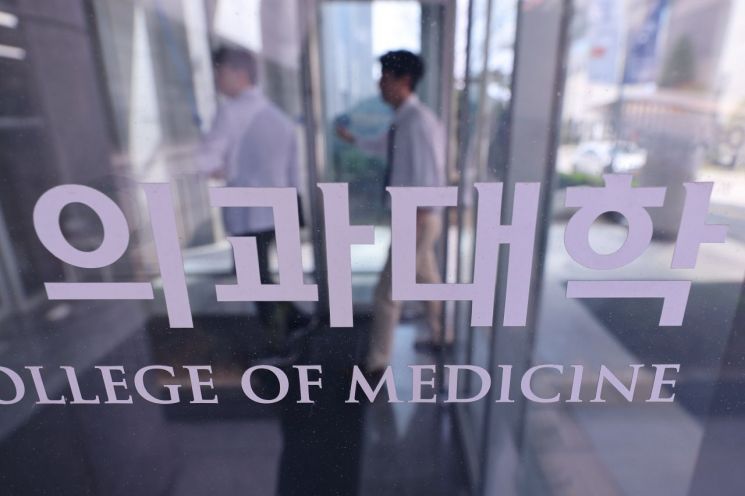
The Physician Workforce Supply and Demand Estimation Committee announced on the 30th that it held its 12th meeting and reviewed and approved the “Physician Workforce Supply and Demand Estimation Results.” This analysis is the result of more than 10 meetings since the committee was launched in August.
According to the committee’s analysis, if the current trend in medical service utilization continues (based on the basic model), the demand for physicians in 2035 is expected to reach approximately 136,000 to 138,000. In contrast, the supply is projected to be only about 133,000 to 134,000, resulting in a shortage of at least 1,535 and up to 4,923 physicians.
By 2040, the physician shortage is expected to widen to between 5,704 and 11,136.
In a scenario assuming increased medical productivity through the adoption of artificial intelligence (AI) and changes in the number of working days, the demand for physicians was calculated at 137,545 in 2035 and 148,235 in 2040.
Additionally, when considering changes in health care policy such as optimizing medical utilization, the demand is projected to be 136,778 in 2035 and 147,034 in 2040.
These supply and demand estimation results will serve as a key foundational resource for determining future medical school enrollment quotas. The government plans to closely review these findings through the Health and Medical Policy Review Committee (HMPRC) and finalize the medical school enrollment quota for the 2027 academic year and beyond. The HMPRC held its first meeting on the 29th to discuss the criteria for reviewing the scale of physician training and intends to hold intensive meetings in January next year to deliberate on the specific training scale.
The Physician Workforce Supply and Demand Estimation Committee also plans to establish a separate annual operational plan for 2026, which will include supply and demand estimations by specialty.
Kim Taehyun, Chair of the Supply and Demand Estimation Committee, stated, “These results were independently and professionally derived through in-depth discussions among the committee members,” and added, “I hope that the HMPRC will respect these estimation results and that sufficient public debate will take place before deciding on the medical school enrollment quota.”
Meanwhile, the government also plans to sequentially establish supply and demand estimation committees by profession-including for nurses and Korean medicine doctors (2027), dentists and pharmacists (2028), and medical technicians (2029)-to systematically manage the health care workforce supply and demand system.
© The Asia Business Daily(www.asiae.co.kr). All rights reserved.
![Clutching a Stolen Dior Bag, Saying "I Hate Being Poor but Real"... The Grotesque Con of a "Human Knockoff" [Slate]](https://cwcontent.asiae.co.kr/asiaresize/183/2026021902243444107_1771435474.jpg)















