Reorganized as a Participatory Festival Featuring the Global K-POP Competition
Main Event on Jungang-ro Reduced to Four Days
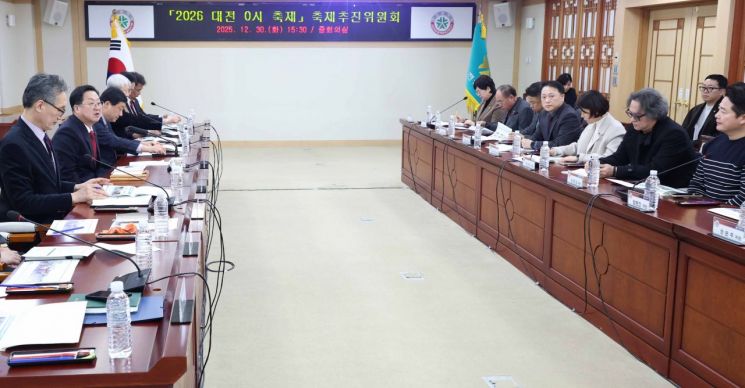
The "Daejeon Zero Hour Festival" in 2026 will be extended from the previous 9 days to 11 days and will take place from August 7 to August 17 next year.
On December 30, Daejeon City held a "Festival Promotion Committee" meeting in the city hall’s main conference room, where it finalized the festival promotion plan for the successful hosting of the "2026 Daejeon Zero Hour Festival" and officially began preparations.
During the meeting, the committee shared a blueprint for elevating next year’s festival into a truly global event, drawing on the experience accumulated over the past three years. Committee members, who are experts in various fields, exchanged in-depth opinions tailored to the evolving festival environment.
The biggest changes for next year’s festival are: ▲ adjustments to the festival period and traffic control measures, and ▲ the introduction of global content.
First, the festival period will be extended from 9 to 11 days. In contrast, the main event period-which previously caused significant inconvenience to citizens due to the full closure of Jungang-ro-will be reduced to 4 days. For the preceding 7 days, only select sections of side roads in the old downtown commercial district will be partially restricted, minimizing the impact on daily life while focusing on programs designed to revitalize local businesses as pre-events.
This strategy aims to reduce inconvenience to citizens caused by traffic controls, while continuously increasing the economic ripple effect on the old downtown commercial district through the extended festival period.
The content of the festival will also undergo a transformation. Moving away from performances centered on inviting famous singers, the festival will feature a "Global K-POP Competition" as its core content, in which participants from around the world can take part. Through the performances of talented foreign contestants who pass online preliminary rounds, the festival aims to shift from a simple spectator event to a participatory global festival.
Additionally, the street parade will be further enhanced in both scale and quality through a "selection and concentration" strategy during the 4-day main event, making it a key feature of the festival. In particular, opportunities will be provided for Daejeon citizens to directly participate in the parade, developing the Daejeon Zero Hour Festival into an event created together with the community.
Furthermore, the festival will continue to uphold its trademark "Three-No Festival" principle-no safety accidents, no litter, and no price gouging-next year as well. Drawing on the operational know-how accumulated over the past three years, the city plans to further solidify its status as a model case for regional festivals in Korea.
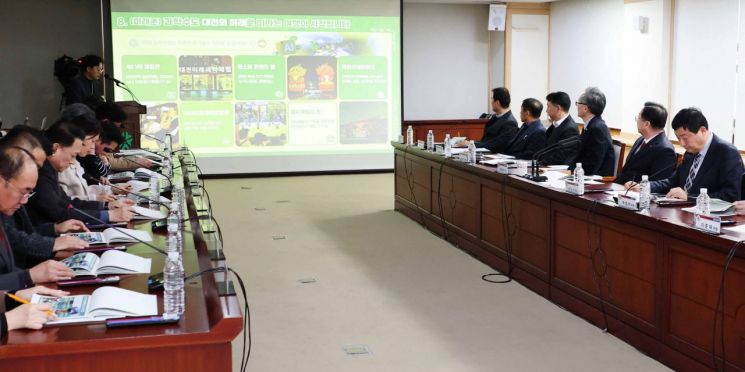
Daejeon Mayor Lee Jangwoo stated, "To become a world-class festival, we must not be complacent with our current success, but instead pursue constant change and development over a long period, just like other leading global festivals. Building on the achievements of the past three years, we will do our utmost to ensure that the Daejeon Zero Hour Festival establishes itself as a sustainable global festival."
Meanwhile, based on the newly finalized promotion plan, the city will begin bidding for event operation agencies in January next year, and will further enhance the quality of the festival’s content by incorporating proposals from the selected agency.
© The Asia Business Daily(www.asiae.co.kr). All rights reserved.
![Clutching a Stolen Dior Bag, Saying "I Hate Being Poor but Real"... The Grotesque Con of a "Human Knockoff" [Slate]](https://cwcontent.asiae.co.kr/asiaresize/183/2026021902243444107_1771435474.jpg)
















