Analysis of Imported Electric Passenger Car Origins, Jan-Nov 2023
8 Out of 10 Are Made in China
Tesla's China-Made Model Y Gains Popularity with Competitive Pricing
Chinese Brands Like BYD Secure Foothold in Korean Market
This year, 8 out of every 10 electric vehicles imported into Korea were manufactured in China. For the third consecutive year, China has accounted for the largest share among countries exporting electric passenger vehicles to Korea. This trend is attributed to the sharp increase in the influx of China-manufactured vehicles from global automakers such as Tesla, Volvo, and Polestar. In addition, the direct entry of Chinese automotive brands into the Korean market is rapidly expanding China's share of imported vehicles by country of origin.
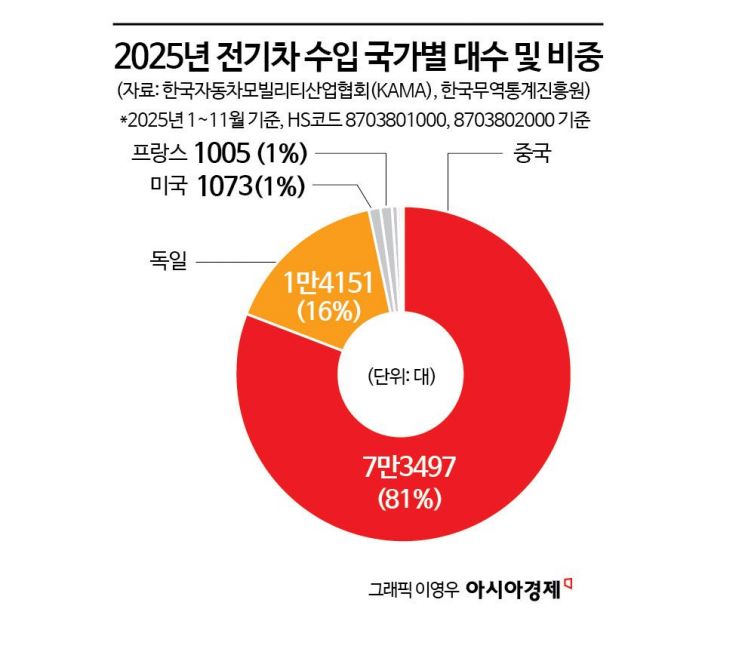
According to an analysis by The Asia Business Daily of data from the Korea Automobile Manufacturers Association and the Korea Trade Statistics Promotion Institute on December 31, out of 90,649 electric vehicles imported into Korea by customs clearance through November this year, 73,497 were produced in China. Chinese-made electric vehicles accounted for a staggering 81% of the total.
The share of Chinese-made vehicles is also increasing among all imported vehicles, including electric, hybrid, and internal combustion engine cars. Of the 302,283 vehicles imported into Korea through November this year, 92,453 were made in China, representing about 30% of the total. Analysts note that the country-of-origin structure for imported vehicles, which was previously centered on Germany, the United States, and Japan, is rapidly shifting toward China.
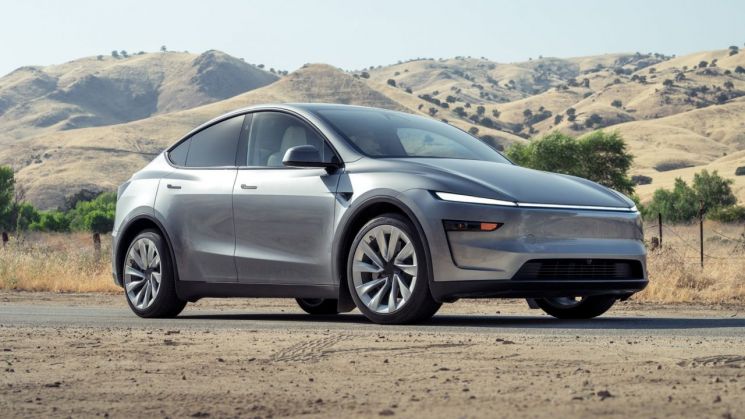
This shift is largely driven by changes in Tesla's supply chain. Tesla has rapidly expanded its market share by importing Model Y and Model 3 vehicles produced at its Shanghai plant into Korea. Through November this year, Tesla's domestic sales reached 55,594 units, up 95% from the previous year. Of these, 99% were Chinese-made Teslas. Tesla now holds about a 20% share of the imported car market, ranking third after BMW and Mercedes-Benz.
The surge in Tesla's popularity is due to its aggressive pricing strategy following the introduction of Chinese-made vehicles. With the application of LFP (lithium iron phosphate) batteries to the China-produced Model Y and Model 3, the actual purchase price of the mid-size electric SUV Model Y has dropped to the high 40 million won range. This is only about 3 to 4 million won more than the Hyundai Ioniq 5 and Kia EV6.
In fact, in 2022, the U.S.-made Model Y Long Range was once priced in the 90 million won range. However, since July 2023, the introduction of the rear-wheel-drive Model Y produced at the Shanghai Gigafactory has lowered the delivery price to the 50 million won range, significantly improving price accessibility for consumers.
The popularity of Volvo and Polestar vehicles produced in China is also part of this trend. In particular, Polestar recorded cumulative sales of 2,538 units through November this year, a 550% increase from the previous year, led by its new model, the Polestar 4. A Polestar representative stated, "We are receiving so many orders that even display cars are being sold," adding, "We have secured about 1,000 pre-orders through January 2026, and plan to begin sequential deliveries starting in February next year."
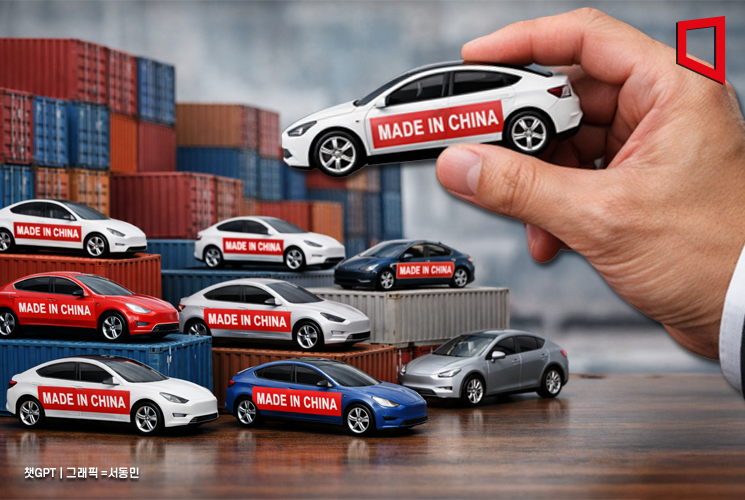
Chinese brands are also rapidly increasing their presence in the Korean market, faster than initially expected. BYD, which entered the domestic passenger car market this year, sold 4,955 vehicles through November, ranking third among imported electric vehicle brands. Although there were initial concerns among consumers about Chinese cars, sales have exceeded expectations. The industry expects the influx of Chinese-made electric vehicles into the Korean market to intensify further starting next year.
Following BYD's successful entry, other Chinese brands such as Zeekr, Xiaopeng, and Leapmotor are preparing to enter the Korean market next year. In particular, Zeekr, the premium electric vehicle brand of China's Geely Holdings, is drawing attention for its aggressive expansion. It has recently signed contracts with dealers and is building its sales and service network. Xiaopeng, often called the "Tesla of China," is also preparing to enter the market by establishing a Korean subsidiary.
In the past, due to the importance of safety in automobiles, consumers tended to scrutinize the country of origin of vehicles. This perception was also the reason German cars enjoyed high regard for a long time. However, recent analysis suggests that consumers now place more emphasis on brand competitiveness and product value than on the country of manufacture. An industry insider commented, "The aggressive push of Chinese-made vehicles, especially in the electric vehicle segment with their price competitiveness, is likely to continue for the foreseeable future."
© The Asia Business Daily(www.asiae.co.kr). All rights reserved.



















