Operating License Approved After Second Deliberation and Vote
First New Nuclear Plant License in Two Years
Gap Left by Hanbit Plant Shutdown on 22nd to Be Filled
Korea Hydro & Nuclear Power to Begin Operations After Commissioning
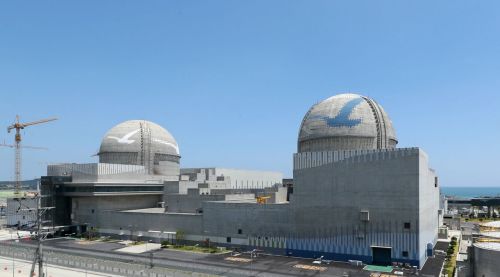
Unit 3 of the Saeul Nuclear Power Plant (formerly Shin Kori Unit 5), located in Ulsan, Uljin, has received its operating license after nine years of construction. With the operation of Saeul Unit 3, the gap left by Hanbit Nuclear Power Plant Unit 1, which ceased operation on December 22 due to the expiration of its lifespan, can now be filled. Korea Hydro & Nuclear Power plans to begin full commercial operation in August next year after completing fuel loading and commissioning. Once Saeul Unit 3 enters commercial operation, it will supply electricity equivalent to approximately 1.7% of the nation’s total power generation and about 37% of Ulsan’s electricity demand.
The Nuclear Safety and Security Commission announced on December 30 that it had approved the operating license for Saeul Unit 3 during its 228th meeting. The operating license for Saeul Unit 3 comes nine years after construction began. This is the first new nuclear power plant license in about two years since Shin Hanul Unit 2 in September 2023.
Saeul Unit 3 is a pressurized water reactor (APR1400) with an electrical output of 1,400 MW and a design lifespan of 60 years. Its basic design is identical to the currently operating Saeul Units 1 and 2 and Shin Hanul Units 1 and 2.
Korea Hydro & Nuclear Power received construction approval for Saeul Unit 3 from the Nuclear Safety and Security Commission in June 2016 and began construction. In August 2020, the company applied for operating licenses for both Saeul Units 3 and 4, which are twin reactors. Originally named Shin Kori Units 5 and 6, the plants were renamed Saeul Units 3 and 4 in 2022 to unify the naming of the plant headquarters.
The Korea Institute of Nuclear Safety (KINS) reviewed differences in design from previous APR1400 reactors, operational capabilities, facility performance, and the radiological impact of assumed accidents, based on its experience with safety reviews of similar reactor types. It confirmed that the facility met the licensing criteria under the Nuclear Safety Act. Subsequently, the Nuclear Safety Expert Committee, composed of 15 experts in various fields, conducted 10 rounds of preliminary reviews of KINS’s findings and concluded that the results were valid.
Based on this, the Nuclear Safety and Security Commission reviewed the operating license for the Saeul plant at its 227th meeting on December 19, but decided to resubmit the proposal as supplementary data was needed regarding the details and assessment results of the accident management plan. At the meeting on December 30, the Commission confirmed that Saeul Unit 3 met the operating license requirements under Article 21 of the Nuclear Safety Act and approved the license by vote. Five out of six commissioners voted in favor.
Saeul Unit 3 is the first domestic nuclear plant to adopt an aircraft impact-resistant design, featuring thicker walls. The containment wall is designed to be 137 cm thick, 15 cm thicker than previous Korean nuclear plants. The auxiliary building surrounding the reactor is 180 cm thick, 30 cm thicker than before.
In addition, to prepare for power loss due to accidents such as earthquakes, the number of alternate AC diesel generators was increased from one per two units to one per unit. The storage capacity of the spent nuclear fuel pool was also expanded from 20 years to 60 years.
Choi Wonho, Chairman of the Nuclear Safety and Security Commission, stated, "We have thoroughly verified the safety of Saeul Unit 3 based on legally prescribed procedures and scientific and technological evidence. We plan to ensure safety through pre-use inspections during the fuel loading and commissioning process following the operating license."
Korea Hydro & Nuclear Power plans to begin fuel loading after obtaining the operating license, followed by approximately eight months of power ascension testing and simplified maintenance, before commencing commercial operation in August next year.
The company stated that approximately 760 companies and a cumulative total workforce of about 7.5 million people (with a maximum of about 4,000 people per day) participated in the construction of Saeul Unit 3. During the 60-year operating period, continuous employment and the injection of approximately 2 trillion won in statutory support funds and local taxes are expected to contribute to the revitalization of the local economy.
Construction of Saeul Unit 3 was pursued as part of the 4th Basic Plan for Long-term Electricity Supply and Demand, finalized in December 2008. Doosan Enerbility supplied the reactor and turbine generators, while Samsung C&T, Doosan Enerbility, and Hanwha Ocean were responsible for the main equipment construction.
Saeul Unit 3 faced several setbacks, including construction halts due to the nuclear phase-out policy of the Moon Jae-in administration and the Gyeongju earthquake.
Former President Moon Jae-in announced at the June 2017 ceremony marking the permanent shutdown of Kori Unit 1 that the government would fully review its nuclear policy and seek social consensus on Saeul Units 3 and 4. As a result, a public deliberation committee and a citizen participation group were formed, and after three months of deliberation, the decision was made in October 2017 to resume construction of Saeul Units 3 and 4.
In March 2021, the construction period was extended due to the reinforcement of seismic design following the Gyeongju earthquake. In 2022, the project period was further extended due to changes in wastewater treatment facility design following amendments to environmental laws.
As a result, the total project period for Saeul Units 3 and 4, which had been 127 months since September 2014, was extended to 148 months, with completion scheduled for November 2026. The Nuclear Safety and Security Commission plans to review the operating license for Saeul Unit 4 next year.
© The Asia Business Daily(www.asiae.co.kr). All rights reserved.

















