"When it comes to responding to increasingly sophisticated and cunning criminal methods, there’s really no other choice. Hitting the ground running is just the basics-you have to study hard, too." A faint smile appeared on the lips of Yang Doyeol, 43, Head of the Investigation Team at the Investigation General Division, Seoul Regional Customs Office.
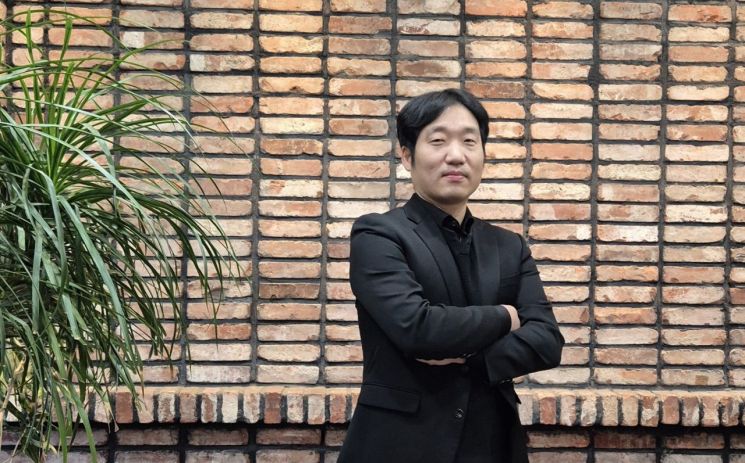 Yang Doyeol, Investigation Team Leader, General Investigation Division, Seoul Main Customs, Korea Customs Service Photo by Korea Customs Service
Yang has been dedicated exclusively to investigative work for 13 years. In the field, he is known as a seasoned veteran. Yet even Yang often finds himself astonished by the increasingly intelligent and diversified methods of crime. Especially when investigating cases that overlap with other sectors such as finance and intellectual property, he spends more and more days poring over relevant materials and studying.
Yang explained, "The Korea Customs Service's Special Judicial Police typically investigates crimes related to drugs, foreign exchange, and intellectual property (IP) at the border stage. While it may seem straightforward from the perspective of identifying and apprehending offenders, in reality, we must also understand the work of agencies outside the Korea Customs Service. That means, to solve even a single case, we often have to spend a considerable amount of time studying," he said with a smile.
For example, the investigation team led by Yang this year uncovered an illicit export company that falsely reported export destinations and illegally acquired steel quotas worth 230 billion won from legitimate companies. Noticing that the amount of steel exported from Korea to the European Union (EU) exceeded the amount of Korean steel imports recorded by the EU, the team launched an investigation and apprehended the fraudulent exporter that had unlawfully obtained the allocated steel quota.
The investigation team conducted searches of the company’s offices and secured key evidence such as export contracts and invoices with EU countries. They then linked and analyzed export-import data from EU customs and export approval documents from the Korea Iron & Steel Association to prove the criminal charges. The company had even created and shared a 'manual for export work processes,' which was used to systematically commit the crime.
Although this may seem like a simple case of unjust enrichment through loopholes, for the investigation team, it required a deeper understanding. In other words, the phrase "identifying and apprehending the perpetrator" is a simplified formula. For this formula to work in reality, it requires a process of tracing the perpetrator's tracks and understanding both the criminal methods used and the relevant field knowledge (such as whether the crime constitutes a violation and how it applies). This is why the Special Judicial Police at the Korea Customs Service study diligently with every new case they take on.
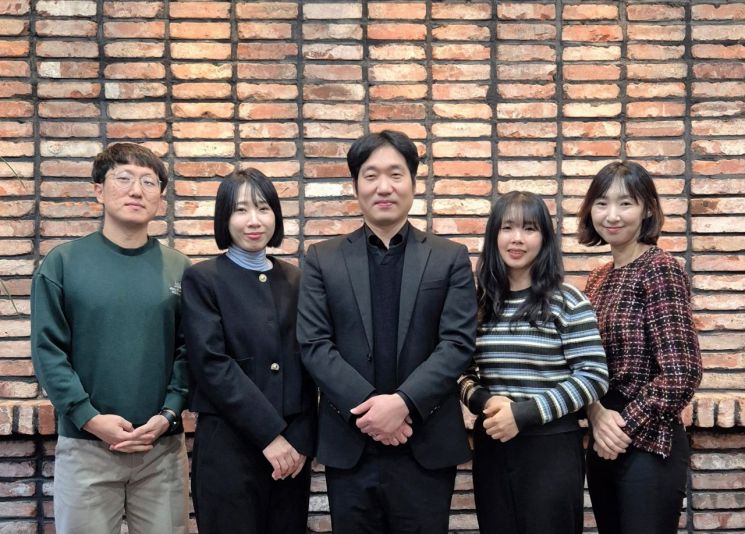 Yang Doyeol, Head of the Investigation Team at the Seoul Regional Customs Office Investigation Division (third from the left), and team members are posing for a commemorative photo. Photo by Korea Customs Service
For Yang, whose daily routine resembles that of a detective in movies or dramas-tailing suspects and conducting stakeouts-the gap between Special Judicial Police and police investigators is not significant. To avoid detection, the team uses two or more vehicles to alternate while following suspects, and as the days and sometimes months of stakeouts at crime scenes accumulate, it becomes natural for team members to say, "I am a detective."
Yang shared, "This year, our investigation team apprehended a cigarette smuggling organization based in the heart of Gangnam. To solve this case, the team conducted months-long stakeouts around suspicious warehouses, repeatedly tailed bonded transport vehicles, and analyzed CCTV footage, ultimately identifying and arresting those involved in cigarette smuggling."
The case involved disguising re-exported cigarettes as returned exports, transporting them from Busan Port back to Incheon Airport under bonded transport, and then secretly moving them to a hidden warehouse during weekend nights for illegal domestic distribution. The investigation team’s actions prevented 1.75 million packs of cigarettes, worth 7.3 billion won, from being illegally distributed in Korea.
Yang pointed out, "What was unique about the cigarette smuggling case our team uncovered was that the criminal organization was rooted not in an airport or port, but in the center of Seoul, and the ringleader was a repeat offender with a prior conviction for a similar crime." He added, "It was unprecedented to uncover a large-scale smuggling ring operating entirely within inland Seoul. This case shattered the stereotype that 'borders only exist at airports or ports.'"
He continued, "The Special Judicial Police at the Korea Customs Service are an organization that not only physically investigates crime scenes like detectives but also constantly think and study to catch even the most cunning criminals. While the investigative process can sometimes be grueling, all members of the Special Judicial Police can remain dedicated to their current duties with pride, knowing that we are the ones solving border-related crimes with our own hands."
Meanwhile, the Investigation Team 1 of the Investigation General Division, Seoul Regional Customs Office, led by Yang, was selected as an 'Outstanding Investigation Team' by the Korea Customs Service this year. The Korea Customs Service evaluates enforcement performance in each investigative field to select outstanding teams and shares exemplary cases to promote investigative work. This year's outstanding teams were chosen based on closed cases registered for evaluation between November of last year and October of this year.
© The Asia Business Daily(www.asiae.co.kr). All rights reserved.
![Clutching a Stolen Dior Bag, Saying "I Hate Being Poor but Real"... The Grotesque Con of a "Human Knockoff" [Slate]](https://cwcontent.asiae.co.kr/asiaresize/183/2026021902243444107_1771435474.jpg)
















