Ministry of Food and Drug Safety and Rural Development Administration
Confirm Edibility and Safety of Lactic Acid Bacteria from Traditional Fermented Foods
The Ministry of Food and Drug Safety announced on December 30 that, in collaboration with the Rural Development Administration, it will add two types of lactic acid bacteria derived from traditional Korean fermented foods such as kimchi and jang (fermented sauces) to the list of approved food ingredients. The aim is to support the development of a diverse range of fermented foods.
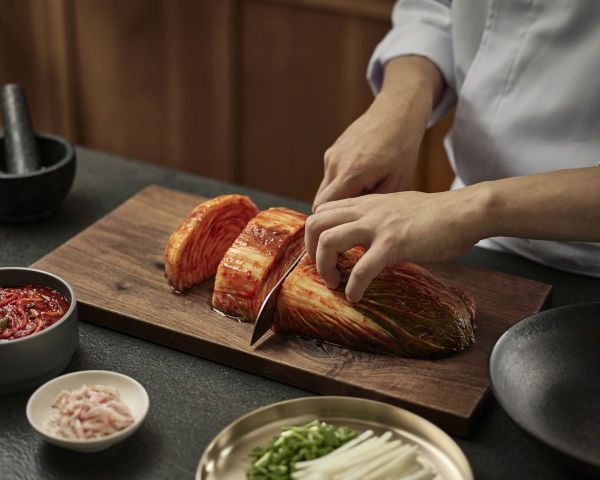
This year, the Ministry and the Rural Development Administration convened the "Traditional Fermented Food Microorganism Industry-Academia-Government Council," comprised of experts from related agencies and academia, to review the scientific basis for the consumption and safety of lactic acid bacteria found in traditional fermented foods, as well as the current status of domestic and international research and management.
As a result, "Leuconostoc lactis" and "Pediococcus inopinatus" are being added to the list, based on several factors: ▲ these bacteria have been consumed by Koreans for a long time through traditional fermented foods; ▲ their biosafety level, pathogenicity, toxin production, and antibiotic resistance are all considered safe for use as food ingredients; and ▲ they are recognized as food ingredients by internationally accredited organizations such as the International Dairy Federation and the European Food Safety Authority.
Leuconostoc lactis is a lactic acid bacterium found in kimchi, as well as in meju, doenjang, gochujang, and soy sauce. During fermentation, it produces not only lactic acid but also acetic acid and carbon dioxide, enhancing the distinctive flavors of fermented foods. Pediococcus inopinatus is a fermentation microorganism found in kimchi and gajami-sikhae, which produces lactic acid. It is especially known as a dominant microorganism in aged kimchi (mukeunji), where it plays a key role in determining flavor.
These lactic acid bacteria are significant as indigenous microbial resources that can be utilized not only in traditional fermented foods but also in the development of various other fermented products such as cheese, butter, beer, and wine.
The Ministry stated, "The expansion of approved food ingredients will support the growth of the K-traditional fermented food industry and strengthen its competitiveness in the international market," adding, "We will continue to collaborate with the Rural Development Administration to discover a wide range of microbial resources."
© The Asia Business Daily(www.asiae.co.kr). All rights reserved.
![Clutching a Stolen Dior Bag, Saying "I Hate Being Poor but Real"... The Grotesque Con of a "Human Knockoff" [Slate]](https://cwcontent.asiae.co.kr/asiaresize/183/2026021902243444107_1771435474.jpg)















