Physical Tasks Reduced by 72%, Work Intensity Down by 50%
90% of Staff Support Further Expansion
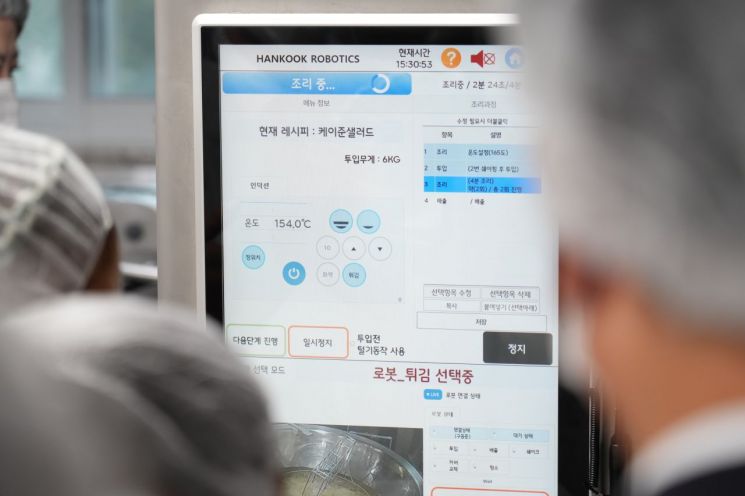
The cooking robots, introduced for the first time this year by the Busan Metropolitan Office of Education in school cafeterias, have been found to significantly improve the working environment for kitchen staff and contribute to the stable operation of school meals.
The Busan Metropolitan Office of Education (Superintendent Kim Seokjun) reported that, based on analyses conducted both internally and by external professional organizations, the average time spent working in front of high-temperature, high-risk cooking pots decreased by 69% after the introduction of cooking robots compared to before. In addition, the number of tasks requiring physical strength, such as handling heavy cooking equipment, dropped by 72%, and the overall work intensity-measured by posture and physical movement-was reduced by about 50%.
This outcome is regarded as significantly mitigating the risk of musculoskeletal disorders among cafeteria staff, while also offering the added benefit of preventing industrial accidents.
Feedback from the field has also been positive. According to the results of four roundtable discussions and satisfaction surveys conducted by the Busan Metropolitan Office of Education in November and December, 82% of respondents said the robots helped improve their work environment, while 78% noted a reduction in work intensity and 74% cited increased convenience. Notably, more than 90% of respondents expressed support for expanding the use of cooking robots in the future.
Cafeteria staff commented, "The robots have taken over the difficult and dangerous tasks, which has noticeably reduced our workload," and "The working environment has changed dramatically compared to before." The majority also agreed that the taste and quality of fried and stir-fried dishes prepared by the robots were the same as, or even better than, before, alleviating concerns about any decline in meal quality.
This introduction of cooking robots was made possible after the Busan Metropolitan Office of Education was selected in May for the 2025 Service Robot Demonstration Project, organized by the Korea Institute for Robot Industry Advancement, thereby securing national funding. Based on this, the office began piloting the robots in some school cafeterias from the second semester of this year and has been operating them in earnest.
The Busan Metropolitan Office of Education plans to continuously improve the functions of the cooking robots and gradually expand their introduction to further enhance the working environment in school cafeterias, based on the results of this demonstration project and feedback from the field.
Superintendent Kim Seokjun stated, "The introduction of cooking robots is a meaningful change that has truly improved safety and the working environment in school cafeterias. Since the safety of cafeteria staff directly leads to healthy meals for students, we will continue to provide policy support to create a safe and sustainable meal environment."
© The Asia Business Daily(www.asiae.co.kr). All rights reserved.

















