"Second Plan for Rationalizing Economic Criminal Penalties" Announced
Revisions to 331 Regulations, Minor Violations Shifted to Administrative Fines
Maximum Fine for Major Corporate Violations Raised to 5 Billion Won
The government and the ruling party have introduced the "Second Plan for Rationalizing Economic Criminal Penalties," which aims to ease the contraction of economic activity caused by excessive criminal punishment while significantly strengthening financial liabilities for major corporate violations.
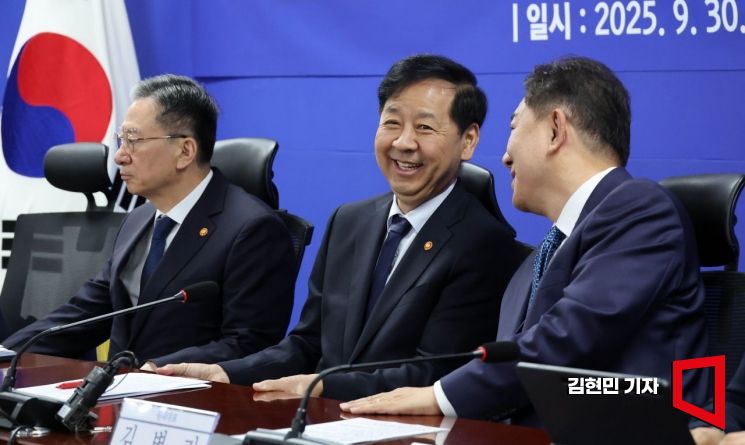
On the morning of December 30, the government and the Democratic Party of Korea held a policy consultation meeting and announced the second plan, which focuses on revising 331 economic criminal penalty regulations. This follows the first plan in September, which revised 110 regulations, and is a follow-up measure intended to comprehensively review punishment-centered regulatory practices, reduce burdens on people's livelihoods, and promote effective deterrence of illegal acts.
This plan was developed based on five key principles: responsibility, timeliness, subsidiarity, fairness and consistency, and alignment with global standards. The government and ruling party decided to strengthen financial liabilities, such as fines, rather than criminal punishment for major corporate violations like unfair trade. For minor violations of obligations by business owners or the general public, criminal penalties will be relaxed or replaced with administrative fines.
First, fines will be significantly increased, especially in the area of unfair trade. Provisions in the Large-Scale Distribution Business Act, the Subcontracting Act, the Franchise Business Act, and the Agency Business Act, which previously prescribed imprisonment, will be changed so that criminal penalties are imposed only for failure to comply with corrective orders. The maximum cap for fixed fines will be raised to 5 billion won. In cases of neglecting obligations to prevent location information leaks, criminal penalties will be abolished and fines will be increased to five times the current level to ensure effective deterrence.
Criminal risks for business owners will also be eased. If there is no intent or the violation is merely an administrative obligation, imprisonment will be abolished or replaced with administrative fines. For example, failure by automobile manufacturers to submit greenhouse gas-related documents, the use of similar names in financial services, and violations of self-certification labeling for automobile parts will be sanctioned mainly through administrative fines and corrective orders instead of criminal penalties.
Regulations closely related to daily life that could lead to the excessive creation of criminal records will also be revised. Penalties for failure to conduct inspections on camper van modifications, failure to retain apartment management fee documents, minor damage in natural parks, and omissions in animal grooming business registration will be abolished or converted to administrative fines. For failure to report changes in representatives of food manufacturing businesses, the upper limit for imprisonment will be significantly lowered.
The government and ruling party plan to promptly pursue legislation for this improvement plan, while also expediting the legislative process for the first plan for rationalizing economic criminal penalties. In addition, they will immediately begin work on a third set of tasks and will provide guidance and publicity to ensure that small and medium-sized enterprises and small business owners do not inadvertently violate the law due to lack of awareness of regulations.
© The Asia Business Daily(www.asiae.co.kr). All rights reserved.
![Clutching a Stolen Dior Bag, Saying "I Hate Being Poor but Real"... The Grotesque Con of a "Human Knockoff" [Slate]](https://cwcontent.asiae.co.kr/asiaresize/183/2026021902243444107_1771435474.jpg)















