Gangwon Province Unveils Metropolitan-Level Comprehensive Vacant House Management Plan
Turning Neglected Vacant Houses into Gangwon’s Assets
Nation’s Second ‘Metropolitan Renovation Model’ Launched
Vacant Houses Down, Population Up... Gangwon-Style Innovative Policies in Full Swing
Four Key Tasks and Twelve Detailed Implementation Models Proposed
Gangwon Special Self-Governing Province is launching a large-scale renovation project to address the issue of neglected vacant houses across the region and to overcome the crisis of local depopulation.
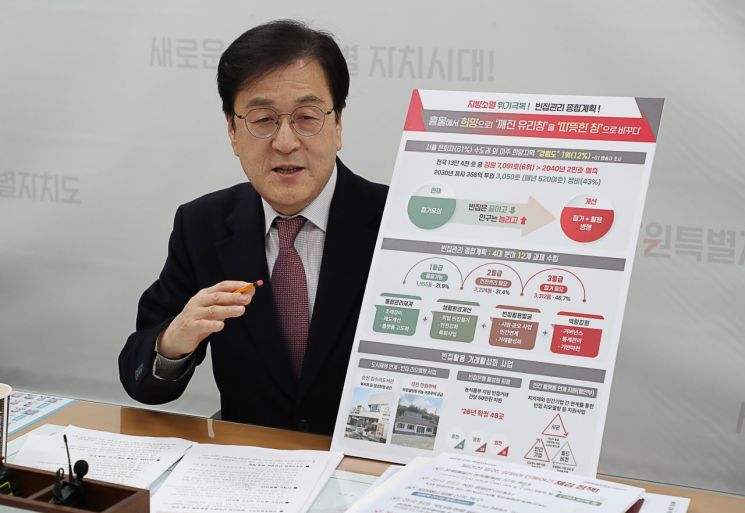 Kim Kwangrae, Deputy Governor for Economic Affairs of Gangwon Special Self-Governing Province, is announcing the comprehensive regional 'Vacant House Management Plan' on the 29th to systematically manage vacant houses throughout the province and restore local vitality. Provided by Gangwon Province
On the 29th, Gangwon Special Self-Governing Province announced a metropolitan-level "Comprehensive Vacant House Management Plan" to systematically manage vacant houses throughout the province and restore regional vitality. This plan marks the second case in the nation where vacant house management, previously handled by cities and counties, will be integrated at the provincial level, and it is being recognized for significantly enhancing the expertise and effectiveness of vacant house policies.
Currently, there are a total of 7,091 vacant houses in Gangwon Province, ranking sixth nationwide. The province predicts that, due to population decline and aging, the number of vacant houses will surge to about 20,000 by 2040. To proactively respond, Gangwon plans to invest a total of 35.8 billion won (8.7 billion won from the central government, 6.5 billion won from the province, and 20.6 billion won from cities and counties) by 2030.
The goal is to renovate approximately 3,050 houses, accounting for about 43% of all vacant houses. The province will carry out renovations of around 520 houses annually to improve public safety and the urban environment.
Notably, the province has introduced a "grading system" that categorizes vacant houses into three grades for differentiated management, moving away from the previous one-size-fits-all demolition policy. Under this system, houses in good condition will be actively remodeled and utilized, while those at risk of collapse will be demolished and transformed into public spaces, establishing a virtuous cycle of "demolition, utilization, and regeneration."
The province has also proposed the "Gangwon-style Four Utilization Models" tailored to local characteristics: the "Urban Model" for revitalizing declining city centers; the "Rural Model" to supplement rural housing services; the "Mountain and Nature-Linked Model" leveraging Gangwon's natural environment; and the "Complex Model" aimed at revitalizing the local economy.
Additionally, the province will begin full-scale enhancement of the integrated vacant house platform "Vacant House Love," established last March, starting next year. Beyond simply providing information, the platform will include property listings, rental, and transaction functions, making it easier for young entrepreneurs and those wishing to return to farming or rural life to access vacant house information. Through this, the province aims to foster a local business ecosystem based on vacant houses.
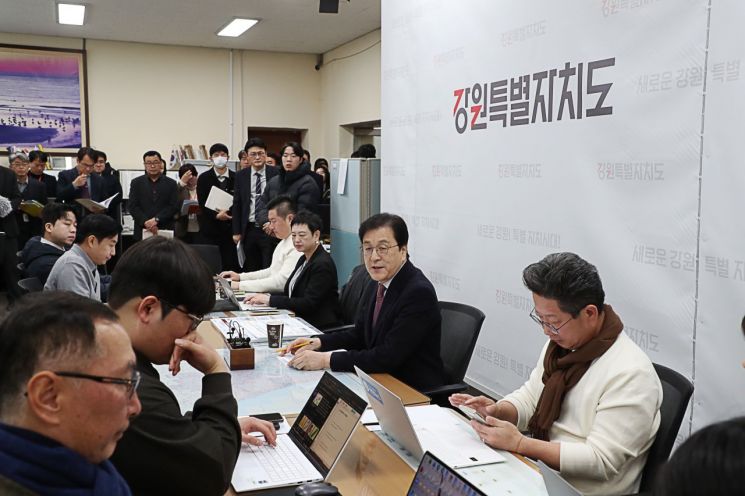 Kim Kwangrae, Deputy Governor for Economic Affairs of Gangwon Special Self-Governing Province, is announcing the comprehensive regional 'Vacant House Management Plan' on the 29th to systematically manage vacant houses throughout the province and restore local vitality. Provided by Gangwon Province
Gangwon Province also plans to maximize the influx of outside residents by revitalizing the "Rural Vacant House Bank" and linking with private platforms. The province will support collaboration between vacant house owners and local businesses, promoting private sector-led regeneration projects in parallel.
Kwangrae Kim, Deputy Governor for Economic Affairs of Gangwon Special Self-Governing Province, stated, "The vacant house issue is not merely about improving the residential environment, but is directly linked to the future of the region. We will prevent urban blight caused by the broken windows effect of vacant houses, and, through close cooperation with the private sector, cities and counties, and the central government, we will create a new regional growth model that progresses from vacant house renovation to utilization and regeneration."
© The Asia Business Daily(www.asiae.co.kr). All rights reserved.
![Clutching a Stolen Dior Bag, Saying "I Hate Being Poor but Real"... The Grotesque Con of a "Human Knockoff" [Slate]](https://cwcontent.asiae.co.kr/asiaresize/183/2026021902243444107_1771435474.jpg)

















